
Leptogenys moelleri
- Wiss. Name
- Leptogenys moelleri
- Tribus
- Ponerini
- Unterfamilie
- Ponerinae
- Autor
- Bingham, 1903
- Verbreitung
- In 0 Ländern gefunden
Einleitung
Leptogenys moelleri is a poorly documented ponerine ant native to the Himalayan region of India. Workers are slender and black, with the head, mesosoma and petiole black and the gaster blackish brown . Their petiolar node is erectly triangular in side view, giving them a distinctive silhouette . Originally described as Lobopelta moelleri by Bingham in 1903,the species was later transferred to Leptogenys by Emery in 1911 . It is endemic to India, with the only confirmed record from Sikkim at around 1100 m elevation . Almost nothing is known about its wild ecology, colony structure, or specific nesting habits – most care information must be inferred from related Leptogenys species or general Ponerinae biology.
Quick Summary
- Difficulty: Hard
- Origin & Habitat: Endemic to the Himalayan region of India, specifically recorded from Sikkim at approximately 1100 m elevation [4][5]. The natural habitat is unstudied, but the elevation suggests a cool, temperate environment.
- Colony Type: Unconfirmed – no documented information about queen number or social structure. Many Leptogenys species are monogyne with ergatoid replacement queens, but this has not been verified for L. moelleri.
- Size & Growth:
- Queen: Size data unavailable – no total length measurements exist in the provided literature.
- Worker: Size data unavailable – no total length measurements exist in the provided literature.
- Colony: Unknown – colony size has not been documented.
- Growth: Unknown – no data on colony growth rate.
- Development: Unknown – no published development data for this species. (All timeline estimates are purely speculative. For related Ponerinae, development is often slow at moderate temperatures.)
- Antkeeping:
- Temperature: Temperature needs are unknown. The Himalayan origin (1100 m elevation) suggests they prefer cooler conditions than lowland tropical species. A starting range of 20–24 °C is a reasonable guess, but careful observation is needed. Provide a gradient so the colony can self-regulate.
- Humidity: Humidity requirements are undocumented. Based on the general preferences of forest-floor Ponerinae, keeping the nest substrate damp (not waterlogged) and providing a drinking water source is advisable. A moisture gradient is safer than uniform wetness.
- Diapause: Uncertain – the species comes from a temperate altitude, so a winter cooling period may be beneficial. If the colony slows down in winter, try a 2–3 month diapause at 10–15 °C. No studies confirm this, so watch for stress.
- Nesting: Preferred nest type is unknown. Y‑tong (AAC) or plaster nests are common for moisture‑loving ponerines and are likely a good starting point. Use test tube setups for founding and small colonies.
- Behavior: Very little is known about L. moelleri behavior. As a ponerine, it has a functional sting (typical of the subfamily) and is probably a solitary or group predator. Workers are likely fast and agile. Escape prevention is critical given their small size (typical for Leptogenys) and agility. They are not expected to be aggressive toward keepers but will defend the nest.
- Common Issues: escape prevention is critical – their small size and speed mean any gap can be an exit., natural history is almost unknown – keepers must be prepared for trial‑and‑error and unpredictable responses., no reliable care data exists – most advice is inferred from related species and may not be accurate.
Housing and Nest Setup
Because nothing is known about the natural nesting sites of Leptogenys moelleri, start with a setup that works for many moisture‑loving ponerines. A Y‑tong (AAC) or plaster nest retains humidity well. For a founding colony, a standard test tube setup with a water reservoir is simplest. The nest chambers should be small and snug – large chambers can stress a small colony. Provide a water tube (test tube with cotton plug) for drinking. The outworld should be escape‑proof: use fluon or barrier tape on all rim edges, and ensure all lids or covers seal tightly. These ants are likely small and fast, so any gap is an escape route. Connect the nest to the outworld with a tube or tubing system that can be closed off during maintenance.
Feeding and Diet
Leptogenys moelleri is a predator, as typical for the genus. In captivity, offer a variety of live or freshly killed small invertebrates: fruit flies, small crickets, mealworm pieces, and especially isopods (woodlice), which many Leptogenys species hunt naturally. Feed 2–3 times per week, offering only what the colony will consume within 24 hours. Remove any leftover prey to prevent mold. Protein is essential, sugar water or honey may be accepted occasionally but should not replace protein. Do not offer prey that is too large for the workers to subdue. There is no published data on diet preferences – adjust based on colony response.
Temperature and Seasonal Care
Since the species was collected at 1100 m elevation in the Himalayas [4], it likely experiences cool summers and cold winters. There are no laboratory studies on its temperature tolerance. A good starting point during the active season is 20–24 °C. Avoid prolonged temperatures above 28 °C, which could be stressful. If the colony shows reduced activity in autumn, a diapause period of 2–3 months at 10–15 °C may be beneficial, but this is entirely speculative. During any cooling period, reduce feeding and keep the substrate slightly drier to avoid mold. Resume normal warmth and feeding in spring.
Behavior and Colony Dynamics
Almost all behavioral traits for Leptogenys moelleri are unknown. Based on the genus, workers are likely fast, diurnal predators that use chemical recruitment to overwhelm prey. They probably have a functional sting (typical of Ponerinae) but are not aggressive toward humans. The queen may be ergatoid (wingless) and relatively active. Colony founding is unconfirmed – many Leptogenys queens are semi‑claustral and must forage, but this species may differ. Expect the colony to grow slowly if at all, and be prepared for unusual behaviors that do not match typical antkeeping patterns. Document your observations to help the antkeeping community.
Frequently Asked Questions
How long does it take for Leptogenys moelleri to produce first workers?
This is unknown – no published data exists. For many ponerines, the first workers appear 8–12 weeks after the queen starts laying, but this timing is not confirmed for L. moelleri.
What do I feed Leptogenys moelleri?
Offer live or freshly killed small invertebrates – fruit flies, small crickets, mealworms, isopods. Feed 2–3 times per week and remove leftover prey after 24 hours. Protein is the main dietary need, sugar water can be offered occasionally.
Do Leptogenys moelleri need hibernation?
Possibly. The species comes from a temperate altitude (1100 m in the Himalayas), so a winter cooling period may be beneficial. No studies confirm this, but if the colony slows down in winter, provide 2–3 months at 10–15 °C. Monitor for stress.
Are Leptogenys moelleri good for beginners?
No – this species is not recommended for beginners. Almost all care parameters are unknown, making it a challenging experiment even for experienced keepers. It should only be attempted by those prepared for uncertainty and potential loss of the colony.
How big do Leptogenys moelleri colonies get?
Unknown – colony size has not been documented for this species. Related Leptogenys species vary widely, from a few dozen to several hundred workers.
Can I keep multiple Leptogenys moelleri queens together?
Unknown – the social structure has not been studied. Most Leptogenys are monogyne, but without data, it is safest to assume they are not tolerant of each other. Do not attempt to house multiple queens together.
When should I move Leptogenys moelleri to a formicarium?
There is no specific recommendation. As a general rule for small colonies, wait until the test tube is overcrowded (30–50 workers typical for many species) before offering a larger nest. Connect the new nest via tubing and let the ants move themselves.
Why are my Leptogenys moelleri dying?
Unknown care parameters make it difficult to diagnose. Common issues for unstudied ponerines include: incorrect humidity (too dry or too wet), unsuitable temperature, lack of protein, or stress from improper nesting setup. Check that moisture is available (but not waterlogged) and that the temperature is cool enough. If the colony is wild‑caught, it may have parasites or be weakened from collection.
Do Leptogenys moelleri need escape prevention?
Absolutely – even though their exact size is undocumented, they are likely small (typical for Leptogenys) and extremely fast. Use fluon or barrier tape on all container edges, ensure tight seals on lids, and use fine mesh for any ventilation holes. Any gap is an escape risk.
Report an Issue
The current care sheet is based fully on literature. See inconsistencies, or something that's incorrect? Please , it will be resolved after review from an admin. Contributing to the blogs tab also helps providing information, to make us be able to further improve the caresheets. Thank you for your support!
References

Dieses Caresheet ist lizenziert unter CC BY-SA 4.0 .
Community-Blogs
CASENT0281928
Auf AntWeb ansehen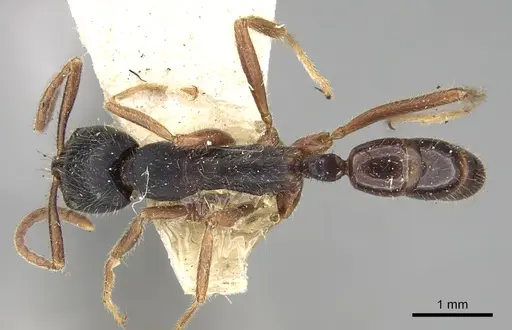
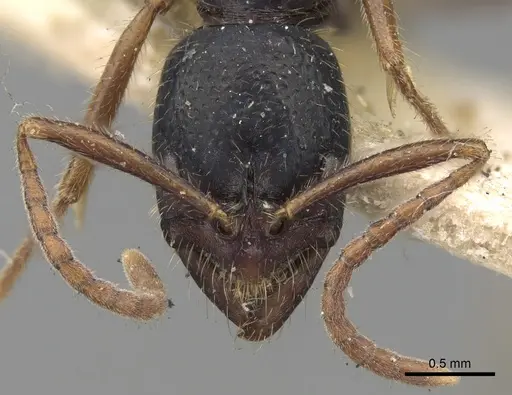
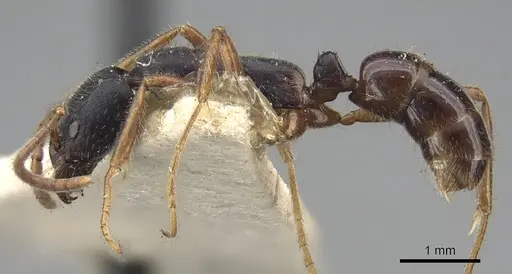
Literatur
Verbreitungskarte wird geladen...Produkte werden geladen...