
Leptogenys emiliae
- Wiss. Name
- Leptogenys emiliae
- Tribus
- Ponerini
- Unterfamilie
- Ponerinae
- Autor
- Forel, 1902
- Verbreitung
- In 0 Ländern gefunden
Einleitung
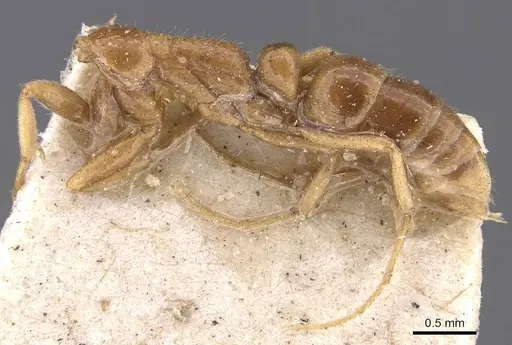
Leptogenys emiliae is a medium-sized predatory ant endemic to India, specifically recorded from Gujarat . Workers have a brownish yellow coloration with distinctive morphological features including a broad petiolar node about 1.4 times broader than long, and a propodeal declivity with transverse striation . As a member of the subfamily Ponerinae, this species is an active hunter that preys on small arthropods like isopods and other insects. The genus Leptogenys is characterized by their slender, elongated bodies and aggressive foraging strategies.
Quick Summary
- Difficulty: Medium
- Origin & Habitat: Endemic to India, recorded from Gujarat in the Indomalaya region [1]. Natural habitat consists of tropical and subtropical environments where they nest in soil or under stones.
- Colony Type: Colony structure for this specific species has not been directly studied.
- Size & Growth:
- Queen: Size data unavailable, no specific measurements exist for this species. Based on genus patterns for Leptogenys, queens are likely around 8-10mm.
- Worker: Size data unavailable, no specific measurements exist for this species. Based on genus patterns for Leptogenys, workers are likely around 5-7mm.
- Colony: Up to several hundred workers at maturity, estimated from genus patterns
- Growth: Moderate, Ponerine ants typically develop at a steady pace
- Development: Estimated 6-10 weeks at optimal temperature based on related Ponerinae species (Development time inferred from genus-level data, specific timing for L. emiliae has not been documented)
- Antkeeping:
- Temperature: Keep at 24-28°C, these are tropical ants from India and prefer warm conditions. A heating cable on one side of the nest creates a suitable gradient.
- Humidity: Moderate to high humidity around 60-80%. Keep the nest substrate moist but not waterlogged. Ponerine ants often prefer slightly damp conditions.
- Diapause: No, being from tropical India, they do not require hibernation. Maintain warm temperatures year-round.
- Nesting: In nature they nest in soil or under stones. In captivity, a Y-tong (AAC) nest or plaster formicarium with moist substrate works well. They prefer dark, humid nest chambers. Avoid overly dry conditions.
- Behavior: Leptogenys emiliae is an active predator. Workers hunt cooperatively, using their mandibles to capture prey. They are not aggressive toward humans but will defend their nest if threatened using their sting. Escape prevention is important, use standard barriers. Their medium size means standard escape prevention measures are adequate.
- Common Issues: colonies often fail when kept too dry, moisture is critical for this species, predatory diet requirements can be challenging, they need regular live prey, slow founding phase means patience is required during colony establishment, wild-caught colonies may have parasites that can decimate the colony in captivity
Housing and Nest Setup
Leptogenys emiliae does well in a Y-tong (AAC) nest or plaster formicarium with moist substrate. These ants prefer dark, humid nest chambers that mimic their natural environment of soil nests or nests under stones. The nest should have multiple chambers connected by narrow passages. Keep the substrate consistently moist, these ants are sensitive to dry conditions. An outworld for foraging allows you to observe their hunting behavior. Use standard escape prevention like fluon on the rim of the nest setup. [1]
Feeding and Diet
As predatory Ponerine ants, Leptogenys emiliae requires a protein-rich diet. They primarily hunt small arthropods in nature, with isopods being a common prey item for Leptogenys species. In captivity, offer live prey such as small crickets, fruit flies, mealworms, and isopods. Feed protein prey 2-3 times per week, adjusting based on colony size. Remove uneaten prey after 24-48 hours to prevent mold. Sugar water or honey can be offered occasionally, but protein is the primary dietary requirement. A well-fed colony will show active, alert workers. [2]
Temperature and Seasonal Care
Maintain temperatures between 24-28°C year-round. Being from tropical India, these ants do not require hibernation or diapause. Cold temperatures will slow their metabolism and can lead to colony decline. Use a heating cable on one side of the nest to create a temperature gradient if your room temperature is below 24°C. Place the heating on top of the nest, not underneath, to avoid drying out the substrate. Monitor colony activity, workers should be active and foraging. If they become sluggish, check your temperatures. [1]
Colony Founding
Founding behavior for Leptogenys emiliae has not been documented in scientific literature. Ponerine ants typically exhibit semi-claustral founding, where the queen must leave the nest to hunt for food during the founding phase. However, this has not been confirmed for this specific species. The queen may dig a small chamber, lay eggs, and hunt to feed the first brood. This founding method can be challenging because the queen needs access to prey. Offer small live prey items near the founding chamber. Founding colonies require patience, the queen may take several weeks to produce her first workers. Do not disturb the nest during this critical period. [2]
Behavior and Foraging
Leptogenys emiliae workers are active, aggressive hunters that use their mandibles to capture prey. They forage individually or in small groups, searching for small arthropods. Unlike some ants that recruit through pheromone trails, Leptogenys often uses tandem running where one worker leads another to food sources. Workers will defend the nest if threatened, using their sting. They are not considered dangerous to humans but may sting if handled roughly. Observe their hunting behavior in the outworld, it is one of the most entertaining aspects of keeping this species. [2]
Frequently Asked Questions
How long does it take for Leptogenys emiliae to produce first workers?
Expect 6-10 weeks from founding to first workers at optimal temperature (24-28°C). This is estimated from related Ponerinae species, as specific development data for L. emiliae is not documented.
What do Leptogenys emiliae ants eat?
They are predators that need live protein prey. Offer small crickets, fruit flies, mealworms, and isopods. Remove uneaten prey after 24-48 hours. Sugar water or honey can be offered occasionally but should not replace protein sources.
Can I keep Leptogenys emiliae in a test tube setup?
Test tubes can work for founding colonies, but you must ensure the queen has access to prey. A small dish of live prey items placed near the test tube works. For established colonies, a Y-tong or plaster nest with moisture is more suitable.
Do Leptogenys emiliae need hibernation?
No. Being from tropical India, they do not require hibernation. Keep them warm year-round at 24-28°C. Cold temperatures can harm the colony.
Are Leptogenys emiliae good for beginners?
They are rated as medium difficulty. The main challenges are their predatory diet requiring live prey and their humidity requirements. If you have kept other Ponerine ants successfully, this species is manageable. Beginners may struggle with the need for regular live prey.
How big do Leptogenys emiliae colonies get?
Colony size is estimated at up to several hundred workers at maturity based on typical Leptogenys growth patterns. Specific data for this species is not available.
When should I move Leptogenys emiliae to a formicarium?
Move them when the test tube becomes crowded or the water reservoir is depleted. This is typically when the colony reaches 20-30 workers. Ensure the new nest maintains proper humidity.
Why is my Leptogenys emiliae colony declining?
Common causes include: too dry conditions (most common), lack of live prey, temperatures below 24°C, or parasites from wild-caught colonies. Check humidity levels first, they need moist substrate. Ensure you are providing adequate live prey.
Can I keep multiple Leptogenys emiliae queens together?
Not recommended. Combining unrelated queens of this species has not been documented and likely results in fighting. Colony type for this species has not been confirmed.
Report an Issue
The current care sheet is based fully on literature. See inconsistencies, or something that's incorrect? Please , it will be resolved after review from an admin. Contributing to the blogs tab also helps providing information, to make us be able to further improve the caresheets. Thank you for your support!
References

Dieses Caresheet ist lizenziert unter CC BY-SA 4.0 .
Community-Blogs
CASENT0907374
Auf AntWeb ansehen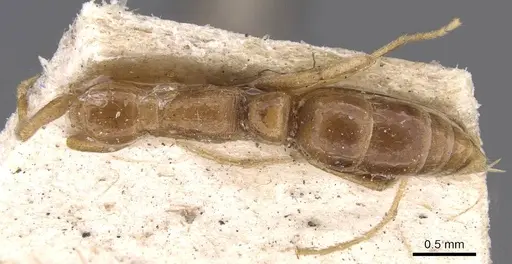
Literatur
Verbreitungskarte wird geladen...Produkte werden geladen...