
Leptanilla anomala
- Wiss. Name
- Leptanilla anomala
- Tribus
- Leptanillini
- Unterfamilie
- Leptanillinae
- Autor
- Brues, 1925
- Verbreitung
- In 0 Ländern gefunden
Einleitung
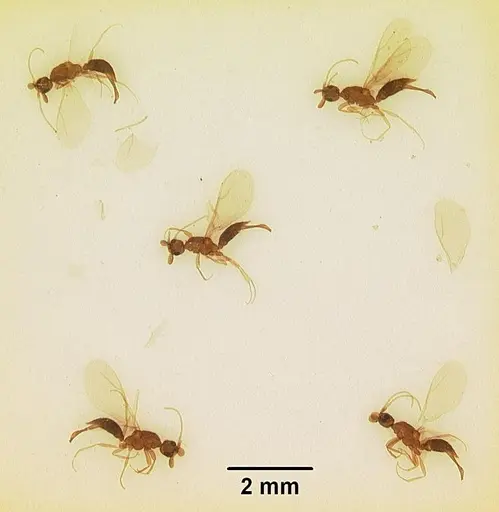
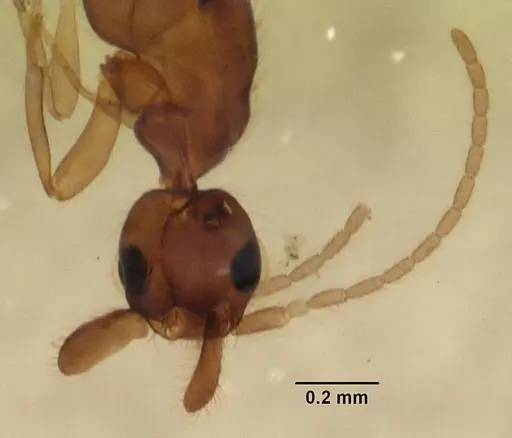
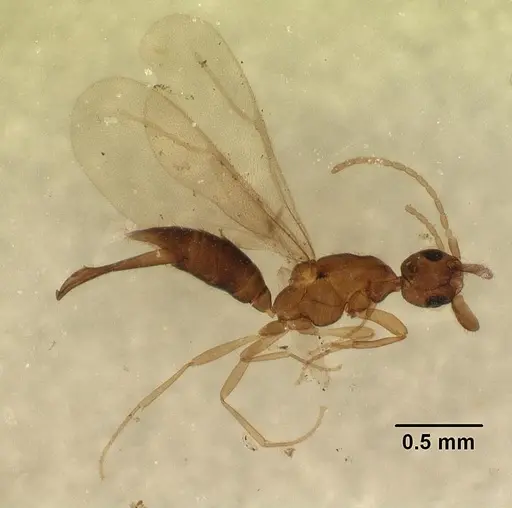
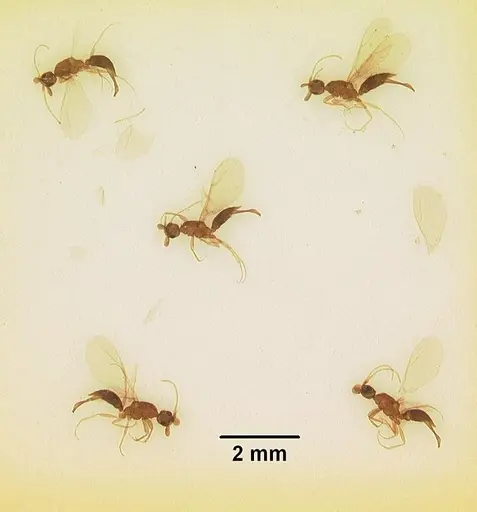
Leptanilla anomala is one of the most mysterious ants in the world - known only from male specimens collected in 1925 in Wai Lima, Sumatra, Indonesia. The worker caste has never been described, making this one of the few ant species where the workers remain completely unknown to science. Originally described in the genus Scyphodon due to its unusual morphology that stumped early taxonomists, it was only confirmed as a true ant (Formicidae) in 2015 and formally transferred to Leptanilla in 2024. The males have bizarre hypertrophied mandibles and genitalia resembling the genus Noonilla, suggesting it may be closely related to or nested within that group . This is a species for advanced myrmecologists interested in taxonomic mysteries rather than antkeepers seeking a species to keep.
Quick Summary
- Difficulty: Expert
- Origin & Habitat: Known only from a single collection in Wai Lima, Lampongs, Sumatra, Indonesia, part of the Indomalayan region [4]. The original specimens were collected by H. Karny and H. C. Siebers. No ecological data exists for this species.
- Colony Type: Unknown, only males have been collected, workers have never been found or described. The colony structure (single queen or multiple queens) is completely unconfirmed.
- Size & Growth:
- Queen: Unknown, no queens have been described [4]
- Worker: Unknown, workers have never been described [4]
- Colony: Unknown, no colony samples have ever been documented [4]
- Growth: Unknown
- Development: Unknown, no developmental data exists for this species (Workers have never been described, so no egg-to-worker timeline can be estimated)
- Antkeeping:
- Temperature: Unknown, no temperature data exists for this species. Leptanilla genus members are typically found in tropical to subtropical regions, but no specific data is available.
- Humidity: Unknown, no humidity data exists for this species. Leptanilla species are typically subterranean, but no specific data is available.
- Diapause: Unknown, no seasonal data exists for this species [4]
- Nesting: Unknown, no natural nesting observations exist. The closely related Leptanilla species typically nest in soil or rotting wood in shaded, damp locations, but this is inferred from genus patterns rather than specific to L. anomala.
- Behavior: Unknown, no workers have ever been found or studied. However, Leptanilla species are tiny ants that would pose no threat to humans even if they could be kept [4].
- Common Issues: This species is essentially unkeepable, workers have never been described and no live specimens exist in captivity., No biological or ecological data exists to guide captive care., The species is only known from museum specimens collected in 1925., Even if workers were discovered, they would likely be extremely tiny requiring specialized equipment to maintain., No established breeding stock exists in the antkeeping hobby.
Why This Species Is Unique
Leptanilla anomala represents one of the most significant gaps in ant taxonomy. The species was originally described in 1925 by Charles Brues from male specimens collected in Sumatra, but he was so uncertain about its classification that he placed it in a new genus called Scyphodon and noted he was 'unable to determine its systematic relationships with any degree of satisfaction.' The specimens were so unusual that they were excluded from Formicidae (true ants) for decades, with various researchers suggesting they might belong to entirely different wasp groups. Only in 2015 was it confirmed as an ant, and in 2024 it was formally transferred to the genus Leptanilla. The worker caste remains completely unknown to science, this is exceptionally rare among described ant species [1][2][5].
Taxonomic History
The taxonomic journey of this species is convoluted. Brues originally described it as Leptanilla anomala in 1925,noting its 'striking characters' that made it easily recognizable but impossible to classify. Petersen (1968) transferred it to Formicidae, but this was disputed and the species remained in taxonomic limbo for decades. Baroni Urbani (1977) and Bolton (1995) accepted it as a valid ant species, but it wasn't until Boudinet's 2015 revision of early ant lineages that its position in Formicidae was firmly established. Most recently, Griebenow (2024) synonymized Scyphodon with Leptanilla based on phylogenetic analysis, confirming it belongs to the Leptanillini tribe. The genus name change from Scyphodon to Leptanilla was formalized in 2024 [1][2][5][3].
Relationship to Other Leptanilla
Based on male morphological characters, Leptanilla anomala is predicted to be either sister to or nested within the genus Noonilla. The males share several key features with Noonilla, including genitalia that conspicuously resemble each other, a basally shifted phallotreme with surrounding setae, and an abdominal tergite VIII that is longer than broad. The phylogenetic analysis by Griebenow (2026) recovered L. anomala among terminals belonging to the former genus Noonilla with high Bayesian posterior probability (BPP = 0.96), though its exact position within the L. havilandi species-group remains unresolved (BPP = 0.33) [5][3]. This suggests L. anomala is a highly unusual member of an already obscure ant group.
Why You Cannot Keep This Species
There are several fundamental barriers to keeping Leptanilla anomala. First, the workers have never been described, no one knows what they look like, how big they are, or how to identify them. Second, no live specimens are known to exist anywhere in the world, only the original museum specimens from 1925 have ever been collected. Third, even if workers were discovered in the wild, they would likely be extremely small and subterranean, making them extraordinarily difficult to find and maintain. There is no established breeding stock in the antkeeping hobby, and no biological data exists to guide captive care. This species exists purely as a taxonomic curiosity documented from six male specimens collected nearly a century ago [4].
Frequently Asked Questions
Can I keep Leptanilla anomala ants?
No. This species cannot be kept because workers have never been described and no live specimens are known to exist. The only known specimens are six male ants collected in 1925 in Sumatra, Indonesia, and stored in museums [4].
What do Leptanilla anomala workers look like?
No one knows. The worker caste has never been described or observed. This is one of the few ant species where the workers remain completely unknown to science [4].
Are Leptanilla anomala workers ever found?
No. Despite being described in 1925,no worker specimens have ever been collected or documented. Leptanilla ants are typically very rare and subterranean, with workers rarely encountered even by professional entomologists [4].
Where does Leptanilla anomala live?
The species is known only from Wai Lima in the Lampongs region of Sumatra, Indonesia. No additional collection records exist. The original specimens were collected by H. Karny and H. C. Siebers [4].
What do Leptanilla anomala males look like?
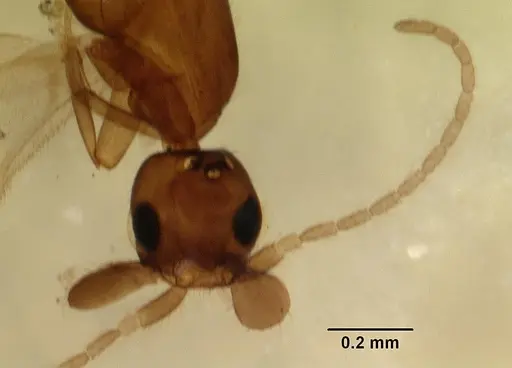
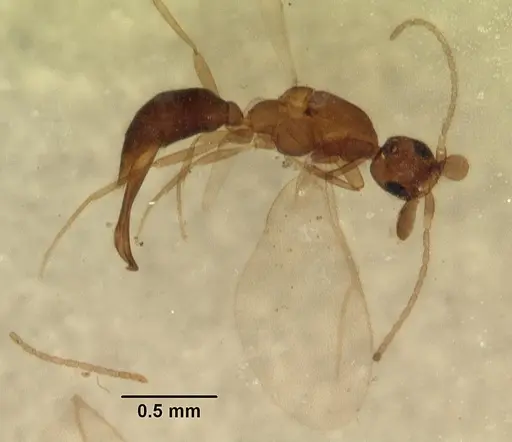
The males have bizarre hypertrophied (enlarged) mandibles that are much larger than typical ant mandibles. They also have unusual genitalia that resemble those of the genus Noonilla. The abdominal tergite VIII is longer than broad, and the phallotreme is shifted basally with setae surrounding it [1][2][3].
Is Leptanilla anomala dangerous?
Unknown, no workers have ever been found or studied. However, Leptanilla species are tiny ants that would pose no threat to humans even if they could be kept [4].
What is the closest kept species to Leptanilla anomala?
Other Leptanilla species such as Leptanilla japonica or Leptanilla havilandi would be the closest relatives, but these are also extremely rare in captivity and poorly studied. The genus Noonilla is also closely related [4].
Why was this species originally called Scyphodon?
Charles Brues created the genus name Scyphodon in 1925 because he was so uncertain about the ant's classification that he felt it needed its own genus. The name means 'cup tooth' in Greek, possibly referring to unusual mandible structures. The species was only confirmed as an ant and transferred to Leptanilla in 2024 [1][2].
Report an Issue
The current care sheet is based fully on literature. See inconsistencies, or something that's incorrect? Please , it will be resolved after review from an admin. Contributing to the blogs tab also helps providing information, to make us be able to further improve the caresheets. Thank you for your support!
References

Dieses Caresheet ist lizenziert unter CC BY-SA 4.0 .
Community-Blogs
CASENT0102497
Auf AntWeb ansehen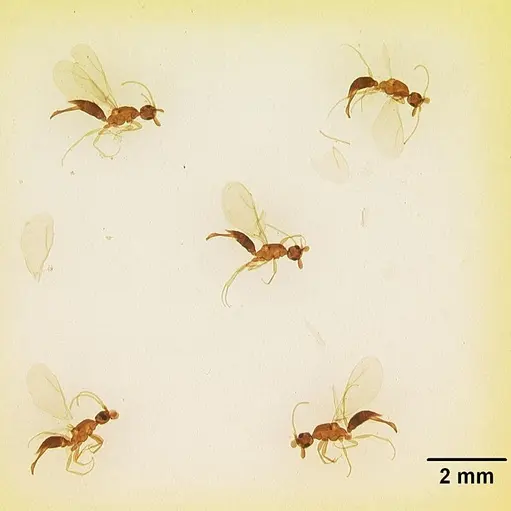
CASENT0102498
Auf AntWeb ansehen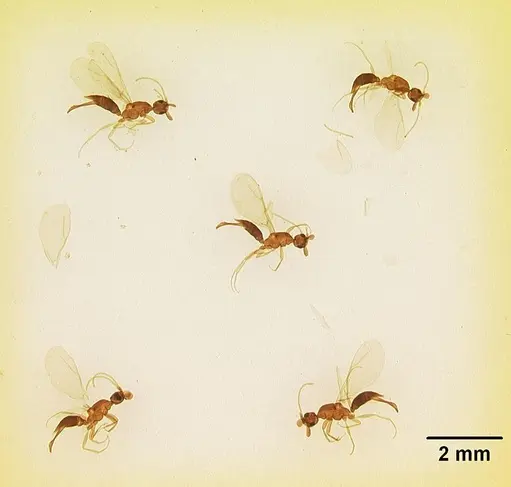
Literatur
Verbreitungskarte wird geladen...Produkte werden geladen...