
Leptanilla acherontia
- Wiss. Name
- Leptanilla acherontia
- Tribus
- Leptanillini
- Unterfamilie
- Leptanillinae
- Autor
- Griebenow, 2024
- Verbreitung
- In 0 Ländern gefunden
Einleitung
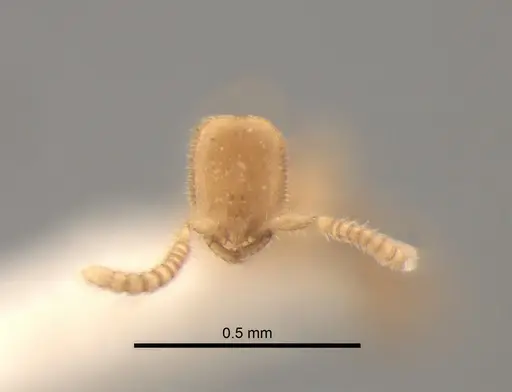
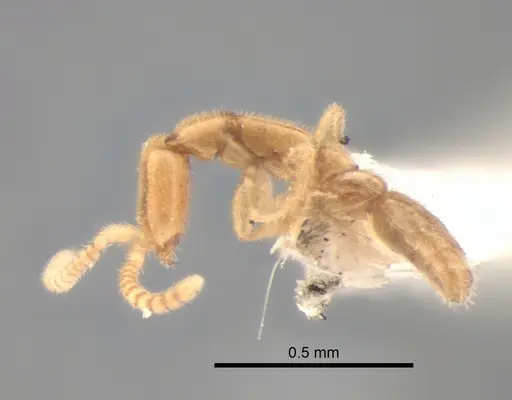
Leptanilla acherontia is a tiny ant species recently described from the Kakamega Forest in Kenya. Workers are among the smallest ants in the world, with a head width of about 0.21-0.22mm. Their pale yellowish coloration and three-toothed mandibles distinguish them from similar species. This species was formally described in 2024,making it one of the most recently named ant species in science. The genus Leptanilla contains hypogaeic (underground-dwelling) ants that are rarely encountered, even by researchers studying African rainforests . What makes L. acherontia particularly special is its scientific rarity - it is one of only two described Afrotropical Leptanilla species whose worker caste is known. The species name references the Acheron River from Greek mythology, continuing a naming theme for this genus that evokes the underworld. These ants live in perhumid equatorial rainforest at elevations around 1550m, dwelling in soil beneath forest litter .
Quick Summary
- Difficulty: Expert
- Origin & Habitat: Kenya (Kakamega Forest, Isecheno) at 1550m elevation in perhumid equatorial rainforest. Found in sifted leaf litter within soil under Morus mesozygia trees [1].
- Colony Type: Colony structure is unconfirmed, this is a newly described species with no published colony data.
- Size & Growth:
- Queen: Size data unavailable, queen caste has not been described for this species [1]
- Worker: Size data unavailable, only head measurements exist (head width ~0.21-0.22mm). Total body length has not been measured [1]
- Colony: Unknown, no colony size data available
- Growth: Unknown, no development data exists
- Development: Unconfirmed, no direct observations of colony development exist for this species (Development timeline must be estimated from related Leptanilla species.)
- Antkeeping:
- Temperature: Infer from habitat: perhumid equatorial rainforest suggests warmth and high humidity. Aim for 24-28°C with high humidity. Start in this range and observe colony activity.
- Humidity: High humidity is essential, these ants live in rainforest floor litter and soil. Keep substrate consistently moist but not waterlogged. Provide a gradient with a damp area and a slightly drier area for choice.
- Diapause: Unknown for this species. Tropical rainforest ants typically show reduced activity during dry seasons rather than true hibernation.
- Nesting: Natural nesting: soil and leaf litter interface in forest floors. In captivity: extremely small size makes standard test tubes challenging. Consider custom setups with tight chambers. The key is maintaining high humidity while preventing escapes.
- Behavior: Behavior is unobserved in captivity, this species has never been kept in the hobby. Based on genus-level knowledge, Leptanilla are hypogaeic (underground) ants that rarely venture to the surface. They likely forage through soil and leaf litter, preying on micro-arthropods like springtails and soil mites. Escape prevention is absolutely critical due to their minute size, they can squeeze through gaps invisible to the naked eye. Temperament is unknown but likely non-aggressive given their tiny size.
- Common Issues: escape prevention is critical, their minute size allows them to pass through standard barrier materials, no captive husbandry information exists, this is essentially an uncharted species for antkeeping, high humidity requirements create mold risk in enclosed setups, extremely slow growth may frustrate keepers expecting visible progress, wild-caught colonies may contain parasites adapted to their specific microhabitat
Why This Species Is So Challenging
Leptanilla acherontia represents one of the most difficult ant species to keep in captivity. This is not exaggeration: the species was only described in 2024,meaning no antkeeper has ever successfully maintained a colony of this species. The worker caste itself was unknown to science until very recently. You would be pioneering entirely new husbandry methods for an ant that most professional myrmecologists have never seen alive. Before attempting this species, you should have extensive experience with other difficult species like Strumigenys, trap-jaw ants, or other hypogaeic genera. Even then, expect significant trial and error, colony losses, and uncertainty at every step [1].
Understanding Their Natural History
L. acherontia was collected from Kakamega Forest in western Kenya, a fragment of the once-vast African rainforest. At 1550m elevation in equatorial Africa, these ants experience warm temperatures year-round with consistently high humidity. They were found in soil beneath the tree Morus mesozygia, within sifted leaf litter, essentially at the interface between decomposing organic matter and soil. This is the world they know: perpetual warmth, moisture, and tiny prey items crawling through dark, humid microhabitats. The genus Leptanilla is known for being hypogaeic, meaning they spend nearly their entire lives underground or within the leaf litter layer, rarely if ever emerging onto surfaces. This lifestyle explains why so little is known about them, they are essentially invisible to human observation [1].
Housing and Setup Recommendations
Given their minute size and unknown exact requirements, you must approach housing with extreme caution. Standard test tubes will likely be too large and allow dangerous open spaces. Custom nests with chambers scaled to their tiny size would be ideal, but such setups are not commercially available. You would likely need to construct or commission custom housing. Alternatively, a small plastic container with tightly fitting lid and a small moisture reservoir could work, but escape prevention would be paramount. Use multiple barrier layers: fluon on rims, fine mesh over any ventilation holes, and consider sealing all edges. The substrate should be a mix of soil and decaying leaf material to mimic their natural environment. High humidity must be maintained constantly, a water reservoir connected to the nesting area via cotton wick can help maintain moisture [2].
Feeding and Nutrition
Feeding is perhaps the most speculative aspect of keeping this species. In the wild, Leptanilla likely prey on soil micro-arthropods, tiny springtails, soil mites, and other invertebrates barely visible to the naked eye. Captive feeding would require culturing these tiny prey items. Standard ant foods like mealworms or fruit flies are likely far too large. You would need to culture springtails, potworms, or other minute soil organisms. Sugar sources are probably irrelevant, these ants are likely obligate predators. Even offering small prey items like fruit fly legs or tiny cricket parts might be too large. This is truly frontier husbandry where you would be experimenting with basic nutrition [2].
Temperature and Humidity Management
The natural habitat provides clear clues: perhumid equatorial rainforest means these ants expect constant warmth and moisture. Aim for temperatures in the 24-28°C range, warm but not extreme. Room temperature might be too cool, so a small heating element on one side of the setup could be necessary. Humidity should be high, around 70-85% relative humidity within the nest chamber. This is best achieved by providing a water reservoir that evaporates slowly, rather than misting which can cause flooding in such tiny setups. The substrate should feel damp to the touch but never waterlogged. Monitor for mold constantly, high humidity that benefits the ants also favors fungal growth [1].
Critical Considerations Before Starting
You must understand what you are getting into. There is no care guide for this species because no one has kept it successfully. You would be conducting original research with every observation. Colonies obtained would likely be wild-caught, and these tiny hypogaeic ants are extraordinarily difficult to locate and collect. Any colony you obtain would be irreplaceable, there is no commercial source, and re-collecting from Kenya would require significant resources. The ethical considerations of removing such rare species from the wild must be weighed carefully. Additionally, there is always the risk that this species simply cannot survive in captivity given its specialized requirements. If you proceed, document everything meticulously, your observations could contribute to genuine scientific knowledge [1].
Frequently Asked Questions
Can I keep Leptanilla acherontia in a test tube?
Standard test tubes are likely unsuitable due to their minute size. The chambers would be enormous relative to the ants, and the water reservoir would be far too large, creating drowning risk. If you attempt test tubes, use very small diameter tubes or construct custom mini-nests. This species has never been kept in captivity, so no established method exists.
How long does it take for Leptanilla acherontia to develop from egg to worker?
The development timeline is completely unconfirmed, no one has observed this species in captivity. Based on related Leptanilla species and their hypogaeic lifestyle, expect development to be slow, likely several months at optimal temperature. However, this is a rough estimate with no direct evidence.
What do Leptanilla acherontia ants eat?
Based on genus-level knowledge, they are likely obligate predators on soil micro-arthropods. Captive feeding would require culturing springtails, potworms, or other tiny soil invertebrates. Standard ant prey items are likely too large. Sugar sources are probably not accepted. This is entirely speculative.
Are Leptanilla acherontia ants good for beginners?
Absolutely not. This species is among the most difficult ants to keep in the world. It was only described in 2024,has never been kept in captivity, and requires specialized conditions we are still discovering. You should have years of antkeeping experience before attempting this species.
Do Leptanilla acherontia ants sting?
Given their minute size, any sting would be negligible even if present. Their mandibles are too small to bite effectively. However, they are unlikely to encounter humans anyway given their underground lifestyle.
How big do Leptanilla acherontia colonies get?
Colony size is completely unknown, no colony data has been published. Based on related Leptanilla species, colonies are likely small. This is speculation based on genus-level patterns.
Can I keep multiple queens together?
Colony structure is unconfirmed for this species. No information exists about whether they are single-queen or multi-queen colonies. Combining unrelated queens is not recommended given the complete lack of data.
Do Leptanilla acherontia need hibernation?
Diapause requirements are unknown. As a tropical rainforest species from equatorial Kenya, they likely do not require true hibernation. However, they may show reduced activity during naturally drier periods in their habitat.
Why are my Leptanilla acherontia dying?
Without any captive husbandry data, diagnosing problems is nearly impossible. Likely causes include: incorrect humidity, temperature outside their narrow range, starvation, escape, or simply incompatibility with captive conditions.
Where can I obtain Leptanilla acherontia ants?
This species is not available commercially. It was only described in 2024 and is known from only a handful of specimens collected in Kenya. Obtaining a colony would require fieldwork in Kakamega Forest, which presents significant practical, legal, and ethical challenges. This species should not be a goal for captive antkeeping.
Report an Issue
The current care sheet is based fully on literature. See inconsistencies, or something that's incorrect? Please , it will be resolved after review from an admin. Contributing to the blogs tab also helps providing information, to make us be able to further improve the caresheets. Thank you for your support!
References

Dieses Caresheet ist lizenziert unter CC BY-SA 4.0 .
Community-Blogs
CASENT0842720
Auf AntWeb ansehen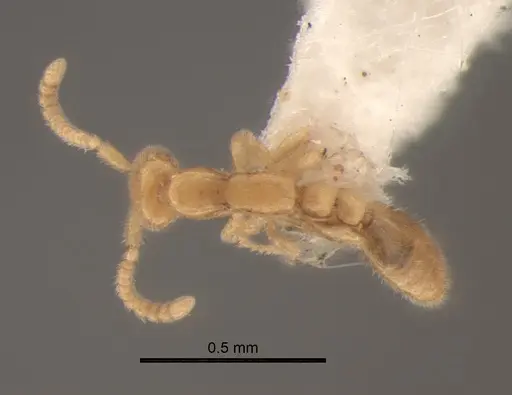
Literatur
Verbreitungskarte wird geladen...Produkte werden geladen...