
Hypoponera pia
- Wiss. Name
- Hypoponera pia
- Tribus
- Ponerini
- Unterfamilie
- Ponerinae
- Autor
- Forel, 1901
- Verbreitung
- In 0 Ländern gefunden
Einleitung
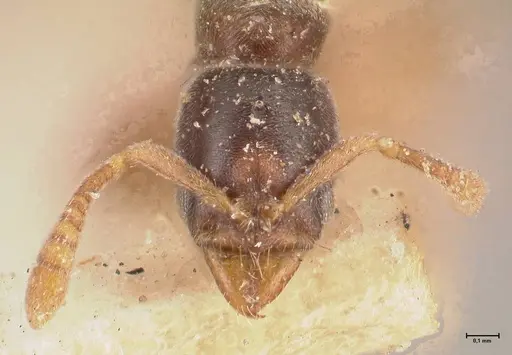
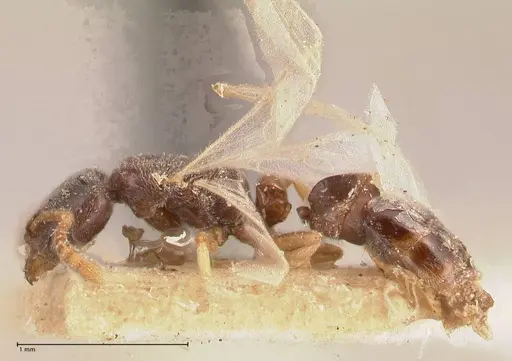
Hypoponera pia is a small, cryptic ant species originally described from New Guinea. Workers are tiny with typical Ponerinae morphology, including a single waist segment (petiole) and a functional stinger. The genus Hypoponera contains ground-nesting ants that are often overlooked due to their secretive habits. This species has been recorded from New Guinea and New Britain , with an isolated record from Sichuan Province, China at 1500m elevation in walnut forest . In the Sichuan survey, they were observed foraging on the ground surface .
Quick Summary
- Difficulty: Medium
- Origin & Habitat: New Guinea and surrounding islands in the Australasian region [1]. In the Sichuan record, they were found in walnut forest at 1500m elevation, foraging on the ground surface [2].
- Colony Type: Colony structure is unconfirmed. No data on queen number or ergatoid queens for this species.
- Size & Growth:
- Queen: Size data unavailable
- Worker: Size data unavailable
- Colony: Colony size is unconfirmed
- Growth: Moderate, inferred from Ponerinae development patterns
- Development: Estimated 6-10 weeks based on related Ponerinae species, but direct data unavailable (Development time may vary with temperature, no species-specific data exists)
- Antkeeping:
- Temperature: Keep at room temperature or slightly below, roughly 20-24°C. Based on the Sichuan elevation record, they tolerate cooler conditions [2].
- Humidity: Keep the nest substrate consistently moist but not waterlogged, as they are ground-nesting ants from forested areas [2][1].
- Diapause: Estimated diapause period of 2-3 months at 10-15°C during winter, based on geographic range and elevation record [2].
- Nesting: Natural nesting occurs in soil and under stones in forest floor habitats [1]. In captivity, use moist plaster or soil nests with tight, enclosed spaces scaled to their size.
- Behavior: Workers are cryptic and secretive, foraging on the ground surface [2]. They are not aggressive toward humans but will sting if handled roughly. Escape prevention is critical due to their tiny size. They are primarily nocturnal or crepuscular foragers.
- Common Issues: escape risk due to tiny size, use fine mesh barriers to prevent escapes, mold growth from high humidity with poor ventilation, stress from temperature fluctuations outside 20-24°C range, starvation if prey is not offered frequently enough
Housing and Nest Setup
Hypoponera pia is a tiny ground-nesting ant that requires moist conditions and tight, enclosed spaces. A test tube setup with a cotton barrier and water reservoir works well for founding colonies. For established colonies, a small plaster nest or soil-based formicarium maintains the humidity they need. Because of their tiny size, use fine mesh or fluon on barriers to prevent escapes. They prefer small chambers scaled to their colony size [1][2].
Feeding and Diet
As a Ponerinae species, Hypoponera pia is likely predatory, feeding on small invertebrates in nature. In captivity, offer small live prey such as springtails, fruit flies, and tiny crickets. They may accept protein sources like crushed mealworms. Sugar acceptance is uncertain, offer honey water occasionally but do not rely on it as a primary food source. Feed small amounts every 2-3 days and remove uneaten prey to prevent mold [1].
Temperature and Seasonal Care
Keep colonies at 20-24°C. The Sichuan record at 1500m elevation suggests they can tolerate cooler conditions than typical tropical ants [2]. Avoid temperatures above 28°C, which can stress colonies. During winter, provide a diapause period of 2-3 months at 10-15°C to mimic natural seasonal cycles. Reduce feeding during diapause and allow the colony to slow down naturally.
Behavior and Handling
Hypoponera ants are cryptic and not particularly aggressive, but they retain a functional stinger. Handle gently and avoid provoking defensive responses. Workers are small and fast-moving, making escape attempts difficult to track. They are primarily ground foragers and will hunt small prey in the outworld. Colonies are likely nocturnal or crepuscular, so expect most activity during evening hours [2][1].
Frequently Asked Questions
How long does it take for Hypoponera pia to raise first workers?
The exact timeline is unconfirmed, but based on related Ponerinae species, expect 6-10 weeks from egg to first worker at optimal temperature (20-24°C).
Can I keep Hypoponera pia in a test tube setup?
Yes, test tubes work well for founding colonies. However, due to their tiny size, use fine mesh barriers or fluon to prevent escapes [1].
What do Hypoponera pia ants eat?
They are likely predatory. Feed small live prey like springtails, fruit flies, and tiny crickets. Protein like crushed mealworms may also be accepted [1].
Are Hypoponera pia good for beginners?
They are rated Medium difficulty. The main challenges are their tiny size (escape prevention), limited available care information, and specific humidity requirements.
Do Hypoponera pia need hibernation?
Yes, a diapause period is estimated based on the Sichuan elevation record. Provide 2-3 months at 10-15°C during winter [2].
How big do Hypoponera pia colonies get?
Colony size is unconfirmed, but based on typical Hypoponera patterns, colonies likely remain small.
Why are my Hypoponera pia dying?
Common causes include escape due to inadequate barriers, mold from excessive humidity with poor ventilation, stress from overheating, or starvation if prey is not offered frequently enough.
When should I move Hypoponera pia to a formicarium?
Move to a larger nest when the test tube becomes crowded or the colony reaches a size where space is limited. Ensure the new setup maintains similar moisture conditions.
Can I keep multiple queens together?
Colony structure is unconfirmed for this species. Combining unrelated queens is not recommended as it has not been documented for Hypoponera pia.
Report an Issue
The current care sheet is based fully on literature. See inconsistencies, or something that's incorrect? Please , it will be resolved after review from an admin. Contributing to the blogs tab also helps providing information, to make us be able to further improve the caresheets. Thank you for your support!
References

Dieses Caresheet ist lizenziert unter CC BY-SA 4.0 .
Community-Blogs
FOCOL0999
Auf AntWeb ansehen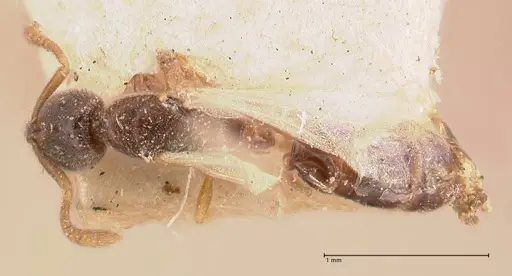
Literatur
Verbreitungskarte wird geladen...Produkte werden geladen...