
Hypoponera aitkenii
- Wiss. Name
- Hypoponera aitkenii
- Tribus
- Ponerini
- Unterfamilie
- Ponerinae
- Autor
- Forel, 1900
- Verbreitung
- In 0 Ländern gefunden
Einleitung
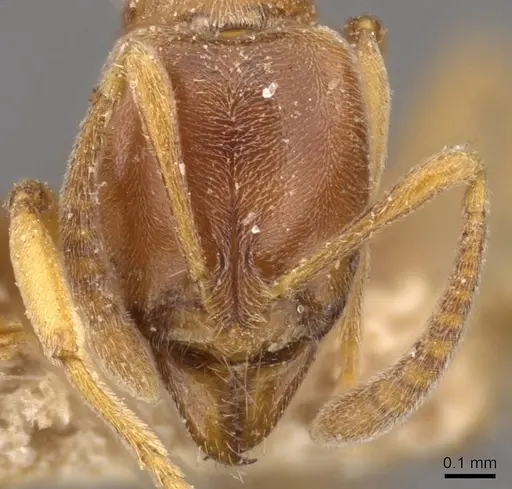
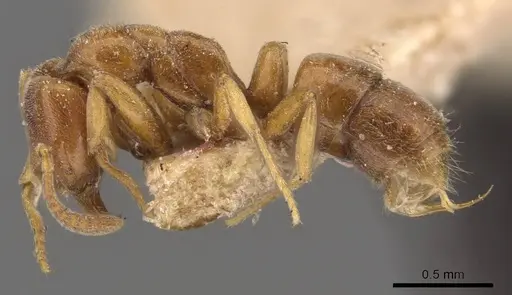
Hypoponera aitkenii is a small ponerine ant species native to South India and Sri Lanka. Workers are tiny ants, approximately 2-3mm in total length, varying in color from dull yellow to dark brown. Queens are slightly larger than workers. This species is widespread and dominant in its range, found across multiple Indian states including Karnataka, Kerala, Tamil Nadu, and Goa at elevations ranging from 36m to 1650m. They are allopatric to the related Hypoponera wroughtonii, which is found further north. The species was elevated from subspecies status to full species in 2015 and can be distinguished from similar species by the absence of cross-ribs at the base of the second gastral tergite .
Quick Summary
- Difficulty: Medium
- Origin & Habitat: South India and Sri Lanka, found across multiple Indian states (Goa, Gujarat, Karnataka, Kerala, Maharashtra, Tamil Nadu, West Bengal) at elevations from 36m to 1650m [1][2]
- Colony Type: Colony structure is unconfirmed. Based on typical Hypoponera patterns, likely single-queen (monogyne) colonies.
- Size & Growth:
- Queen: ~2.5-3.5mm inferred from Hypoponera genus patterns
- Worker: ~2-3mm inferred from Hypoponera genus patterns
- Colony: Unknown, likely small based on genus patterns
- Growth: Unknown, development data unavailable for this species
- Development: Unknown, development time unconfirmed for this species (Ponerine ants typically develop slower than myrmicines, but specific development data is unavailable for this species.)
- Antkeeping:
- Temperature: Keep at room temperature (20-26°C). As a South Indian species from tropical to subtropical elevations, they prefer warm conditions. A heating cable on one side of the nest creates a suitable gradient.
- Humidity: Moderate humidity. Keep the nest substrate consistently moist but not waterlogged. These ants prefer conditions similar to forest floor microhabitats.
- Diapause: Likely unnecessary, being a tropical/subtropical species from South India, they probably do not require a true hibernation. However, a slight cooling period during winter months may be beneficial.
- Nesting: In nature they likely nest in soil or under stones in forested areas. In captivity, a test tube setup works well for founding colonies. For established colonies, a Y-tong or plaster nest with moisture provision is suitable.
- Behavior: Hypoponera ants are generally docile and non-aggressive. They are cryptic foragers, often hunting small prey rather than scavenging openly. Workers are small but active. They have a functional stinger but due to their tiny size, it rarely penetrates human skin. Escape prevention is important given their small size, use fine mesh and tight-fitting barriers.
- Common Issues: small size makes escape prevention critical, use fine mesh barriers, limited available care information requires careful observation and adjustment, humidity control is important, too dry causes desiccation, too wet promotes mold, limited natural history data means many care aspects are estimated rather than confirmed
Housing and Nest Setup
For founding colonies, a standard test tube setup works well. Fill the tube with water and plug the end with cotton, providing a humidity chamber. Cover the tube with a dark cloth for the first few weeks until the queen settles. For established colonies, a Y-tong or plaster nest with a water reservoir works well. The nest should have chambers scaled to their tiny size, narrow passages rather than large open spaces. Because they are small, ensure all connections and barriers are secure. A small outworld for foraging allows you to observe their hunting behavior. [1]
Feeding and Diet
Like other Ponerinae ants, Hypoponera aitkenii is likely predatory, feeding on small invertebrates. In captivity, offer small live prey such as fruit flies, pinhead crickets, and small mealworms. They may also accept protein gels or crushed insects. Sugar sources like honey water or sugar water may be accepted but are not a primary food source. Feed small amounts of protein every few days, removing any uneaten prey within 24 hours to prevent mold.
Temperature and Seasonal Care
As a South Indian species found from near sea level to 1650m elevation, they prefer warm conditions. Maintain temperatures between 20-26°C for optimal colony health and brood development. A heating cable placed on one side of the nest creates a temperature gradient allowing ants to self-regulate. Unlike temperate species, they likely do not require a true hibernation period. However, a slight reduction in temperature during winter months may simulate natural seasonal variations and promote colony health. Avoid temperatures below 18°C for extended periods. [1]
Behavior and Colony Dynamics
Hypoponera ants are known for their cryptic lifestyle and relatively docile temperament. Workers likely forage individually or in small groups, hunting small prey rather than forming large foraging trails. The genus is characterized by small eyes with few ommatidia, suggesting they rely more on chemical cues than visual hunting. Queens are slightly larger than workers and have more slender antennae. Colonies probably grow slowly at first, with the queen raising the first brood alone before workers take over foraging duties. Workers have a functional stinger but due to their tiny size, stinging behavior is rare and rarely effective against humans. [1]
Handling and Observation
These tiny ants require careful handling and observation. When servicing the colony, work in a clean area free of other insects that might escape. Use a red acetate or dark cloth over the nest to reduce stress while still allowing observation. Because they are small and can escape through tiny gaps, always check that any connections between the nest and outworld are secure. Regular observation helps you understand individual colony patterns and catch problems early. Their small size means you may need a magnifying glass to observe fine details like egg-laying or brood development.
Frequently Asked Questions
How long does it take for Hypoponera aitkenii to produce first workers?
The exact timeline is unknown. Ponerine ants typically develop slower than myrmicine ants, but specific development data is unavailable for this species.
Can I keep multiple queens together?
The colony structure of this species is unconfirmed. Based on typical Hypoponera patterns, they likely form single-queen colonies. Combining unrelated queens is not recommended without evidence they can coexist peacefully.
What do Hypoponera aitkenii eat?
They are predatory ants that likely hunt small invertebrates. In captivity, offer small live prey like fruit flies, pinhead crickets, and small mealworms. They may accept protein gels or crushed insects. Sugar sources may be accepted but are not a primary food source.
Are Hypoponera aitkenii good for beginners?
They are rated as medium difficulty. While generally docile, their small size and specific temperature/humidity requirements make them better suited for keepers with some experience. Limited available care information also requires careful observation.
What temperature do they need?
Keep them at room temperature (20-26°C). As a South Indian species from tropical to subtropical elevations, they prefer warm conditions. A heating cable on one side of the nest creates a suitable gradient.
Do they need hibernation?
Likely no true hibernation required. Being a tropical/subtropical species from South India, they probably do not need a cold period. A slight temperature reduction during winter may be beneficial but is not necessary.
How big do colonies get?
Colony size is unknown for this specific species. Based on typical Hypoponera patterns, colonies likely remain small. Ponerine colonies typically grow more slowly than myrmicines.
When should I move them to a formicarium?
Keep them in a test tube setup for the founding stage. Move to a formicarium or larger nest once the colony reaches 20-30 workers and the test tube setup becomes crowded. Ensure the new setup maintains appropriate humidity.
Why are my ants dying?
Common causes include: temperature too cold (below 18°C), humidity too dry or too wet, mold from overfeeding, or escape through small gaps. Review each parameter and adjust gradually. Their small size also makes them vulnerable to sudden environmental changes.
Report an Issue
The current care sheet is based fully on literature. See inconsistencies, or something that's incorrect? Please , it will be resolved after review from an admin. Contributing to the blogs tab also helps providing information, to make us be able to further improve the caresheets. Thank you for your support!
References

Dieses Caresheet ist lizenziert unter CC BY-SA 4.0 .
Community-Blogs
CASENT0907305
Auf AntWeb ansehen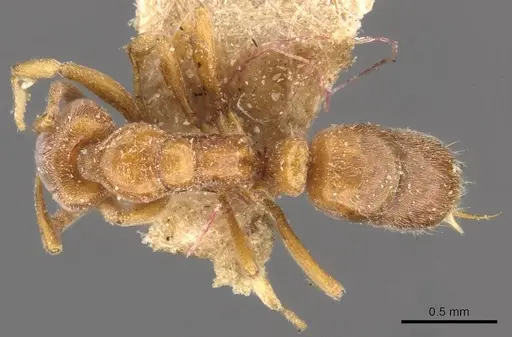
Literatur
Verbreitungskarte wird geladen...Produkte werden geladen...