
Fulakora minima
- Wiss. Name
- Fulakora minima
- Tribus
- Amblyoponini
- Unterfamilie
- Amblyoponinae
- Autor
- Kusnezov, 1955
- Verbreitung
- In 0 Ländern gefunden
Einleitung
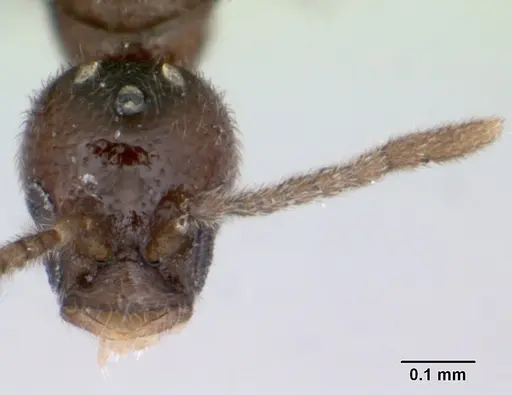
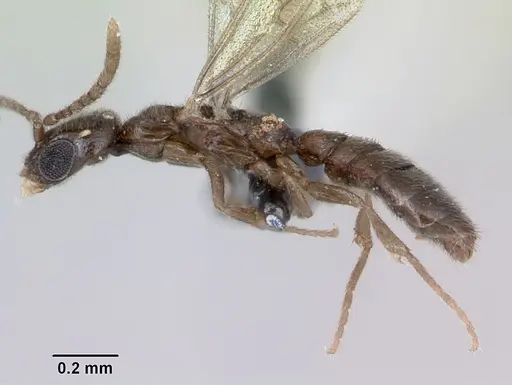
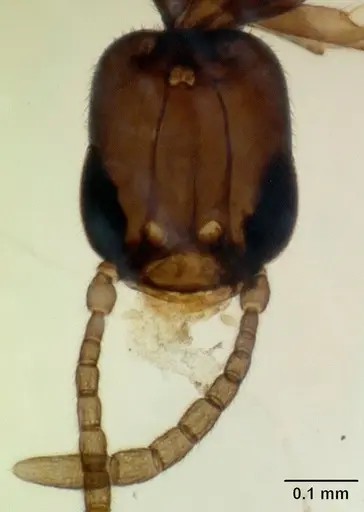
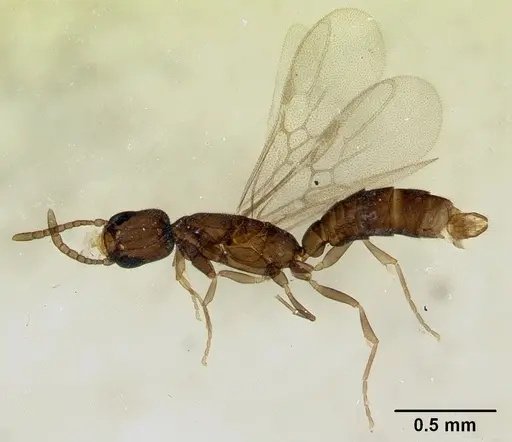
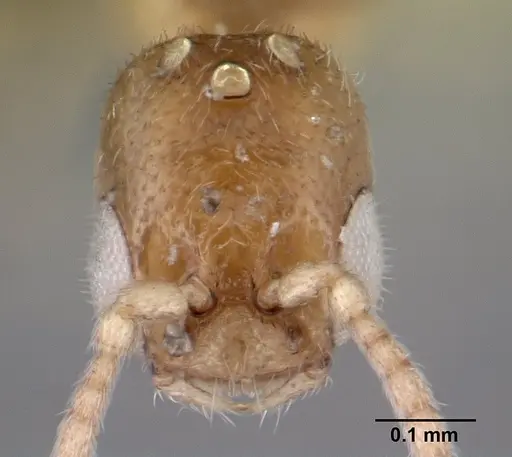
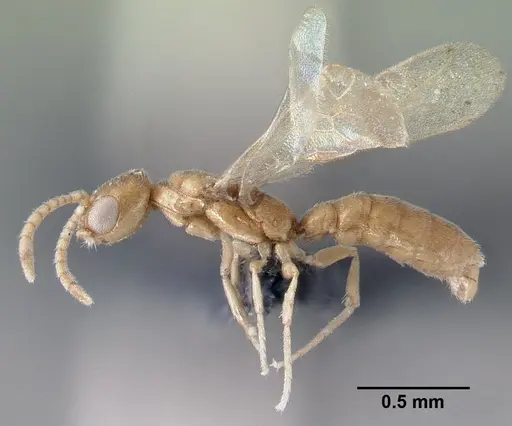
Fulakora minima is one of the most mysterious ants in the world - workers have never been collected, and the species is known only from a handful of tiny males collected in Tucumán, Argentina in the 1950s . Males measure under 2mm in total length, with an oblong head featuring 10 antennal segments and lacking teeth on the anterior clypeal margin . The species was originally described as Paraprionopelta minima in 1955 and later transferred to Fulakora in 2016 . Some researchers believe these males may actually represent the previously unknown male caste of Stigmatomma degenerata, another enigmatic amblyoponine species . This taxonomic uncertainty, combined with the complete absence of workers from any collection, makes this species essentially impossible to keep in captivity.
Quick Summary
- Difficulty: Not Keepable, Workers Never Described
- Origin & Habitat: Argentina (Tucumán), with unconfirmed records from Costa Rica, Guatemala, and Nicaragua [7]
- Colony Type: Unknown, only males have ever been collected, workers are unknown to science [5][6]
- Size & Growth:
- Queen: Unknown, queen has never been collected or described
- Worker: Unknown, workers have never been collected or described
- Colony: Unknown
- Growth: Unknown
- Development: Unknown, no biological data exists for this species (Workers have never been collected, making any care requirements completely unknown)
- Antkeeping:
- Behavior: Unknown, the behavior of workers, colonies, or even the collected males has not been studied [5][6]
- Common Issues: this species cannot be kept because workers have never been collected or described, the species may not even be valid, it may represent males of Stigmatomma degenerata, no information exists on colony structure, founding behavior, or basic biology, there are no captive colonies anywhere in the world because the species is only known from a handful of male specimens
Why This Species Cannot Be Kept
Fulakora minima represents a unique challenge in ant keeping: it is known only from males, and workers have never been collected or described [1][2]. The original specimens were collected in Tucumán, Argentina in the 1950s, and no additional specimens have been found since [1]. This means there are no worker ants to establish a colony, no known queen, and absolutely no biological or ecological information about the species. Even the most experienced antkeepers cannot maintain a species that has never been found in its worker form. Furthermore, there is significant taxonomic uncertainty, some researchers believe these males may actually be the previously unknown males of Stigmatomma degenerata [1][5][6]. Until workers are collected and described, this species remains a scientific curiosity rather than a candidate for captive keeping.
Taxonomic History and Confusion
The story of Fulakora minima is complicated by taxonomic revisions and uncertainty. Originally described as Fulakora minima by Kusnezov in 1955 based on eight male specimens collected in Argentina [1][2], the species was provisionally placed in Amblyopone by Brown in 1973,then transferred to the genus Fulakora in 2016 by Ward and Fisher when they revised the subfamily Amblyoponinae [3][4]. However, the species has always been considered questionable, Kusnezov himself suggested in 1963 that these males might actually represent the male caste of Fulakora degenerata (now Stigmatomma degenerata) [1][5][6]. This hypothesis has never been confirmed or refuted because no workers of either species have been found that could provide definitive comparison. The genus Fulakora (sometimes called 'dracula ants' due to their unique habit of feeding on the hemolymph of their brood) contains several species where the worker caste remains unknown, making this less unusual than it might first appear.
What We Know About Fulakora as a Genus
While F. minima itself cannot be kept, the genus Fulakora belongs to the Amblyoponinae subfamily, known commonly as 'dracula ants' [3]. These ants have a unique feeding behavior, they puncture their own brood and drink the hemolymph (blood-like fluid), a behavior called 'non-destructive cannibalism' that provides additional nutrition without killing the larvae [3]. Other species in this genus that are better known are typically predatory, hunting small invertebrates like springtails and other micro-arthropods in forest floor habitats. They tend to prefer humid, shaded environments and often nest in rotting wood or under stones [7]. However, these are general patterns for the genus, F. minima may or may not share these characteristics since it has never been studied in any form.
Related Species That Can Be Kept
If you are interested in keeping amblyoponine ants (dracula ants), several related species are available in the antkeeping hobby. Stigmatomma species are sometimes available and represent the likely group to which F. minima may belong [1][5]. These ants are predatory, hunting small prey like springtails and micro-arthropods. They typically prefer humid conditions and may require live food. Another option is Amblyopone species, which have similar habits. When selecting a species, look for those where workers have actually been described and colony founding has been observed. Avoid species where workers are unknown or poorly described, as these will be impossible to maintain in captivity. Always verify that the species you are interested in has a documented worker caste before attempting to keep it.
Frequently Asked Questions
Can I keep Fulakora minima in captivity?
No. This species cannot be kept because workers have never been collected or described. The species is known only from a handful of male specimens collected in Argentina in the 1950s. Without workers, there is no way to establish a colony [1][2][5].
Why have workers never been found for Fulakora minima?
This is unknown. The males were collected in 1953 in Tucumán, Argentina, and no additional specimens of any caste have been found since [1]. It may be that the species is very rare, has a limited range, or that the workers occupy microhabitats that are difficult to sample. Some researchers believe the males may actually belong to a different species (Stigmatomma degenerata), which would explain why no matching workers have been found [1][5][6].
Is Fulakora minima the same as Stigmatomma degenerata?
Possibly. Kusnezov (1963) suggested that the males described as Fulakora minima (now Fulakora minima) might actually be the males of Stigmatomma degenerata [1][5][6]. This hypothesis has never been confirmed because workers of neither species have been collected, making comparison impossible. The two may turn out to be the same species once workers are found, or they may remain separate mysteries.
What do Fulakora ants eat?
For Fulakora minima specifically, this is completely unknown. However, other Fulakora species (dracula ants) are predatory and feed on small invertebrates. They are known for their unique behavior of feeding on the hemolymph of their own brood without killing them [3]. Related Stigmatomma species are also predatory, hunting springtails and other micro-arthropods. Do not assume F. minima has the same diet, we simply do not know.
Where does Fulakora minima live?
The confirmed specimens come from Tucumán, Argentina [1][2]. There are unconfirmed records from Costa Rica, Guatemala, and Nicaragua [7], but these have not been verified and may represent different species or misidentifications. The exact habitat preferences are unknown.
What is the size of Fulakora minima?
The males are tiny, under 2mm in total length [1][2]. This is all we know. The size of workers, if they ever existed, is completely unknown. Queens have never been collected or described.
Are there similar ants that can be kept instead?
Yes. If you are interested in dracula ants (Amblyoponinae), look for Stigmatomma species or Amblyopone species that have well-documented worker castes. These ants are predatory and require humid conditions with live prey. Always verify that the species you want to keep has described workers before purchasing. Avoid any species where workers are 'unknown' or 'undescribed', these cannot be maintained in captivity.
Do Fulakora minima queens have wings?
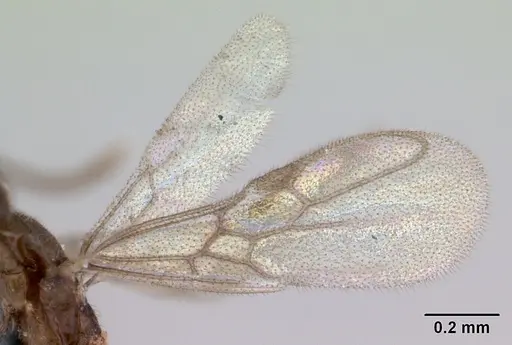
Unknown. Only males have ever been collected, so we have no information about queens or their morphology. The males collected were presumably winged (as most male ants are), but this was not specifically described in the original description [1].
Report an Issue
The current care sheet is based fully on literature. See inconsistencies, or something that's incorrect? Please , it will be resolved after review from an admin. Contributing to the blogs tab also helps providing information, to make us be able to further improve the caresheets. Thank you for your support!
References

Dieses Caresheet ist lizenziert unter CC BY-SA 4.0 .
Community-Blogs
CASENT0172795
Auf AntWeb ansehen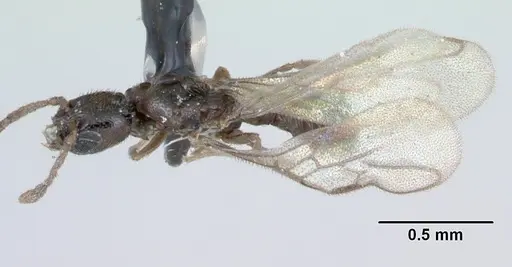
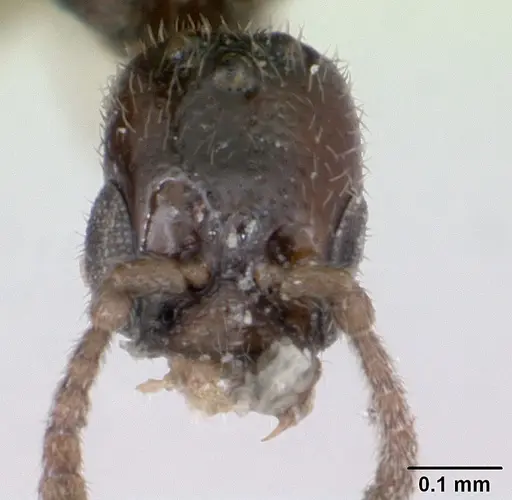
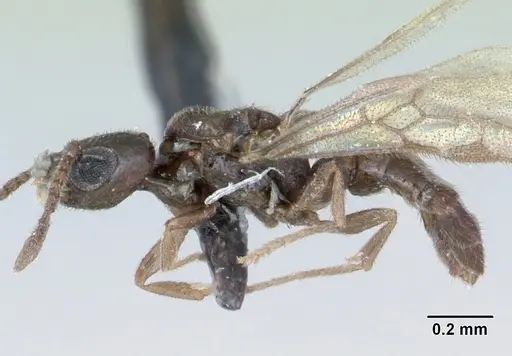
CASENT0172796
Auf AntWeb ansehen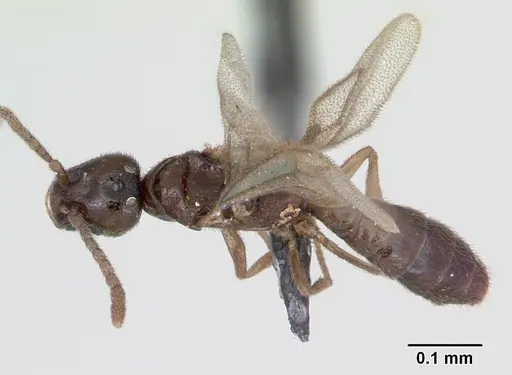
CASENT0172797
Auf AntWeb ansehen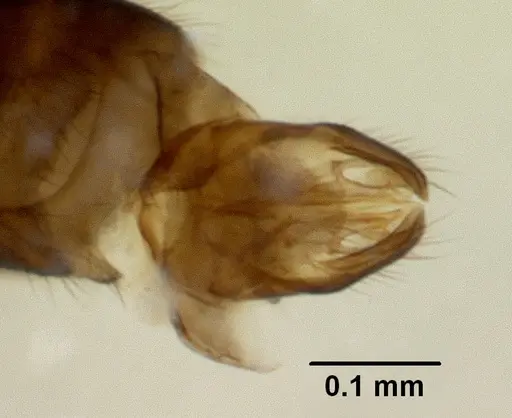
CASENT0173342
Auf AntWeb ansehen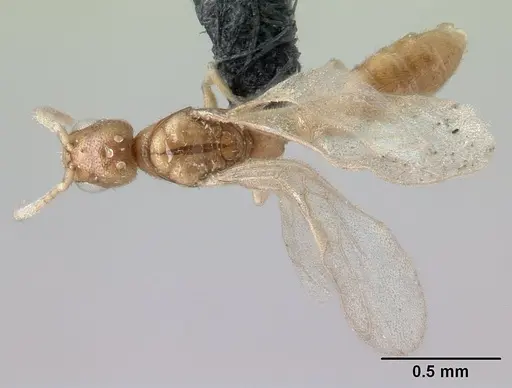
Literatur
Verbreitungskarte wird geladen...Produkte werden geladen...