
Echinopla deceptor
- Wiss. Name
- Echinopla deceptor
- Tribus
- Camponotini
- Unterfamilie
- Formicinae
- Autor
- Smith, 1863
- Verbreitung
- In 0 Ländern gefunden
Einleitung
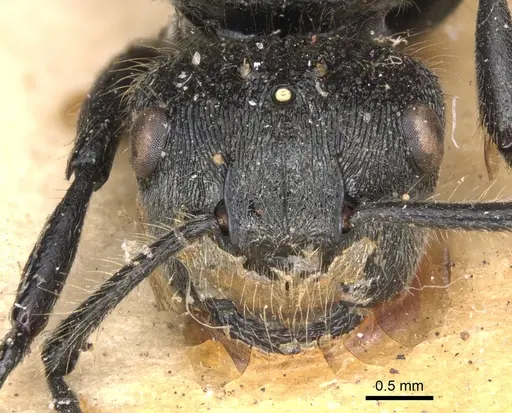
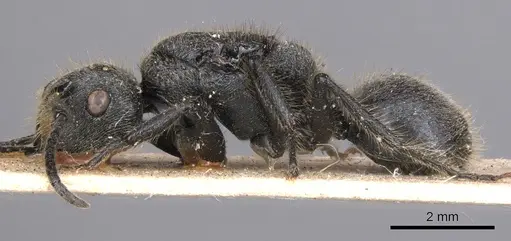
Echinopla deceptor is a black ant species in the Formicinae subfamily (tribe Camponotini), originally described by Frederick Smith in 1863 from Buru Island, Indonesia . Workers and queens feature distinctive longitudinal striations on the head and propodeum, while the gaster remains smooth . The petiole has short spines on each side, with the distance between spine tips narrower than the propodeum width . This species belongs to the striata-group within Echinopla, a genus closely related to Polyrhachis. The genus lacks a functional sting and instead uses formic acid spray as its primary defense mechanism, typical of Formicinae ants. Only the queen has been scientifically described - worker morphology remains undocumented.
Quick Summary
- Difficulty: Unknown
- Origin & Habitat: Echinopla deceptor is found in the Indomalaya region, specifically on Buru Island in the Moluccas, Indonesia [1][2]. The exact habitat preferences within this tropical island have not been documented in scientific literature.
- Colony Type: Colony structure is unconfirmed. No studies exist on queen number or colony organization for this species.
- Size & Growth:
- Queen: Size data unavailable, only the original dealate queen from 1863 has been described, but measurements were not recorded [1]
- Worker: Size data unavailable, workers have not been described in available literature
- Colony: Unknown, no colony size data exists for this species
- Growth: Unknown
- Development: Unknown, no development data exists for this species (No direct measurements or observations of brood development have been documented.)
- Antkeeping:
- Temperature: Unknown, no thermal studies exist. Based on its Indonesian distribution (tropical archipelago), it likely requires warm conditions in captivity. Start around 24-28°C and observe colony activity.
- Humidity: Unknown, no humidity data exists. As an Indonesian species from the Moluccan islands, it likely prefers moderate to high humidity. Keep the nest substrate consistently moist but not waterlogged.
- Diapause: Unknown, no seasonal studies exist. Indonesian tropical species typically do not require hibernation, but this has not been confirmed for this species.
- Nesting: Nesting preferences are unconfirmed. Related Echinopla species often nest in rotting wood or under bark in forested areas. A naturalistic setup with rotting wood pieces or a Y-tong/plaster nest with some moisture would be a reasonable starting point.
- Behavior: Behavior is unstudied. As a Formicine ant, they lack a functional sting and instead defend by biting and spraying formic acid from their acidopore. Their small size means escape prevention should be taken seriously. The striated body texture and spined petiole suggest they may have defensive capabilities, though this is not well documented.
- Common Issues: lack of documented care information makes successful captivity uncertain, escape prevention is important given unknown but likely small worker size, no confirmed diet, feeding may require experimentation, humidity and temperature requirements are unconfirmed and may cause colony failure if guessed incorrectly, this species is extremely rare in the antkeeping hobby with no established husbandry protocols
Species Identification and Taxonomy
Echinopla deceptor was originally described by Frederick Smith in 1863 from a dealate queen collected on Buru Island, Indonesia [1]. The species belongs to the striata-group within the genus Echinopla, characterized by longitudinal striations on the head and propodeum, a smooth gaster, and short spines on the petiole [2]. The genus Echinopla is part of the Formicinae subfamily (tribe Camponotini), making it related to genera like Camponotus and Polyrhachis. Key identifying features include the regularly longitudinally striate frons and propodeum, roundly angled humeral corners of the pronotum in dorsal view, and a petiole with short spines spaced closer together than the propodeum width [2]. The body is uniformly black in coloration.
Distribution and Habitat
Echinopla deceptor is known only from Buru Island in the Moluccas, Indonesia [1][2]. Buru is a tropical island in the eastern Indonesian archipelago. The exact microhabitat preferences of this species have not been documented in scientific literature. Based on related Echinopla species and typical Formicinae ecology, they likely inhabit forested areas where they nest in rotting wood, under bark, or in similar sheltered microhabitats. The island of Buru features tropical rainforest environments in its interior regions, which would provide suitable habitat for forest-dwelling ant species. However, no specific ecological studies or field observations of this species exist.
Defense Mechanism
Like all Formicinae ants, Echinopla deceptor lacks a functional sting. The primary defense mechanism is spraying concentrated formic acid from the acidopore (a specialized gland opening) while biting. This is typical of the Camponotini tribe. When threatened, workers will bite the target and simultaneously release formic acid into the wound, causing irritation. This defense strategy is effective against small predators and other ants.
Current State of Knowledge
Echinopla deceptor is one of the least studied ant species in the antkeeping hobby. It was originally described from a single queen specimen in 1863, and subsequent scientific literature has added little to our understanding of its biology [1]. The species is known primarily from taxonomic descriptions and regional distribution records. No information exists about worker morphology, colony size, queen number, founding behavior, diet, nuptial flight timing, or any aspect of its captive care. This makes creating a reliable caresheet impossible, any recommendations would be speculative guesses based on genus-level patterns rather than species-specific evidence. Antkeepers interested in this species should be prepared for experimental husbandry and should document their observations carefully to contribute to our knowledge.
Related Species and Genus Context
The genus Echinopla contains approximately 20-30 described species, primarily distributed throughout Southeast Asia and the Indo-Australian region [2]. These ants are closely related to Polyrhachis, another spiny ant genus, and share similar morphological features including spined petioles. Echinopla species are typically smaller than Polyrhachis and have distinctive striated sculpture patterns. The striata-group specifically is characterized by the longitudinal striations on the head and propodeum [2]. While specific biology is unstudied for this species, related Echinopla species are known to be generalist foragers that likely feed on nectar, honeydew, and small insects. They typically nest in rotting wood or in soil under objects in forested habitats. This genus-level information provides the best available guidance for attempting to keep this species, though significant uncertainty remains.
Frequently Asked Questions
How do I care for Echinopla deceptor ants?
Unfortunately, there is no established care guide for Echinopla deceptor. This species has never been documented in the antkeeping hobby, and scientific literature provides no information about its biology, diet, or housing requirements. Any advice would be purely speculative. If you obtain this species, you would essentially be pioneering its husbandry through experimentation.
What do Echinopla deceptor ants eat?
Diet is unconfirmed for this species. Based on genus-level patterns for related Formicinae ants, they likely accept sugar sources (honey water, sugar water) and protein (small insects like fruit flies, pinhead crickets, mealworms). However, no direct observations of feeding behavior exist for this species specifically.
What size do Echinopla deceptor workers reach?
Worker size is unknown. The original description only covered the queen, and no worker specimens have been described in available literature. Size data is unavailable for this species.
Is Echinopla deceptor a good species for beginners?
No, this species cannot be recommended for any keeper because no information exists about its care requirements. Keeping an unstudied species like this would be experimental at best and likely to fail. Beginners should choose species with established caresheets and known requirements.
How big do Echinopla deceptor colonies get?
Colony size is unknown. No colony size data exists for this species in scientific literature.
What temperature should I keep Echinopla deceptor at?
Temperature requirements are unconfirmed. Based on its Indonesian distribution (tropical climate), warm conditions around 24-28°C are likely appropriate. However, this is an inference, not a confirmed requirement. Monitor colony activity and adjust as needed.
Does Echinopla deceptor need hibernation?
Diapause requirements are unknown. As a tropical species from Indonesia, it likely does not require hibernation, but this has not been confirmed through research.
Can I keep multiple Echinopla deceptor queens together?
Colony structure is unconfirmed. No information exists about whether this species is monogyne (single queen), polygyne (multiple queens), or exhibits any multi-queen behavior. Combining unrelated queens is not recommended without any evidence of colony structure.
Where can I get Echinopla deceptor ants?
This species is extremely rare in the antkeeping hobby. It has never been documented as being available from suppliers or breeders. The original type specimen was collected in 1863, and there are no recent records of this species being found or kept. Obtaining this species would likely require field collection in Indonesia, which presents significant legal and practical challenges.
Report an Issue
The current care sheet is based fully on literature. See inconsistencies, or something that's incorrect? Please , it will be resolved after review from an admin. Contributing to the blogs tab also helps providing information, to make us be able to further improve the caresheets. Thank you for your support!
References

Dieses Caresheet ist lizenziert unter CC BY-SA 4.0 .
Community-Blogs
CASENT0901884
Auf AntWeb ansehen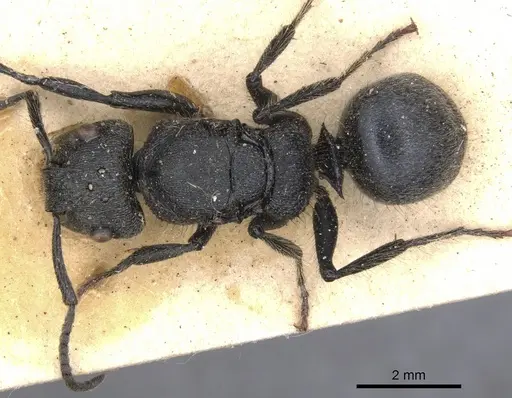
Literatur
Verbreitungskarte wird geladen...Produkte werden geladen...