
Crematogaster saussurei
- Wiss. Name
- Crematogaster saussurei
- Tribus
- Crematogastrini
- Unterfamilie
- Myrmicinae
- Autor
- Forel, 1899
- Verbreitung
- In 0 Ländern gefunden
Einleitung
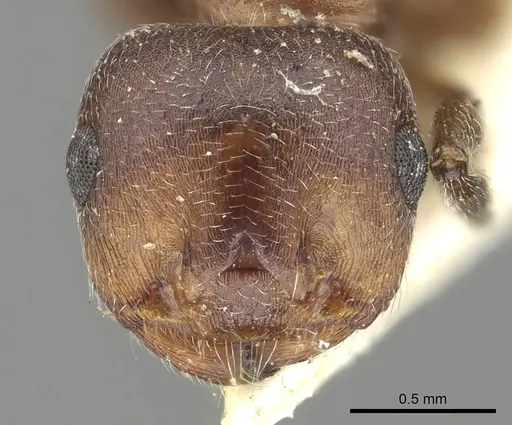
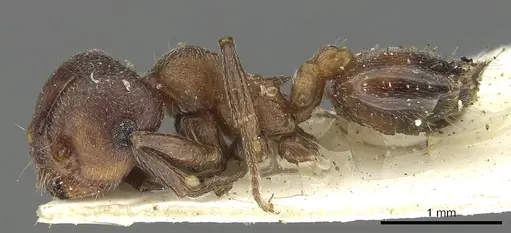
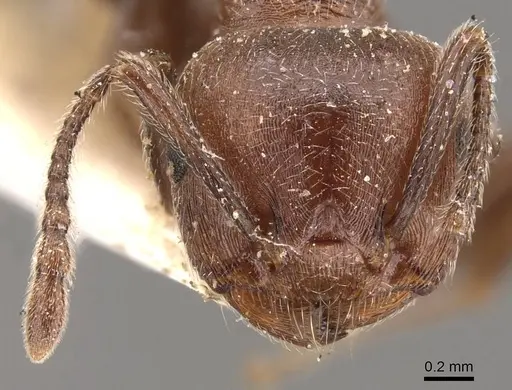
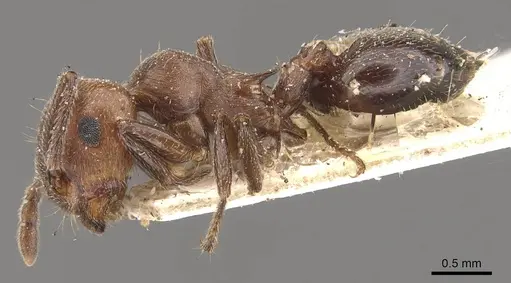
Crematogaster saussurei is a small ant species native to Mexico, found from southern Chihuahua to Veracruz . Workers have the characteristic heart-shaped abdomen that they raise over their head like an acrobat when threatened, which gives the genus its common name. The species was first described by Forel in 1899, with a detailed redescription by Morgan and Mackay in 2017 . Key identifying features include punctate-lineolate sculpture on the head and mesosoma, with the base of the propodeal spines not connected at the widest portion of the propodeum . As a Neotropical species from Mexico, they prefer warmer conditions.
Quick Summary
- Difficulty: Medium
- Origin & Habitat: Native to Mexico, found from southern Chihuahua to Veracruz [1]. This is a Neotropical species from warm regions of central and southern Mexico.
- Colony Type: Colony structure is unconfirmed for this species. Further research is needed to determine whether they are monogyne (single queen) or polygynous (multiple queens).
- Size & Growth:
- Queen: Size data unavailable for this species
- Worker: Small ant, approximately 3-4mm inferred from genus typical sizes
- Colony: Likely several hundred to a few thousand workers based on genus patterns
- Growth: Moderate, estimated from related Crematogaster species
- Development: Estimated 6-8 weeks at optimal temperature based on genus patterns (Development time is inferred from related Crematogaster species, actual timeline for this species is unconfirmed)
- Antkeeping:
- Temperature: Keep at 22-26°C. As a Mexican Neotropical species, they prefer warm conditions. A heating cable on one side of the nest creates a temperature gradient they can regulate themselves.
- Humidity: Moderate humidity around 50-70%. These ants are from relatively drier regions of Mexico, so avoid overly damp conditions. Provide good ventilation to prevent mold buildup.
- Diapause: No true hibernation required. As a Mexican Neotropical species, they are not cold-hardy. You may reduce feeding and slightly lower temperatures (18-20°C) during winter months, but do not subject them to cold hibernation temperatures.
- Nesting: In nature, Crematogaster nest in rotting wood, under bark, or in hollow stems. In captivity, a Y-tong (AAC) nest, plaster nest, or naturalistic setup with rotting wood works well. They prefer tight, enclosed spaces scaled to their small size.
- Behavior: Crematogaster saussurei has the typical genus defense behavior, when threatened, workers raise their abdomen over their head like an acrobat. They also have a smear defense mechanism, using their modified stinger to wipe venom onto enemies rather than piercing flesh. They are generally not aggressive toward keepers but will defend their nest vigorously. They are active foragers and will search for sugar sources and small prey. Their small size means escape prevention is important, use fine mesh barriers and tight-fitting lids. They are fast-moving and can be skittish.
- Common Issues: escape prevention is critical due to their small size, they can squeeze through tiny gaps, wild-caught colonies may harbor parasites that can decimate the colony in captivity, overheating is a risk, keep nest temperatures stable and avoid direct heat sources, dry conditions can cause colony decline, monitor humidity levels regularly, slow initial colony growth can lead to overfeeding and mold problems in the founding chamber
Nest Preferences and Housing
Crematogaster saussurei nests in rotting wood, under bark, and in hollow stems in the wild. In captivity, they do well in Y-tong (AAC) nests, plaster nests, or naturalistic setups with wood pieces. They prefer tight chambers and narrow passages scaled to their small worker size. Avoid tall, open spaces that make them feel exposed. A test tube setup can work for founding colonies, but be prepared to move them to a more permanent nest once the colony reaches 20-30 workers. Provide some substrate material they can tunnel through if using a naturalistic setup. Good ventilation is important to prevent mold, but avoid excessive airflow that dries out the nest. [1]
Feeding and Diet
Like most Crematogaster species, these ants are omnivorous with a preference for sugar sources and protein. Offer sugar water, honey, or diluted maple syrup as a constant carbohydrate source. For protein, provide small live prey like fruit flies, pinhead crickets, or mealworms. They will also accept dead insects and can be fed commercial ant foods. Feed protein prey 2-3 times per week, and ensure sugar water is always available. Remove uneaten prey after 24-48 hours to prevent mold. Young colonies may need smaller prey items, consider breaking larger insects into pieces or offering flightless fruit flies.
Temperature and Seasonal Care
As a Mexican Neotropical species, Crematogaster saussurei prefers warm conditions. Keep the nest area at 22-26°C, with a slight gradient allowing workers to choose their preferred temperature. A heating cable placed on top of the nest (never underneath where it can dry out the substrate) can help maintain stable temperatures. During winter months, you can reduce temperatures slightly to around 18-20°C and reduce feeding frequency, but avoid true cold hibernation. These ants are not cold-hardy and can be damaged by temperatures below 15°C. Monitor colony behavior, if workers become sluggish and cluster together, they may need slightly warmer conditions. [1]
Behavior and Defense
The genus name Crematogaster literally means 'wax belly,' referring to their distinctive behavior of raising their abdomen over their head when threatened, like an acrobat balancing on their hands. This is their primary defense mechanism. They also have a smear defense: their modified, flattened stinger is used to wipe or smear venom onto enemies rather than piercing flesh. Workers are fast-moving and can be skittish, quickly retreating into the nest when threatened. They are not particularly aggressive toward humans and rarely sting. Their small size makes them adept at finding tiny gaps in enclosures, so escape prevention is essential.
Colony Growth and Development
Crematogaster saussurei colonies start slowly during the founding period. The queen seals herself in a chamber and survives on stored fat reserves while raising the first brood. This typically takes 4-6 weeks before the first nanitic (first) workers emerge. After that, colony growth accelerates but remains moderate compared to some faster-growing genera. A healthy colony may reach several hundred workers within a year under good conditions. The queen can live for several years, and colonies can persist for a long time with proper care. Be patient during the founding phase, disturbing the queen during this time can be fatal to the colony.
Frequently Asked Questions
How long does it take for Crematogaster saussurei to produce first workers?
From egg to first worker typically takes 6-8 weeks at optimal temperature (22-26°C). This is based on typical Crematogaster development patterns, as specific development data for this species is unconfirmed. The queen will remain sealed in her chamber during this time, surviving on stored fat reserves.
Can I keep Crematogaster saussurei in a test tube?
Yes, test tubes work well for founding colonies. Use a standard test tube setup with a water reservoir at one end, stopped with cotton. Keep it dark and undisturbed until the first workers emerge. Once the colony reaches 20-30 workers, consider moving them to a more spacious Y-tong or plaster nest.
Do Crematogaster saussurei ants sting?
Crematogaster ants have a stinger but rarely use it against humans. Their primary defense is raising their abdomen over their head (the 'acrobat' behavior). They also use a smear defense, wiping venom onto enemies with their modified stinger. They are not considered dangerous to keepers.
What do Crematogaster saussurei eat?
They are omnivorous. Offer sugar water, honey, or maple syrup constantly as a carbohydrate source. For protein, feed small insects like fruit flies, pinhead crickets, or mealworms 2-3 times per week. Remove uneaten food promptly to prevent mold.
Are Crematogaster saussurei good for beginners?
They are rated as medium difficulty. They have specific temperature needs (warm conditions) and their small size requires good escape prevention. They are not the easiest species for beginners, but with proper research and attention to their needs, they can be kept successfully.
Do Crematogaster saussurei need hibernation?
No, true hibernation is not required. As a Mexican Neotropical species, they are not cold-hardy. You may reduce feeding and lower temperatures slightly (to around 18-20°C) during winter months, but keep them warm year-round and avoid temperatures below 15°C.
How big do Crematogaster saussurei colonies get?
The maximum colony size is unconfirmed for this specific species, but Crematogaster colonies typically reach several hundred to a few thousand workers. A well-established colony can persist for many years with proper care.
Why are my Crematogaster saussurei dying?
Common causes include: temperatures too cold (below 15°C), dry conditions, mold from overfeeding or poor ventilation, escape through tiny gaps, or parasites from wild-caught colonies. Check your temperature gradient, humidity levels, and ensure escape prevention is adequate for their small size.
When should I move my colony to a formicarium?
Move them when the colony reaches 20-30 workers or when the test tube becomes cramped. A Y-tong (AAC) nest or plaster nest works well for Crematogaster. Make sure the new nest has appropriately sized chambers for their small workers.
Can I keep multiple queens together?
The colony structure of Crematogaster saussurei is unconfirmed. Many Crematogaster species are polygynous (multiple queens), but combining unrelated foundress queens is risky and not well-documented for this species. It is not recommended to attempt pleometrosis (multiple queen founding) without specific knowledge of this species' behavior.
Report an Issue
The current care sheet is based fully on literature. See inconsistencies, or something that's incorrect? Please , it will be resolved after review from an admin. Contributing to the blogs tab also helps providing information, to make us be able to further improve the caresheets. Thank you for your support!
References

Dieses Caresheet ist lizenziert unter CC BY-SA 4.0 .
Community-Blogs
CASENT0902151
Auf AntWeb ansehen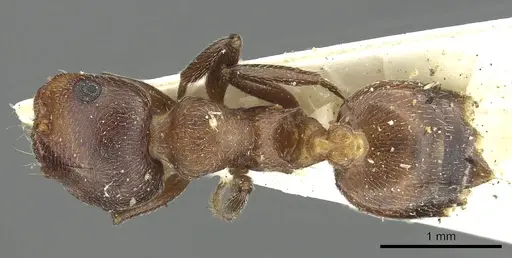
CASENT0908469
Auf AntWeb ansehen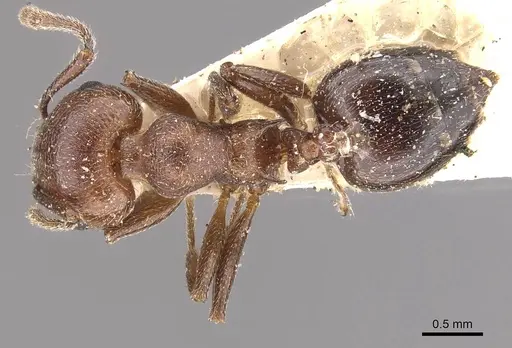
Literatur
Verbreitungskarte wird geladen...Produkte werden geladen...