
Cataglyphis agostii
- Wiss. Name
- Cataglyphis agostii
- Tribus
- Formicini
- Unterfamilie
- Formicinae
- Autor
- Sharaf, 2007
- Verbreitung
- In 0 Ländern gefunden
Einleitung
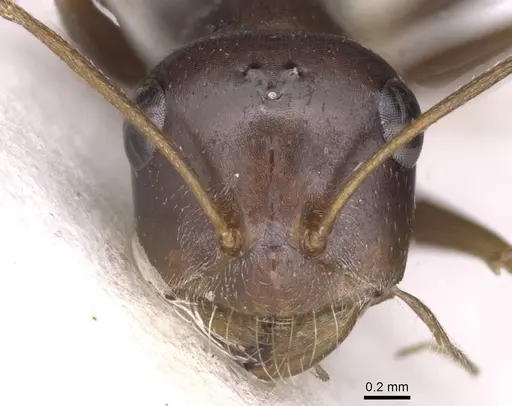
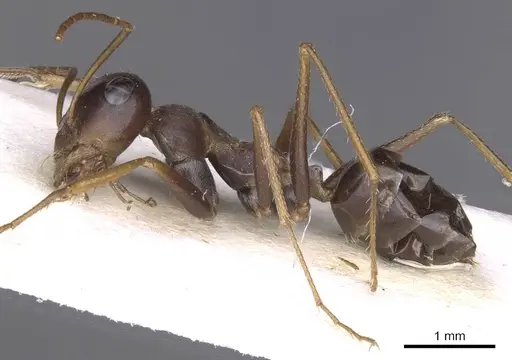
Cataglyphis agostii is a large desert ant species described from South Sinai, Egypt. Workers measure 10.79mm in total length, making them among the larger Cataglyphis species. They have a dark brown to nearly black shining body with contrasting yellowish antennae, mandibles, and tarsi. The body is smooth and almost without sculpture, giving them a glossy appearance. This species belongs to the albicans group and is closely related to the much smaller Cataglyphis minimus from Saudi Arabia. Only a single worker has ever been collected, making this one of the rarest and least-studied Cataglyphis species in existence . What makes C. agostii particularly interesting is its high-elevation habitat - it was found at over 1500 meters on Gebel Sebaal, a semi-isolated mountain in South Sinai. This is unusual for Cataglyphis, which are typically lowland desert ants. The type specimen was collected nesting under a rock, suggesting typical Cataglyphis ground-nesting behavior. Because so little is known about this species, all care recommendations are based on what is understood about the genus as a whole .
Quick Summary
- Difficulty: Unknown, too little data to assess
- Origin & Habitat: South Sinai, Egypt, found at elevations over 1500m on Gebel Sebaal (Gebel Ras Abuhebeig), a semi-isolated mountain site [1]
- Colony Type: Unknown, only a single worker has ever been collected, no queen or colony has been documented
- Size & Growth:
- Queen: Unknown, queen caste has never been described
- Worker: 10.79mm total length (holotype worker) [1]
- Colony: Unknown, no colony data exists
- Growth: Unknown, no development data available
- Development: Unknown, no species-specific data available (No direct observations of colony development exist for this species.)
- Antkeeping:
- Temperature: Based on high-elevation Sinai origin, likely prefers warm conditions but not extreme heat. Start around 24-28°C and observe colony activity [2].
- Humidity: Low, this is a desert species from arid Sinai. Keep nesting area relatively dry with just a small water source. Avoid damp conditions [2].
- Diapause: Likely, most Cataglyphis from temperate regions enter winter dormancy. Given the high-elevation origin, expect a cool period during winter months [2].
- Nesting: Natural nesting under rocks in semi-open terrain. In captivity, a dry formicarium or Y-tong nest works well. Provide a sandy substrate they can burrow into if they choose to excavate. Ensure good ventilation to prevent moisture buildup [2].
- Behavior: Cataglyphis are known for their fast, active foraging behavior, they are daytime heat-tolerant ants that typically run quickly across hot desert surfaces to hunt for prey and collect seeds. Workers are likely aggressive foragers given typical genus behavior. Escape prevention is important, while workers are large (10.79mm), they are still capable climbers. Use standard barrier methods. As with all Formicinae, this species lacks a functional sting and instead sprays formic acid as a chemical defense [2].
- Common Issues: no captive breeding data exists, this species may not be available in the antkeeping hobby and no established protocols exist., unknown queen biology, founding behavior and colony establishment are completely unstudied., high-elevation origin means temperature needs may differ from typical desert Cataglyphis, monitor for signs of overheating or cold stress., no dietary information exists, while genus typically eats insects and seeds, this species specific preferences are unknown., single specimen collection means no data on colony size, growth patterns, or social structure exists.
Discovery and Rarity
Cataglyphis agostii was only described in 2007 and remains one of the rarest ant species in the world. The entire scientific knowledge of this species comes from a single worker collected in May 1997 by M.R. Sharaf from Gebel Sebaal (also spelled Gebel Serbaal) in South Sinai, Egypt. The species was named in honor of Dr. Donat Agosti, a Swiss ant taxonomist and specialist of the genus Cataglyphis. This means that if you were to obtain this species in captivity, you would potentially be working with biology that has never been documented before, a rare opportunity but also a significant responsibility to document your observations carefully [1].
Taxonomic Relationships
C. agostii belongs to the albicans group of Cataglyphis, a group of generally larger, smooth-bodied desert ants. It appears most closely related to Cataglyphis minimus from Saudi Arabia, which is much smaller at only 4.4mm. Both species share the distinctive shining dark body with yellow appendages and smooth, nearly sculpture-free body surface. However, C. agostii is more than twice as large as C. minimus and has a larger scape index (130.4 vs 106.5), meaning its antennae are proportionally longer. The pilosity (hair pattern) also differs, C. agostii has distinctive hairs on the pronotum and propodeum while C. minimus has different hair coverage [1].
Habitat and Distribution
This species is known only from Gebel Sebaal in South Sinai, Egypt, at an elevation exceeding 1500 meters. This is unusual territory for Cataglyphis, which are typically associated with hot, lowland desert environments. The high elevation suggests this species may tolerate cooler conditions than its relatives. The type locality is described as a semi-isolated site, meaning the population may be geographically restricted. The single specimen was found under a rock, indicating typical ground-nesting behavior for the genus. Egypt represents the northern edge of the species potential range within the Palaearctic region [1][2].
Care Recommendations Based on Genus Knowledge
Since no captive care data exists for C. agostii specifically, we must rely on what is known about the genus Cataglyphis as a whole. These are desert-adapted ants known for their heat tolerance and fast, active foraging. For housing, use a dry nest setup with good ventilation, these ants do not tolerate damp conditions. Temperature should be warm (24-28°C) but not extreme. Feed a varied diet of small insects and seeds, which is typical for the genus. However, keep in mind that C. agostii high-elevation origin may mean it prefers slightly cooler conditions than typical lowland desert Cataglyphis [2].
Frequently Asked Questions
Is Cataglyphis agostii available in the antkeeping hobby?
Almost certainly not. This species is known from only a single specimen collected in 1997 and has never been documented in captivity. It would be extremely rare if it exists in the hobby at all.
How big do Cataglyphis agostii workers get?
The only known worker (the holotype) measures 10.79mm in total length, making this a large Cataglyphis species. For comparison, many common Cataglyphis species are 6-9mm.
What does Cataglyphis agostii look like?
Workers have a dark brown to nearly black shining body with a smooth, glossy surface. The antennae, mandibles, and tarsi are clear yellow, a striking contrast against the dark body. The head is longer than broad, and there are distinctive yellow hairs on the propodeum and other body parts.
Where does Cataglyphis agostii live in the wild?
Only known from Gebel Sebaal in South Sinai, Egypt, at elevations over 1500 meters. This is a high-altitude desert environment, quite different from the typical lowland habitats many Cataglyphis species occupy.
What temperature should I keep Cataglyphis agostii at?
No species-specific data exists, but based on its high-elevation Sinai origin, aim for warm conditions in the range of 24-28°C. This is warmer than room temperature but not extreme. Monitor your colony activity to find the ideal range, if they seem sluggish, warm slightly, if they avoid the heated areas, reduce temperature.
How do I care for a species with no available information?
You would essentially be pioneering the captive husbandry of this species. Start with genus-level care (dry, warm conditions typical of Cataglyphis), document everything, and connect with researchers studying Egyptian ants. Be prepared for a steep learning curve, what works for related species may need adjustment for this high-elevation species.
Is Cataglyphis agostii endangered?
We simply do not know. The species is known from a single specimen, so its population status, range, and conservation status have never been assessed. Its limited known distribution on a single mountain in Sinai could make it vulnerable if its habitat is threatened.
What do Cataglyphis agostii eat?
No dietary observations exist for this species. Based on genus typical behavior, they likely eat small insects and seeds like other Cataglyphis species. In captivity, you could offer small crickets, mealworms, and seeds while documenting what they accept.
Can I keep multiple Cataglyphis agostii queens together?
No information exists about colony founding or social structure for this species. Most Cataglyphis are monogyne (single queen), but polygyny has been observed in some species. Without data, combining unrelated queens is not recommended.
Report an Issue
The current care sheet is based fully on literature. See inconsistencies, or something that's incorrect? Please , it will be resolved after review from an admin. Contributing to the blogs tab also helps providing information, to make us be able to further improve the caresheets. Thank you for your support!
References

Dieses Caresheet ist lizenziert unter CC BY-SA 4.0 .
Community-Blogs
CASENT0913666
Auf AntWeb ansehen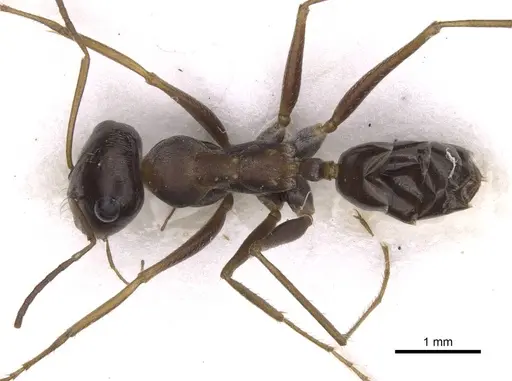
Literatur
Verbreitungskarte wird geladen...Produkte werden geladen...