
Cardiocondyla subspina
- Wiss. Name
- Cardiocondyla subspina
- Tribus
- Crematogastrini
- Unterfamilie
- Myrmicinae
- Autor
- Seifert, 2023
- Verbreitung
- In 0 Ländern gefunden
Einleitung
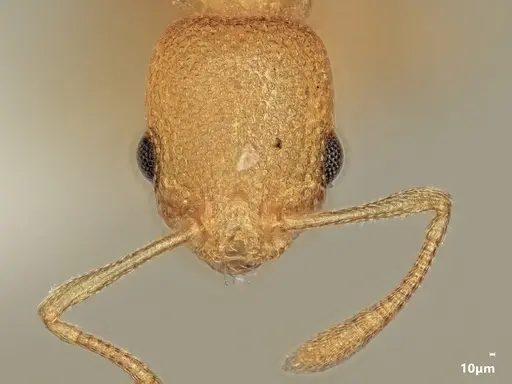
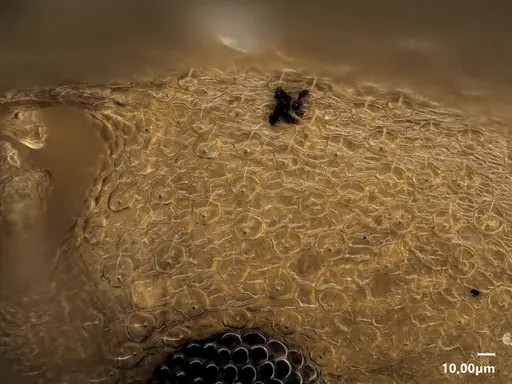
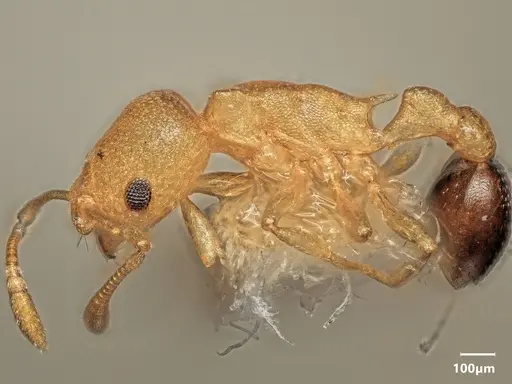
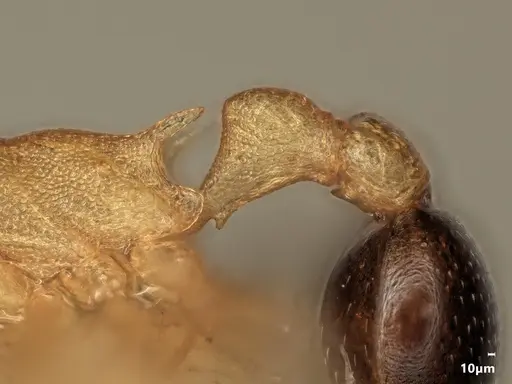
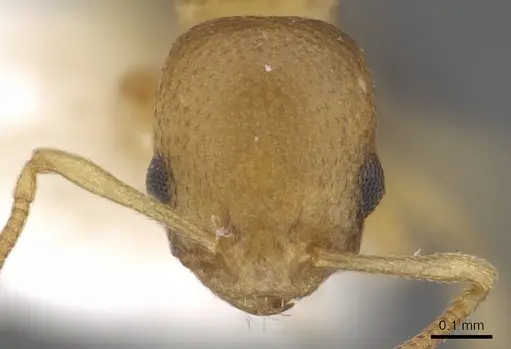
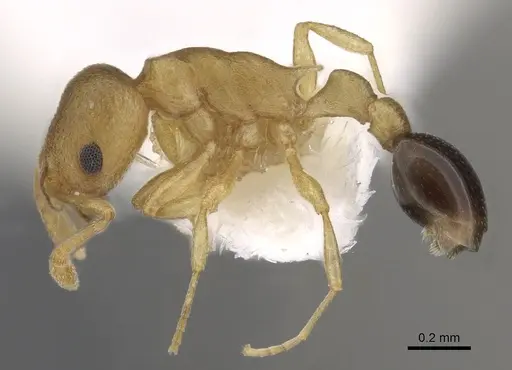
Cardiocondyla subspina is a recently described ant species known only from two worker specimens collected in 1987 in Manusela National Park on the island of Seram, Indonesia . Workers are tiny, measuring approximately 2mm in length (inferred from Cardiocondyla genus patterns) . They have bright yellow bodies contrasting with a dark brown to blackish gaster . The species was formally described in 2022 and belongs to the Cardiocondyla thoracica species group [AntWiki]. Only two workers have ever been documented - a holotype and paratype collected via fogging sampling in tropical lowland forest below 500 meters elevation . This collection method strongly suggests arboreal foraging habits, living and feeding in the forest canopy rather than on the ground. No queen has ever been described, no nest has been found, and no colony has ever been observed .
Quick Summary
- Difficulty: Expert
- Origin & Habitat: Indonesia (Seram), tropical lowland forest below 500m elevation, likely arboreal foragers [1]
- Colony Type: Unknown, no colony data exists. Only two worker specimens have ever been collected [1].
- Size & Growth:
- Antkeeping:
- Temperature: Likely 25-28°C based on tropical lowland origin at 3°S latitude [1]
- Humidity: High humidity likely needed given collection via fogging in forest environment [1]
- Diapause: No, tropical equatorial species with no seasonal cold period [1]
- Nesting: Unknown, arboreal collection suggests they may prefer vertical surfaces or elevated chambers [1]
- Behavior: Unknown temperament. Extreme escape risk due to tiny size, they can pass through gaps that would stop most other ants [1]
- Common Issues: extreme escape risk, at ~2mm they can pass through standard mesh and small gaps, complete lack of captive care data, no one has successfully kept this species in captivity, likely unavailable in ant trade, only two specimens exist in museum collections, desiccation risk, tiny ants lose moisture rapidly without consistent high humidity, feeding challenges, prey size must be extremely small, likely requiring springtails or micro-flies
Extreme Rarity and Data Limitations
Cardiocondyla subspina is known from only two worker specimens, a holotype and paratype collected in 1987 during Operation Raleigh in Manusela National Park [1]. No queen has ever been described, no nest has been found, and no behavioral observations exist beyond the fact that they were collected via canopy fogging [1].
This means virtually everything about their care is unknown. If you somehow obtain this species, you would be the first person to attempt keeping them. Any care guidelines here are extrapolated from their tropical origin and genus patterns, not from actual husbandry experience.
Housing and Escape Prevention
At approximately 2mm long, these ants present a significant escape risk. Standard 0.5 mm mesh may be too large, they could walk right through the holes. You would need steel wool barriers, extremely tight-fitting test tube cotton plugs, or glass containers with Vaseline barriers applied with zero gaps [1].
Given the fogging collection suggesting arboreal habits, they might prefer vertical test tube setups or formicariums with climbing surfaces rather than ground-level nesting [1]. However, this is speculative. Any enclosure must be absolutely sealed, if you can see a gap, they can escape through it.
Environmental Conditions
Coming from tropical Seram at low elevation (below 500m) near the equator (3°S), these ants likely need warm, stable temperatures around 25-28°C year-round with no cooling period [1]. They probably require high humidity consistent with rainforest canopy environments, though not waterlogged conditions [1].
Without diapause (winter rest), they would remain active year-round if temperatures stay stable. A heating cable on one side of the nest could provide a gentle gradient, but given their unknown biology, start with uniform warmth around 26°C.
Feeding
Their diet is completely unknown. The arboreal collection suggests they might feed on honeydew from scale insects or treehoppers in the canopy, or possibly tiny arthropods [1]. In captivity, you would need to experiment with extremely small prey: springtails (Collembola), micro-flies, or possibly dissolved honey water offered on tiny droplets.
Given their size, they cannot tackle standard fruit flies or even small crickets. Prey would need to be very small. Liquid carbohydrates like honey water or sugar water would likely be accepted if they follow typical Cardiocondyla patterns, but acceptance is unconfirmed.
Frequently Asked Questions
Can I buy Cardiocondyla subspina for my ant farm?
No. This species is not available in the ant trade. Only two specimens exist in museum collections (London and Görlitz), and no live colonies have ever been documented. You cannot purchase them commercially.
How big do Cardiocondyla subspina colonies get?
Unknown. Since only two individual workers have ever been found and no nests have been discovered, colony size could range from a few dozen to several thousand workers. We simply have no data.
How long until Cardiocondyla subspina get their first workers?
Unknown. The egg-to-worker timeline has never been documented.
Do Cardiocondyla subspina need hibernation?
No. They come from tropical Indonesia near the equator where temperatures remain stable year-round. They do not require diapause or winter rest.
What do Cardiocondyla subspina eat?
Unknown. They were collected via canopy fogging, suggesting they might forage on honeydew or tiny insects in trees. In captivity, you would need to offer extremely small prey like springtails or micro-flies, plus sugar water.
Are Cardiocondyla subspina good for beginners?
No. This is an expert-only species due to extreme rarity, complete lack of care data, and their tiny size which makes escape prevention difficult. They are not available to hobbyists anyway.
How do I prevent Cardiocondyla subspina from escaping?
With extreme difficulty. At approximately 2mm, they can pass through standard mesh and small gaps. You would need steel wool barriers, perfectly sealed glass containers with Vaseline barriers, or test tubes with extremely tight cotton plugs. Assume any visible gap is an escape route.
Can I keep multiple Cardiocondyla subspina queens together?
Unknown. Since queens have never been described and colony structure is unstudied, we do not know if they accept multiple queens. Many Cardiocondyla species are polygyne (multi-queen), but this specific species might be monogyne (single queen), we simply do not know.
Report an Issue
The current care sheet is based fully on literature. See inconsistencies, or something that's incorrect? Please , it will be resolved after review from an admin. Contributing to the blogs tab also helps providing information, to make us be able to further improve the caresheets. Thank you for your support!
References

Dieses Caresheet ist lizenziert unter CC BY-SA 4.0 .
Community-Blogs
ANTWEB1048540
Auf AntWeb ansehen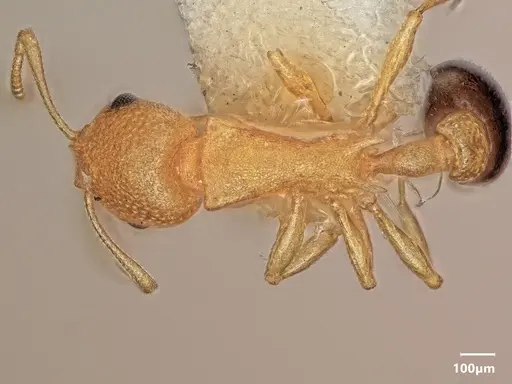
CASENT0901760
Auf AntWeb ansehen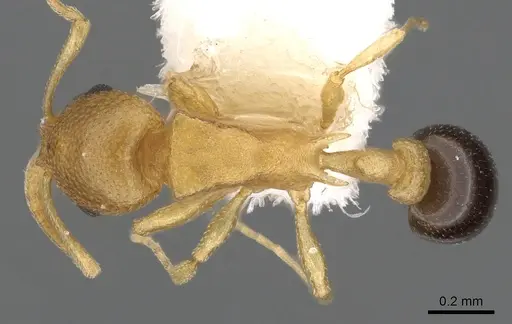
Literatur
Verbreitungskarte wird geladen...Produkte werden geladen...