
Cardiocondyla sima
- Wiss. Name
- Cardiocondyla sima
- Tribus
- Crematogastrini
- Unterfamilie
- Myrmicinae
- Autor
- Wheeler, 1935
- Verbreitung
- In 0 Ländern gefunden
Einleitung
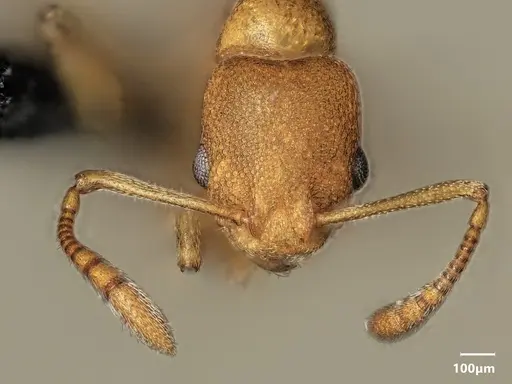
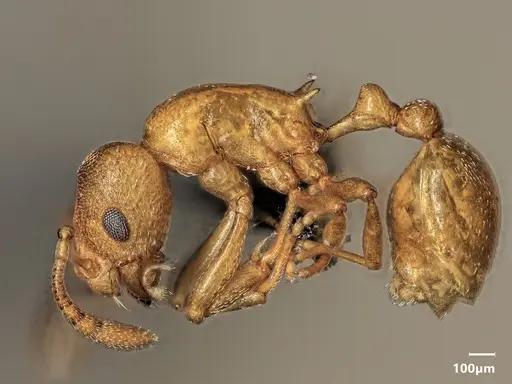
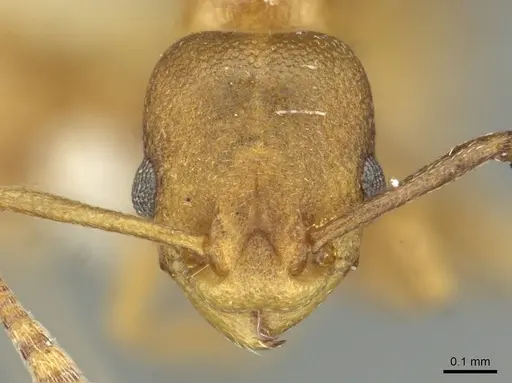
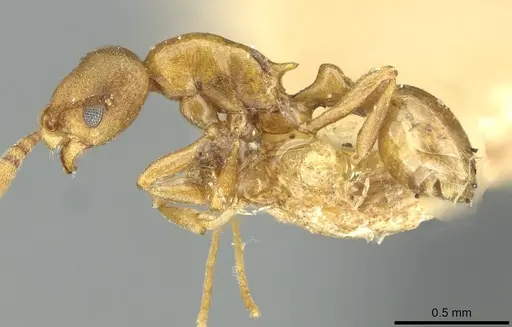
Cardiocondyla sima are tiny ants with workers measuring 2-2.2 mm in total length [AntWiki]. They have a pale yellowish-brown coloration and possess a unique anatomical feature: 11-segmented antennae instead of the usual 12 found in most Cardiocondyla species . Their heads are short and nearly square-shaped when viewed from above, with noticeably protruding eyes . These ants inhabit tropical forests across the Malaysian Peninsula, Thailand, and the Philippine islands of Mindanao and Leyte, living in leaf litter and rotting wood at elevations up to 650 meters [AntWiki]. What makes this species unusual is its taxonomic history and expected male morphology. Originally placed in their own subgenus called Prosopidris due to their unique 11-segmented antennae and specially shaped postpetiole, they were later returned to Cardiocondyla [AntWiki]. Based on their close relationship to Cardiocondyla papuana, researchers expect the males to be wingless (ergatoid) with sickle-shaped mandibles used for fighting rival males . However, the actual biology of Cardiocondyla sima remains almost completely unknown—the few specimens collected have simply been sifted from forest floor debris .
Quick Summary
- Difficulty: Expert
- Origin & Habitat: Tropical Southeast Asia, Malaysian Peninsula, Thailand, and Philippines (Mindanao, Leyte). Found in leaf litter and rotting wood at elevations up to 650 m [2][1].
- Colony Type: Colony structure unconfirmed
- Size & Growth:
- Antkeeping:
- Temperature: Warm and stable, roughly 24-28°C inferred from their tropical distribution between 4°N-11°N latitude [2].
- Humidity: Consistently moist substrate. They inhabit damp leaf litter and rotting wood in nature [2].
- Diapause: No, tropical species active year-round.
- Nesting: Tiny chambers in soil, leaf litter, or rotting wood. Use naturalistic setups with small cavities or very small test tubes.
- Behavior: Cryptic and slow-moving. They live in forest floor debris and are not aggressive. However, their 2mm size means escape prevention must be extreme, use Fluon or fine mesh barriers [1].
- Common Issues: escapes are inevitable without extreme barriers due to 2mm worker size., desiccation kills quickly, these tropical ants need consistent moisture., overfeeding causes mold outbreaks in small nests., dietary preferences are unknown and may lead to rejection of standard foods.
Identification and Natural History
Cardiocondyla sima workers measure only 2-2.2 mm in total length, making them among the smallest ants in the hobby [1]. They are uniformly light yellowish-brown with a compact, high-profile body shape [2]. The most reliable way to identify them is by counting antennal segments: they have 11 segments total, with the last three forming an unusually long club that makes up 57-60% of the entire antenna length [2]. Most other Cardiocondyla species have 12 segments. Their postpetiole (the second waist segment) also has a distinctive cone-shaped front when viewed from above [2].
In nature, these ants live west of the Wallace Line in the Indo-Malayan region, specifically between 4°N and 11°N latitude [2]. Collectors have found them in leaf litter and rotting wood from sea level up to 650 meters elevation [2]. Unfortunately, almost nothing is known about their behavior, colony size, or reproductive habits in the wild.
Housing and Escape Prevention
At just 2 mm long, these ants can squeeze through gaps you cannot see. You must use extreme escape prevention. Apply Fluon (a slippery barrier) to the upper walls of any container, or use fine mesh screens with holes smaller than 0.5 mm. Even tiny air holes in test tubes must be blocked with cotton or fine mesh.
For the nest itself, think small and naturalistic. In nature they live in leaf litter and rotting wood, so provide tiny chambers with moist substrate. Small test tubes (9mm diameter or less) work for founding, but move them to a naturalistic setup with soil and leaf litter once the colony grows. Avoid large open spaces, they prefer tight, secure cavities. [2][1]
Temperature and Humidity
These ants come from tropical forests, so keep them warm and humid. Aim for roughly 24-28°C year-round [2]. They do not need hibernation.
Keep the nest substrate damp but not waterlogged. It should feel like a wrung-out sponge. Use a water tower or moist cotton in test tubes, and mist naturalistic setups when the surface starts drying. Tropical leaf litter habitats maintain high humidity naturally, so avoid dry conditions.
Feeding and Diet
The diet of Cardiocondyla sima is unknown. Based on related Cardiocondyla species, they likely accept small live prey like springtails, fruit flies, or tiny insect pieces. Offer sugar water or honey diluted to 1:4 ratio as a carbohydrate source. Start with tiny amounts, overfeeding causes mold in small nests. If they reject food, try smaller prey items or different protein sources. [1]
Defense Mechanism
Like other Myrmicinae ants, Cardiocondyla sima has a modified stinger that smears venom onto enemies rather than piercing flesh. This is a common defense strategy in the subfamily.
Colony Founding and Development
Founding behavior has not been documented for this species. Most Cardiocondyla queens are claustral, meaning the queen seals herself in and raises the first workers using stored body fat. However, this is unconfirmed for C. sima. If you obtain a queen, provide a small, dark chamber with moist substrate and leave her undisturbed.
Development time from egg to worker is unknown.
Frequently Asked Questions
Can I keep Cardiocondyla sima in a test tube?
Yes, but use very small tubes (9mm diameter or less) with minimal water to prevent drowning. Block the opening with tight cotton and fine mesh to prevent escapes.
How long until first workers for Cardiocondyla sima?
The egg-to-worker timeline is unconfirmed. Expect several months, but this is speculative.
Do Cardiocondyla sima need hibernation?
No. They come from tropical Southeast Asia and remain active year-round.
Can I keep multiple Cardiocondyla sima queens together?
Not recommended. Combining unrelated queens has not been documented for this species. Colony structure is unconfirmed.
Are Cardiocondyla sima good for beginners?
No. Their extremely small size (2mm) makes escapes likely, and their undocumented biology means care requirements are uncertain. Only expert keepers should attempt this species.
Do Cardiocondyla sima ants sting?
No. At 2mm long, they are too small to sting humans, and Cardiocondyla species generally lack functional stings. They may smear venom if handled roughly.
What do Cardiocondyla sima eat?
Their diet is unknown. Offer small live prey like springtails or fruit flies, plus sugar water. Adjust based on what they accept.
How do I prevent Cardiocondyla sima from escaping?
Use Fluon barriers on all container walls, fine mesh smaller than 0.5mm for ventilation, and check that all lids seal completely. Their 2mm size means standard setups will not contain them.
Report an Issue
The current care sheet is based fully on literature. See inconsistencies, or something that's incorrect? Please , it will be resolved after review from an admin. Contributing to the blogs tab also helps providing information, to make us be able to further improve the caresheets. Thank you for your support!
References

Dieses Caresheet ist lizenziert unter CC BY-SA 4.0 .
Community-Blogs
ANTWEB1048538
Auf AntWeb ansehen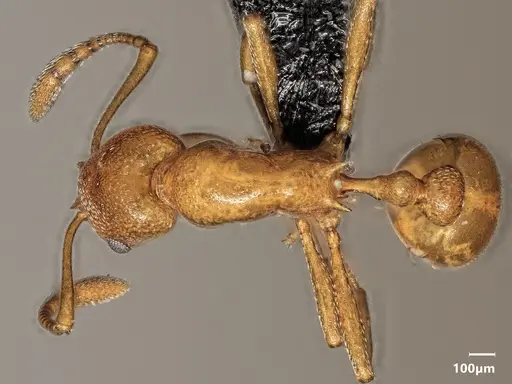
CASENT0913595
Auf AntWeb ansehen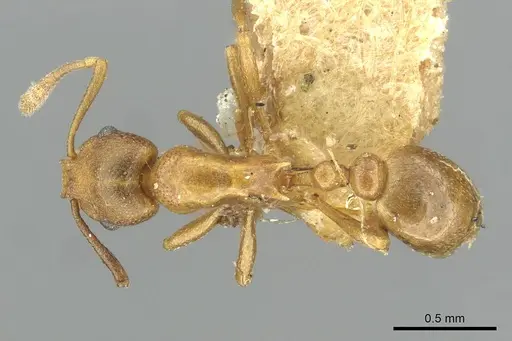
Literatur
Verbreitungskarte wird geladen...Produkte werden geladen...