
Cardiocondyla carbonaria
- Wiss. Name
- Cardiocondyla carbonaria
- Tribus
- Crematogastrini
- Unterfamilie
- Myrmicinae
- Autor
- Forel, 1907
- Verbreitung
- In 0 Ländern gefunden
Einleitung
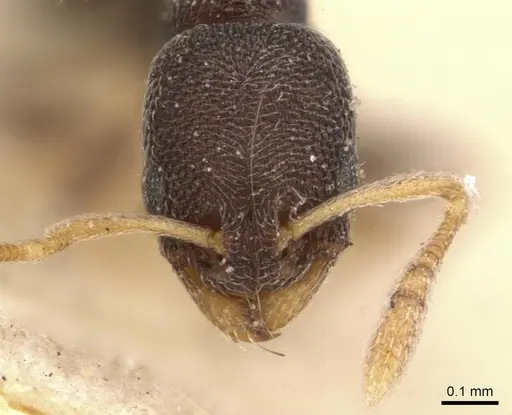
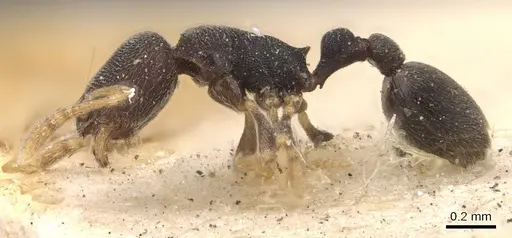
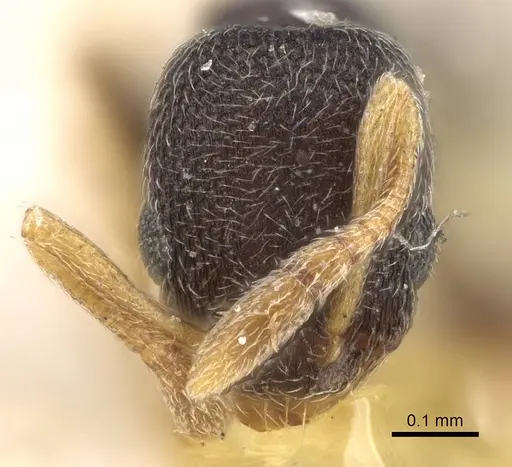
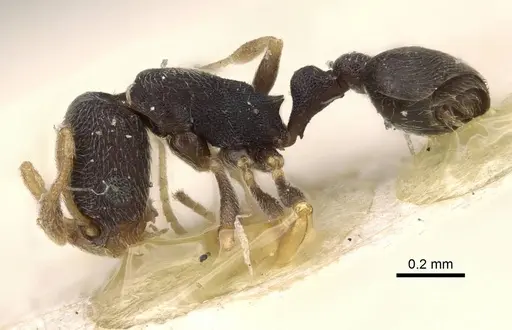
Cardiocondyla carbonaria is an extremely rare ant species known only from two specimens collected in 1902 in the Western Ghats of India, near Mumbai. Workers are tiny ants with a distinctly elongated head and a unique perfectly matt surface texture covering their entire blackish-brown body. The species belongs to the Cardiocondyla minutior group, which contains small ground-nesting ants widespread across tropical and subtropical regions. What makes C. carbonaria special is its extreme rarity - it has never been observed alive by researchers, and virtually nothing is known about its behavior, colony structure, or captive care requirements. This is a species for advanced antkeepers who enjoy working with poorly documented species.
Quick Summary
- Difficulty: Expert
- Origin & Habitat: Endemic to the Western Ghats of India, specifically recorded from Karnataka and Maharashtra states. The only known specimens came from Matheran, a hill station east of Mumbai at approximately 770m elevation and 18.99°N latitude [1][2]. The region experiences a tropical monsoon climate with hot, humid summers and moderate winters.
- Colony Type: Unknown, no live colonies have ever been studied. As a member of the Cardiocondyla genus, colony structure is unconfirmed.
- Size & Growth:
- Queen: Unknown, no queen specimens have been described [3]
- Worker: Size data unavailable, the only measurements available are head measurements (CS 434 µm), not total body length. Based on typical Cardiocondyla worker size, likely around 2mm [2][4]
- Colony: Unknown, no colony data exists
- Growth: Unknown
- Development: Unknown, no development data exists for this species. (No direct observations of founding or development exist.)
- Antkeeping:
- Temperature: Unconfirmed, likely prefers warm conditions similar to other Cardiocondyla. Based on the tropical Western Ghats habitat, aim for 24-28°C as a starting point and observe colony activity.
- Humidity: Unconfirmed, likely requires moderate to high humidity typical of ground-nesting ants in tropical forests. Start with 60-80% ambient humidity with a moist nest substrate.
- Diapause: Unknown, no data on seasonal behavior. The Matheran region has mild winters (15-25°C), so a reduced activity period may occur but has not been documented.
- Nesting: Presumed to nest in soil or under stones like other Cardiocondyla minutior group members. Use a small test tube setup with fine substrate, or a small Y-tong (AAC) or plaster nest with tight chambers scaled to their tiny size.
- Behavior: Completely unstudied in captivity. Based on genus patterns, they are likely docile and not aggressive. Their extremely small size makes escape prevention critical, they can squeeze through gaps that seem sealed. Expect non-aggressive foraging behavior similar to other Cardiocondyla species.
- Common Issues: extreme rarity means no captive breeding stock exists, wild collection would be unethical for an endemic species, tiny size makes escape likely without fine mesh barriers and tight-fitting lids, no established care protocols exist, keepers must experiment and document their findings, no information on whether they accept sugar, need live prey, or are specialized feeders
Why Keep Such a Mysterious Species?
Cardiocondyla carbonaria represents a unique opportunity in antkeeping, the chance to be among the first to document the biology of a species that has never been observed alive. Only two specimens exist in museum collections, collected in 1902 from Matheran, India. Everything we know about this ant comes from those two workers preserved in alcohol over a century ago. For the advanced antkeeper, this is both a challenge and a privilege: you become a pioneer, discovering behaviors, preferences, and care requirements that no one has documented before. That said, this species is NOT recommended for beginners. Without established care protocols, you will likely face many failures while figuring out what works. Consider starting with more common Cardiocondyla species like Cardiocondyla minutior or Cardiocondyla obscurior to build experience before attempting this rare species. [2][4][3]
Natural History and What We Know
The Western Ghats of India is one of the world's biodiversity hotspots, and C. carbonaria is one of the rarest ants endemic to this region. The type locality at Matheran sits at about 770m elevation, east of Mumbai, in a region of tropical semi-evergreen forest. The species was described by Forel in 1907 and redescribed by Seifert in 2003 and 2022, who placed it in the Cardiocondyla minutior group based on its morphometry. The most distinctive feature is its perfectly matt surface, unlike most ants that have some shine, C. carbonaria has a completely dull, microsculptured surface covering the head, mesosoma, waist, and gaster. This is caused by extremely fine shagrination. The species has been recorded from Karnataka and Maharashtra states, but no biologist has ever observed a live colony [1][2]. This species is also preyed upon by tiger beetles in the Western Ghats region [5].
Inferring Care from Relatives
Since we have no direct data on C. carbonaria, we must infer care requirements from the broader Cardiocondyla genus. Cardiocondyla ants are typically small, ground-nesting ants that form moderate-sized colonies. The minutior group specifically contains widespread tropical species that are often found in disturbed habitats, under stones, or in soil. Related species like C. minutior are known to be generalist feeders that accept sugars, proteins, and small insects. They are not aggressive and typically have simple colony structures. However, C. carbonaria could have unique requirements that differ from its relatives, this is the risk of keeping a poorly known species. Start with standard Cardiocondyla protocols: small test tube setups, moderate humidity, varied diet, and observe carefully [3].
Housing and Setup
Given their tiny worker size, housing must be scaled appropriately. Use small test tubes with fine cotton barriers, or small Y-tong (AAC) or plaster nests with chambers sized for tiny ants. The key concern is escape prevention, these ants are so small they can squeeze through standard barrier setups. Use tight-fitting lids and consider fluon or other barriers. A small outworld connected to the nest allows for feeding. Since we don't know their natural nesting preferences, provide options: a moist cotton/test tube setup and a small plaster nest with a water reservoir. Start with the test tube approach as it's easiest to maintain and observe. Keep the setup humid but not wet, avoid mold by ensuring some ventilation. [3]
Feeding and Diet
No direct data exists on what C. carbonaria eats. Based on genus patterns, they are likely generalist omnivores that accept honeydew, sugar water, and small insects. Related Cardiocondyla species are known to tend aphids and feed on small arthropods. Start with a basic protocol: a constant sugar source (honey water or sugar water) and occasional small protein offerings like fruit flies, pinhead crickets, or other tiny arthropods. Since their workers are tiny, prey items must be very small. Observe carefully, if workers ignore certain foods, try alternatives. Document everything you offer and whether it was accepted. This species could have specialized dietary needs that we don't yet understand. [3]
Temperature and Seasonal Care
The type locality in Matheran (770m elevation, ~18.99°N) experiences a tropical monsoon climate with temperatures ranging from roughly 15°C in winter to 35°C in summer. The monsoon brings high humidity from June to September. Since no data exists on this species' temperature tolerance, use the tropical baseline: keep them warm, around 24-28°C. A slight temperature gradient allows workers to choose their preferred zone. Monitor for signs of stress (workers avoiding heated areas, clustering away from warmth) and adjust accordingly. Whether they need a winter rest period is unknown, the Matheran region has mild winters, so any diapause would likely be brief or subtle. [2][3]
Frequently Asked Questions
Is Cardiocondyla carbonaria available for purchase?
Almost certainly not. This species is known from only two museum specimens and has never been collected or bred in captivity. No antkeepers currently maintain this species. Finding a colony would require fieldwork in the Western Ghats, which would be ethically questionable for an endemic species with no population data.
How do I keep Cardiocondyla carbonaria?
No established care protocol exists because this species has never been kept in captivity. You would need to experiment using related Cardiocondyla species as a starting point: small test tube setup, moderate humidity (60-80%), warm temperatures (24-28°C), and a varied diet of sugar and small protein sources. Document everything carefully. This is an expert-level species only for those comfortable with experimental antkeeping.
How big do Cardiocondyla carbonaria colonies get?
Unknown. No live colonies have ever been observed. Colony size data is unavailable for this species.
Do Cardiocondyla carbonaria ants sting?
Unknown for this specific species. Most Cardiocondyla species are docile and non-aggressive. The default defense mechanism for this tribe (Crematogastrini) involves a modified stinger used to smear venom rather than pierce, but given their tiny size, any sting would likely be imperceptible to humans.
Where does Cardiocondyla carbonaria live?
Only known from the Western Ghats of India, specifically Matheran in Maharashtra state at approximately 770m elevation. It has been recorded from Karnataka and Maharashtra, but no biologist has ever observed a live colony in the wild.
Is Cardiocondyla carbonaria a good species for beginners?
No. This is an expert-level species that is NOT recommended for beginners or even intermediate antkeepers. No care protocols exist, no one has ever kept this species, and the few known specimens are in museums. There are no captive breeding stocks. Start with more common species like Cardiocondyla obscurior or other well-documented ants.
How long do Cardiocondyla carbonaria workers live?
Unknown, no lifecycle data exists for this species.
Can I keep multiple Cardiocondyla carbonaria queens together?
Unknown. No data exists on colony structure for this species. Some Cardiocondyla are monogyne (single queen) while others are polygyne (multiple queens), but we have no information for C. carbonaria specifically.
What should I feed Cardiocondyla carbonaria?
Unknown, no feeding observations exist. Based on genus patterns, offer sugar water or honey constantly, and small protein sources like fruit flies or tiny arthropods occasionally. Document what they accept and reject. Their tiny size means prey must be very small.
Report an Issue
The current care sheet is based fully on literature. See inconsistencies, or something that's incorrect? Please , it will be resolved after review from an admin. Contributing to the blogs tab also helps providing information, to make us be able to further improve the caresheets. Thank you for your support!
References

Dieses Caresheet ist lizenziert unter CC BY-SA 4.0 .
Community-Blogs
CASENT0908337
Auf AntWeb ansehen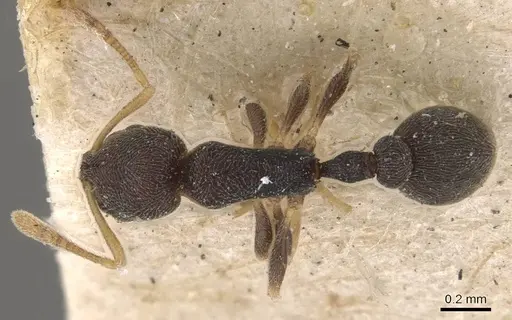
CASENT0922222
Auf AntWeb ansehen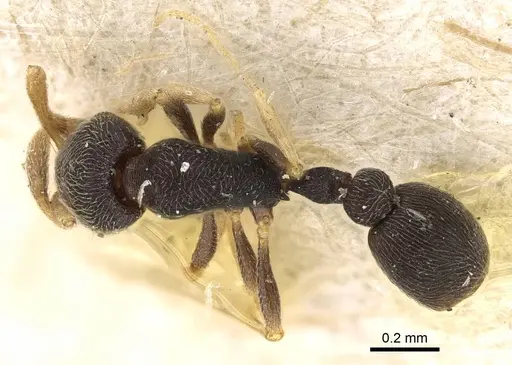
Literatur
Verbreitungskarte wird geladen...Produkte werden geladen...