
Camponotus haematocephalus
- Wiss. Name
- Camponotus haematocephalus
- Untergattung
- Tanaemyrmex
- Tribus
- Camponotini
- Unterfamilie
- Formicinae
- Autor
- Emery, 1903
- Verbreitung
- In 0 Ländern gefunden
Einleitung
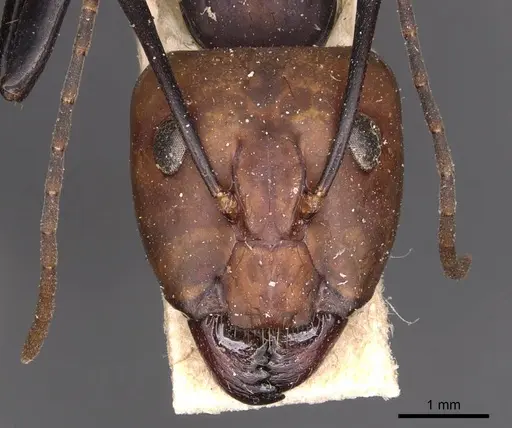
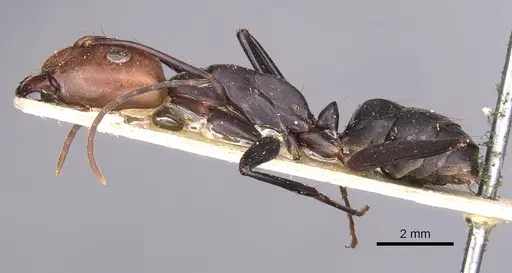
Camponotus haematocephalus is a carpenter ant species native to Peru, first described by Emery in 1903 from specimens collected in the Marcapata region of the Andes . The species belongs to the subfamily Formicinae and the genus Camponotus. Workers are polymorphic, with smaller minor workers and larger major workers (soldiers). Currently known only from Peru, this species remains poorly studied in scientific literature . As a Neotropical carpenter ant from the Peruvian Andes, this species likely exhibits typical Camponotus behaviors including nesting in wood or soil cavities, foraging for carbohydrate and protein sources, and maintaining moderate-sized colonies. Specific details about colony size, development timeline, and detailed behavior are not well documented in available research.
Quick Summary
- Difficulty: Medium
- Origin & Habitat: Native to Peru, specifically the Marcapata region in the Andes [1][2]. As a Neotropical species, it likely inhabits tropical or subtropical forest environments at moderate elevations. The exact habitat preferences are not well documented in scientific literature.
- Colony Type: Colony structure is unconfirmed for this specific species. Based on typical Camponotus patterns, the species is likely monogyne (single queen colonies), though this has not been directly documented.
- Size & Growth:
- Queen: Size data unavailable, no specific measurements exist for this species. Based on typical Camponotus queen size range, estimated roughly 12-16mm
- Worker: Polymorphic workers, based on typical Camponotus worker sizes, minor workers approximately 5-8mm and major workers approximately 8-12mm
- Colony: Estimated up to several hundred workers at maturity based on genus patterns
- Growth: Moderate, Camponotus species typically take several months to produce first workers, with growth depending on temperature and feeding
- Development: Estimated 6-10 weeks at optimal temperature based on typical Camponotus development, but this has not been directly measured for this species (Development time is inferred from related Camponotus species, actual timeline may vary)
- Antkeeping:
- Temperature: Keep nest area at 24-28°C. As a Neotropical species from Peru, they prefer warm conditions. A heating cable on one side of the nest can create a gentle gradient. Room temperature (22-25°C) is acceptable if stable.
- Humidity: Moderate to high humidity, aim for 60-80% relative humidity. Keep the nest substrate slightly moist but not waterlogged. Provide a water tube for drinking water.
- Diapause: No true hibernation required given their tropical origin. They may show reduced activity during cooler periods but a full diapause is not necessary. Maintain stable temperatures year-round.
- Nesting: In captivity, they do well in Y-tong (AAC) nests, plaster nests, or naturalistic setups with soil. They prefer dark, secure nesting sites. A formicarium with chambers sized to colony size works well, avoid overly large spaces for small colonies.
- Behavior: Carpenter ants are generally calm and not overly aggressive. They are more likely to flee than fight when disturbed, though major workers can deliver a painful bite with their strong mandibles. As Formicinae, they lack a functional sting but can spray formic acid from their acidopore while biting. They are nocturnal foragers in nature, so you may see more activity in the evening and at night. They are not escape artists compared to smaller ant species, but standard escape prevention (Fluon barriers) is still recommended.
- Common Issues: slow founding phase, queens can take months to produce first workers, and beginners often give up too soon, humidity control is tricky, too wet causes mold and fungal problems, too dry causes brood death, major workers (soldiers) can deliver a painful bite combined with formic acid spray, handle them gently, wild-caught colonies may have parasites or diseases that are difficult to treat in captivity, heating too aggressively can dry out the nest and kill the colony
Housing and Nest Setup
Camponotus haematocephalus does well in several nest types. Y-tong (AAC) nests are excellent for observing colony development, the clear walls let you watch brood development without disturbing the colony. Plaster nests or naturalistic setups with soil also work well and better mimic their natural environment. The nest should be dark, carpenter ants prefer secure, enclosed spaces. For the outworld (foraging area), use a simple container with escape prevention (Fluon on the rim works well). Start colonies in a test tube setup for founding, then move to a formicarium once the colony reaches 20-30 workers. The key is matching nest size to colony size, too large a space stresses small colonies. [2]
Feeding and Diet
Like most Camponotus species, these ants are omnivorous. Provide a constant source of sugar water, honey, or diluted maple syrup, carpenter ants have a sweet tooth and need carbohydrates for energy. For protein, offer small insects like fruit flies, small crickets, mealworms, or frozen insects. Feed protein 2-3 times per week, and sugar water continuously. Remove uneaten prey after 24-48 hours to prevent mold. Fresh water should always be available, a small test tube with a cotton ball works as a water source. Avoid overfeeding as excess food creates mold problems.
Temperature and Heating
As a Neotropical species from Peru, Camponotus haematocephalus prefers warm temperatures. Keep the nest area at 24-28°C for optimal brood development. Temperatures below 20°C can slow or stop brood development entirely. A small heating cable placed on top of the nest (never under it, as this can cause drying) can maintain warmth. Room temperature is often sufficient if your home stays in the 22-25°C range. Avoid temperature fluctuations, stable warmth is better than cycling between warm and cool. Monitor with a thermometer placed near the nest.
Humidity Management
Maintain moderate to high humidity, aim for 60-80% relative humidity in the nest area. The nest substrate should feel slightly moist but never waterlogged. A water tube connected to the nest provides both drinking water and helps maintain humidity through evaporation. Check moisture levels regularly, if the substrate dries out completely, mist lightly or add water gradually. Too much moisture causes mold, which can devastate colonies. Too little moisture causes brood to dry out and die. The goal is damp, not wet.
Colony Development and Patience
One of the biggest challenges with Camponotus species is the slow founding phase. A newly mated queen sealed in her chamber may take 4-8 weeks just to lay her first eggs, then another 6-12 weeks until the first workers (nanitics) emerge. This means you may wait 3-6 months before seeing any workers at all. This is normal, do not dig up the queen to check, as this almost always kills the colony. The queen will tend to her eggs and larvae in darkness. After nanitics emerge, the colony grows faster as workers can forage for food. A mature colony of several hundred workers may take 2-4 years to develop. Patience is essential.
Defense Mechanism
As a member of the subfamily Formicinae, Camponotus haematocephalus lacks a functional sting. Instead, they defend by biting the target and spraying a stream of concentrated formic acid from an acidopore into the wound. This dual defense mechanism can cause irritation, so handle them gently to avoid triggering this response.
Behavior and Handling
Camponotus haematocephalus is generally calm and not prone to biting unless provoked. Major workers (soldiers) have larger mandibles and can deliver a noticeable bite combined with formic acid spray if handled roughly, but they prefer to flee or play dead. They are primarily nocturnal in the wild, so you may notice more activity in the evening hours. Workers communicate through chemical trails, you may see them following established paths to food sources. They are not aggressive toward humans and make good observation subjects. When cleaning the outworld, do so gently to avoid crushing workers.
Frequently Asked Questions
How long does it take for Camponotus haematocephalus to produce first workers?
Expect 3-6 months from founding to first workers. The queen lays eggs first (2-4 weeks), then eggs develop through larval and pupal stages (6-12 weeks depending on temperature). This slow process tests keeper patience, resist the urge to check on the queen, as disturbance often kills founding colonies.
What temperature do Camponotus haematocephalus ants need?
Keep them at 24-28°C for optimal development. This is warmer than many temperate ant species, reflecting their Neotropical origin. Room temperature of 22-25°C is acceptable but may slow development slightly. Use a heating cable if your room runs cool.
Do Camponotus haematocephalus ants need hibernation?
No, hibernation is not required. As a species from tropical Peru, they do not experience cold winters that would trigger diapause. Maintain stable warm temperatures year-round. They may show slightly reduced activity during cooler periods but no special winter care is needed.
What do Camponotus haematocephalus ants eat?
They need both sugar and protein. Provide constant sugar water, honey, or diluted maple syrup for energy. For protein, offer small insects like fruit flies, crickets, or mealworms 2-3 times per week. Fresh water should always be available.
Are Camponotus haematocephalus ants aggressive?
No, they are generally calm and not aggressive. They prefer to flee when threatened rather than fight. Major workers can bite and spray formic acid if handled roughly, but they are not prone to attacking. They make good pets for observation.
How big do Camponotus haematocephalus colonies get?
At maturity, colonies likely reach several hundred workers. This is moderate for a Camponotus species. Growth is slow, expect 2-4 years to reach a large colony from a single founding queen.
Can I keep multiple Camponotus haematocephalus queens together?
This has not been documented for this specific species. Most Camponotus are monogyne (single queen), and combining unrelated queens typically results in fighting. It is not recommended to attempt multi-queen setups without specific evidence this species tolerates it.
When should I move my colony to a formicarium?
Move from test tube to formicarium once the colony reaches 20-30 workers. Moving too early stresses small colonies. The formicarium should have chambers appropriately sized for the colony, too much empty space can be stressful.
Why is my Camponotus haematocephalus colony dying?
Common causes include: too low temperature (below 20°C stops development), too dry or too wet conditions, mold from overfeeding, disturbance during founding, or parasites from wild-caught colonies. Check temperature and humidity first, reduce feeding if mold appears, and ensure the queen is not being disturbed.
Report an Issue
The current care sheet is based fully on literature. See inconsistencies, or something that's incorrect? Please , it will be resolved after review from an admin. Contributing to the blogs tab also helps providing information, to make us be able to further improve the caresheets. Thank you for your support!
References

Dieses Caresheet ist lizenziert unter CC BY-SA 4.0 .
Community-Blogs
CASENT0905223
Auf AntWeb ansehen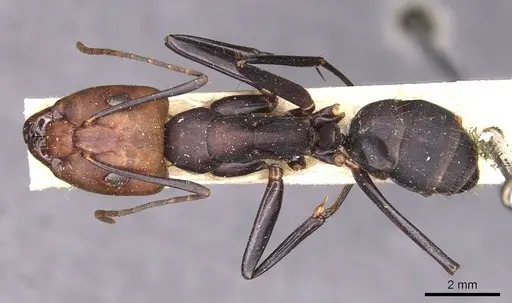
Literatur
Verbreitungskarte wird geladen...Produkte werden geladen...