
Camponotus decessor
- Wiss. Name
- Camponotus decessor
- Tribus
- Camponotini
- Unterfamilie
- Formicinae
- Autor
- Forel, 1908
- Verbreitung
- In 0 Ländern gefunden
Einleitung
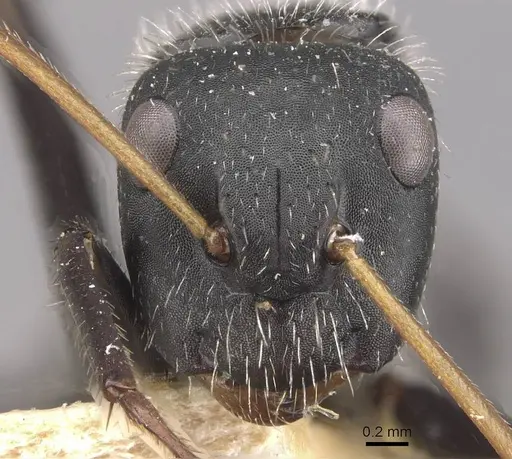
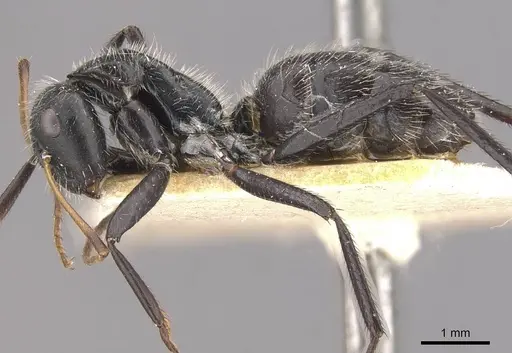
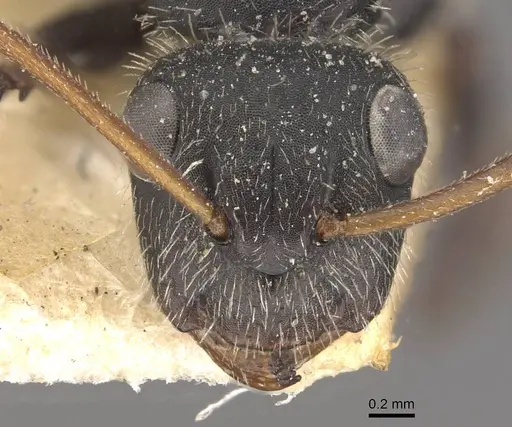
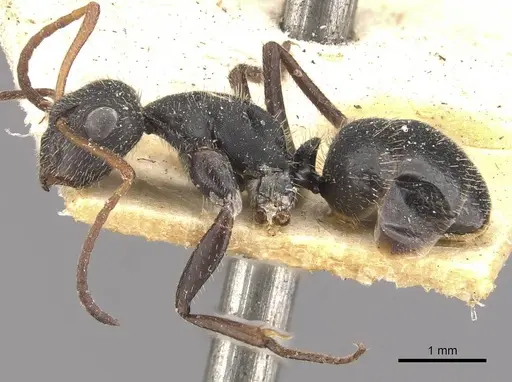
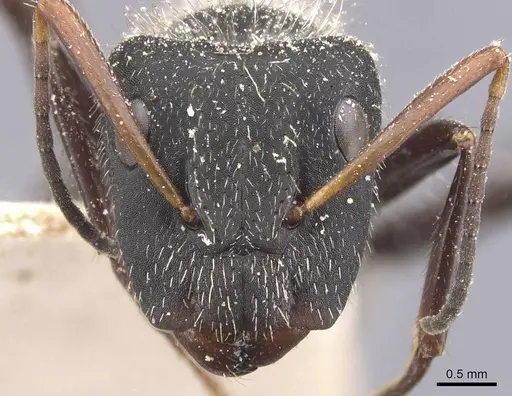
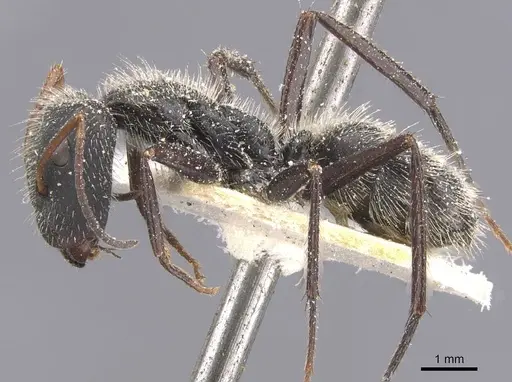
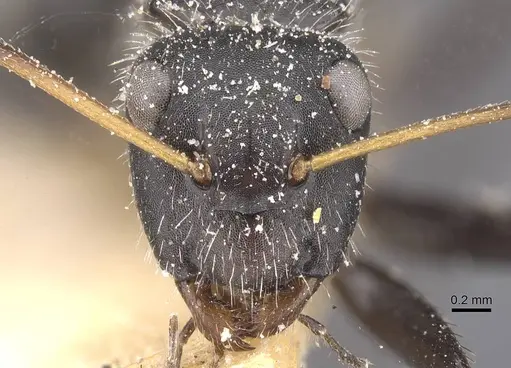
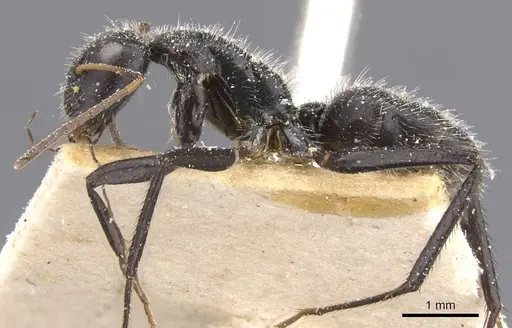
Camponotus decessor is a Neotropical carpenter ant species found in Brazil (São Paulo state) and Colombia. Minor workers have a distinctive appearance with a flattened mesosoma, a thick petiole featuring a convex anterior face and vertical posterior face, and notably dense white erect hairs covering the head and mesosoma. The species belongs to the subgenus Myrmobrachys and can be distinguished from the similar Camponotus depressus by having a non-flattened head - the flattening is much more pronounced in C. depressus. Major workers have not been documented for this species. As a Neotropical species from southeastern Brazil, these ants prefer warmer, humid conditions typical of tropical carpenter ants.
Quick Summary
- Difficulty: Medium
- Origin & Habitat: Neotropical species found in Brazil (São Paulo state) and Colombia. Natural habitat preferences are unconfirmed, but Myrmobrachys species typically nest in rotting wood or pre-existing cavities in tropical forest environments [1][2].
- Colony Type: Colony structure is unconfirmed. Most Camponotus species form single-queen colonies, though some can be multi-queen.
- Size & Growth:
- Queen: Size data unavailable, no measurements exist in scientific literature [1].
- Worker: Size data unavailable, no measurements exist in scientific literature [1].
- Colony: Unknown, no colony size data exists in scientific literature.
- Growth: Unknown, no development studies exist for this species.
- Development: Unknown, no development data exists for this species. (Development timeline has not been studied for this species.)
- Antkeeping:
- Temperature: Keep at 24-28°C. As a Neotropical species from Brazil, they prefer warm conditions.
- Humidity: Maintain moderate to high humidity, aim for 60-80%. Keep the nest substrate consistently moist but not waterlogged.
- Diapause: Unconfirmed, Neotropical species from Brazil likely do not require true hibernation.
- Nesting: No specific nesting data exists. Myrmobrachys subgenus species typically nest in rotting wood or existing cavities. In captivity, a Y-tong (AAC) nest or well-moistened plaster nest works well.
- Behavior: Behavior is unconfirmed for this specific species. Most Camponotus species are relatively docile. Escape risk is moderate, use standard Camponotus escape prevention (Fluon on container edges).
- Common Issues: biology is completely unknown, no captive breeding studies exist, humidity requirements are inferred from habitat, not confirmed, growth rate is unknown, no data on founding behavior, escape prevention should be taken seriously, they can squeeze through small gaps
Appearance and Identification
Camponotus decessor is a distinctive-looking carpenter ant. Minor workers feature a notably flattened mesosoma (the middle body section). The head and mesosoma are covered with many thick white erect hairs, which is a key identifying feature. The petiole (the narrow waist segment) is thickened with a convex anterior face and a vertical posterior face. The hind tibia is rounded rather than flattened. Major workers have not been documented for this species, so you may only see minor workers in established colonies. This species can be confused with Camponotus depressus, but C. decessor lacks the pronounced head flattening seen in C. depressus [1].
Distribution and Natural Habitat
This species is found in the Neotropical region, specifically in Brazil (São Paulo state) and Colombia. The exact natural habitat preferences are unknown, as no biological studies exist for this species. However, being part of the Myrmobrachys subgenus suggests they likely nest in rotting wood or pre-existing cavities in forest environments, similar to other members of this group. The São Paulo region of Brazil has a subtropical climate with warm temperatures year-round [1][2].
Temperature and Heating Requirements
As a Neotropical species from southeastern Brazil, Camponotus decessor prefers warm conditions in the range of 24-28°C. In captivity, maintain the nest area within this temperature range. A heating cable placed on top of the nest can help maintain warmth, especially in cooler rooms. Monitor colony activity, if workers cluster near the warm side, increase heat slightly, if they avoid it, reduce temperature. Unlike temperate Camponotus species, this species does not need a true hibernation period.
Humidity and Moisture Needs
Being a Neotropical species, Camponotus decessor requires moderate to high humidity, roughly 60-80%. Keep the nest substrate consistently moist but avoid waterlogging. The substrate should feel damp to the touch with some slightly drier areas available for the ants to regulate their own moisture exposure. Rehydrate the nest when the surface begins drying rather than following a fixed schedule. Poor humidity can slow brood development and cause colony decline.
Feeding and Diet
No specific dietary studies exist for this species. Based on typical Camponotus behavior, they likely have an omnivorous diet. Offer sugar sources such as sugar water, honey, or maple syrup regularly. For protein, provide insects such as mealworms, crickets, or other small arthropods. Feed protein sources 2-3 times per week and keep sugar water available constantly. Remove uneaten food after 24-48 hours to prevent mold.
Nesting in Captivity
No specific nesting data exists for Camponotus decessor. In captivity, standard Camponotus housing works well. Y-tong (AAC) nests or well-moistened plaster nests provide appropriate conditions. The nest should have chambers scaled to the ant size with adequate humidity retention. Since this species likely comes from humid tropical environments, ensure the nest material can hold moisture without becoming waterlogged. Test tube setups can work for founding colonies, but established colonies do better in formicaria that allow for proper humidity control.
Frequently Asked Questions
How long does it take for Camponotus decessor to produce first workers?
The exact timeline is unknown since no development studies exist for this species. Development time varies widely in Camponotus, but expect several months for nanitics to emerge under optimal conditions.
What do Camponotus decessor ants eat?
No species-specific dietary data exists. Based on typical carpenter ant behavior, they likely accept sugar sources (honey, sugar water, maple syrup) and protein (insects like mealworms, crickets, flightless fruit flies). Offer sugar constantly and protein 2-3 times per week. Remove uneaten food within 48 hours.
Are Camponotus decessor ants aggressive or dangerous?
Aggression levels are unconfirmed for this species. Most Camponotus species are relatively docile and rarely sting. While they can bite if threatened, they are not considered dangerous to humans.
Do Camponotus decessor ants need hibernation?
Hibernation requirements are unconfirmed. As a Neotropical species from Brazil, they likely do not need true hibernation. A slight temperature reduction during winter months may be beneficial but is not required.
What temperature should I keep Camponotus decessor at?
Keep nest temperatures in the range of 24-28°C. This species comes from subtropical Brazil, so warmth is important for colony health and brood development.
How big do Camponotus decessor colonies get?
Maximum colony size is unknown, no scientific data exists for this species. Most Camponotus colonies reach several hundred to a few thousand workers.
Can I keep multiple Camponotus decessor queens together?
Colony structure is unconfirmed for this species. Most Camponotus are single-queen. Without specific data, it is not recommended to combine unrelated foundress queens, as fighting is likely.
Is Camponotus decessor a good species for beginners?
This species is not ideal for beginners because its biology is completely unstudied. There is no specific care data, so keepers must rely on genus-level assumptions. More established species with documented care requirements are better choices for new antkeepers.
What size nest should I use for Camponotus decessor?
Use a nest with chambers appropriately sized for small carpenter ants. Y-tong (AAC) nests or moistened plaster nests work well. The nest should allow for humidity control and have enough space for colony growth over time.
Does Camponotus decessor need high humidity?
As a Neotropical species, they require moderate to high humidity, roughly 60-80%. Keep the nest substrate consistently moist but not waterlogged. Monitor for condensation, some is good, but excessive moisture can cause mold problems.
Report an Issue
The current care sheet is based fully on literature. See inconsistencies, or something that's incorrect? Please , it will be resolved after review from an admin. Contributing to the blogs tab also helps providing information, to make us be able to further improve the caresheets. Thank you for your support!
References

Dieses Caresheet ist lizenziert unter CC BY-SA 4.0 .
Community-Blogs
CASENT0910750
Auf AntWeb ansehen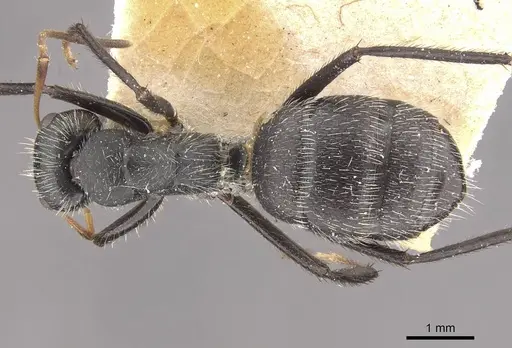
CASENT0910751
Auf AntWeb ansehen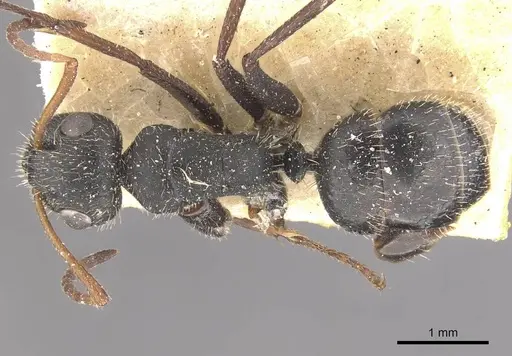
CASENT0911745
Auf AntWeb ansehen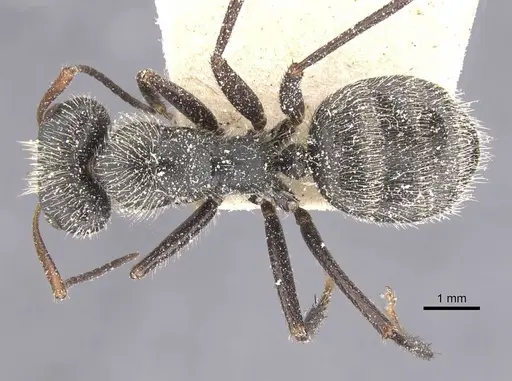
CASENT0911746
Auf AntWeb ansehen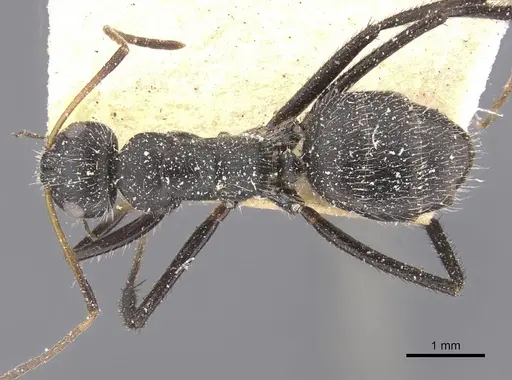
Literatur
Verbreitungskarte wird geladen...Produkte werden geladen...