
Camponotus cameroni
- Wiss. Name
- Camponotus cameroni
- Untergattung
- Myrmobrachys
- Tribus
- Camponotini
- Unterfamilie
- Formicinae
- Autor
- Forel, 1892
- Verbreitung
- In 0 Ländern gefunden
Einleitung
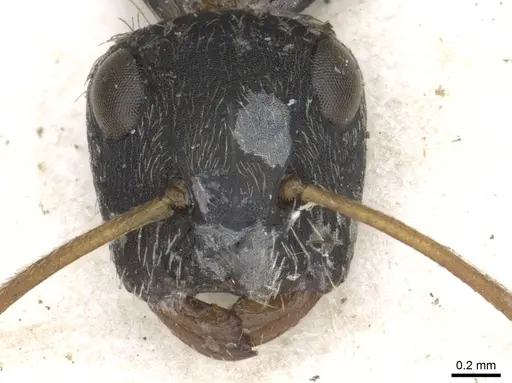
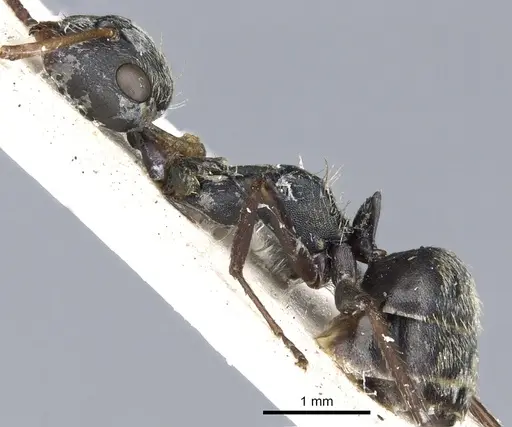
Camponotus cameroni is a variable-sized ant belonging to the subgenus Myrmobrachys, found throughout Central and South America from Mexico to Argentina. Workers measure approximately 4-7mm, with queens significantly larger. This species displays remarkable color variation - colonies can be completely yellow, black with pale brown clypeus, have red legs, or feature a red head with the rest of the body black, to completely black. They are notably hairy, with erect hairs on the clypeus, mesosoma, petiole and gaster, plus dense appressed golden to white hairs on the gaster that give it a distinctive yellowish appearance. C. cameroni nests in hollow stems in tropical forests or in soil under stones . The species is very similar to C. formiciformis and C. arboreus, but can be distinguished by having few or no erect hairs near the eyes .
Quick Summary
- Difficulty: Easy
- Origin & Habitat: Neotropical species found from Mexico through Central America to Argentina and Paraguay. In Colombia, recorded in Guajira, Cundinamarca, Valle del Cauca, Meta, and Huila. Nests in hollow stems in tropical forests or in soil under stones [1][2].
- Colony Type: Single-queen colonies, inferred from typical Camponotus genus patterns.
- Size & Growth:
- Queen: size data unavailable
- Worker: 4-7mm [1]
- Colony: up to several hundred workers, inferred from Camponotus genus patterns
- Growth: moderate
- Development: 6-8 weeks at warm temperatures (around 24-27°C), typical for Camponotus species (Development time depends on temperature, warmer conditions accelerate development. Nanitic (first) workers are smaller than normal workers.)
- Antkeeping:
- Temperature: Keep at 24-27°C. They tolerate a range from roughly 22-30°C. A heating cable on one side of the nest can create a gradient if your room runs cool.
- Humidity: Moderate humidity around 50-70%. Keep the nest substrate slightly moist but not waterlogged. Provide a water tube for drinking.
- Diapause: No, as a tropical species from Central and South America, they do not require hibernation. Keep them at warm temperatures year-round.
- Nesting: In captivity, they do well in Y-tong (AAC) nests, plaster nests, or test tube setups. They prefer tight, dark chambers. Given their natural nesting in hollow stems, a naturalistic setup with cork or wood pieces also works well. Avoid overly large, open spaces.
- Behavior: Generally calm and non-aggressive for a Camponotus species. Workers are moderately active foragers. They are not known for being particularly defensive. Their small size (4-7mm workers) means they can squeeze through small gaps, use standard escape prevention with fluon on container edges. They are primarily nocturnal or crepuscular foragers in the wild.
- Common Issues: escape prevention is important, workers are small enough to slip through small gaps, overheating can be fatal, avoid temperatures above 32°C, colonies may decline if kept too cold, maintain warm temperatures year-round, mold can become an issue if humidity is too high and ventilation is poor, founding colonies are vulnerable, keep the queen in a quiet, dark location until workers emerge
Housing and Nest Setup
Camponotus cameroni does well in several nest types. Y-tong (AAC) nests work excellently because they provide the dark, tight chambers these ants prefer. Plaster nests are another good option, they hold humidity well and allow you to create appropriately sized chambers. Test tube setups are suitable for founding colonies. The key is providing chambers scaled to their worker size (4-7mm), passages should be snug but not cramped. Avoid large, open spaces in the nest. A small outworld connected to the nest allows for feeding and waste removal. Use standard escape prevention like fluon on container rims, as these workers can squeeze through surprisingly small gaps. [1]
Feeding and Diet
Like other Camponotus species, C. cameroni is omnivorous. They accept sugar sources readily, offer sugar water, honey, or diluted maple syrup. For protein, provide small insects like fruit flies, small mealworms, or cricket pieces. In the wild, they likely forage for honeydew and small arthropods. Feed them a few times per week, offer protein 2-3 times weekly and keep a sugar source available constantly. Remove uneaten prey after 24-48 hours to prevent mold. Workers will store food in their social stomachs and share with nestmates.
Temperature and Seasonal Care
As a tropical species from Central and South America, C. cameroni prefers warm conditions. Keep the nest area at 24-27°C. They can tolerate temperatures down to around 22°C and up to about 30°C, but prolonged exposure to extremes should be avoided. Room temperature in most homes is often suitable. If your space runs cool, a small heating cable placed on one side of the nest can provide warmth, always create a temperature gradient so ants can move to cooler areas if needed. Unlike temperate species, they do not require hibernation or a diapause period. Maintain warm temperatures year-round for optimal colony health and growth. [1]
Colony Founding
Camponotus queens typically seal themselves in a chamber to raise their first workers. When a newly mated queen finds a suitable cavity (in a hollow stem, under a stone, or in your test tube setup), she seals herself in and lays eggs. The eggs develop into larvae, then pupae, and eventually emerge as nanitic (first) workers 6-8 weeks later at optimal temperatures. These first workers are smaller than normal workers. The queen stops feeding once workers arrive, and the colony now relies on foragers to bring food. During founding, keep the queen in darkness and avoid disturbances.
Behavior and Temperament
Camponotus cameroni is generally a calm, manageable species. They are not particularly aggressive and are unlikely to sting. Workers are moderately active, foraging primarily during evening and night hours. They communicate through chemical trails and can recruit nestmates to food sources. The species is known for its dense covering of golden to white appressed hairs on the gaster, giving it a distinctive fuzzy appearance. Workers vary considerably in size within a colony (minor and major castes). They are not escape artists in the same way as tiny ants, but standard containment practices should still be followed due to their small worker size. [1]
Frequently Asked Questions
How long does it take for Camponotus cameroni to have first workers?
Expect first workers (nanitics) to emerge in 6-8 weeks after the queen lays eggs, assuming temperatures around 24-27°C. Cooler temperatures will slow development significantly.
What do Camponotus cameroni ants eat?
They are omnivorous. Offer sugar water, honey, or maple syrup as a constant energy source. For protein, provide small insects like fruit flies, small mealworms, or cricket pieces 2-3 times per week.
What temperature do Camponotus cameroni need?
Keep them warm at 24-27°C. They are a tropical species and do not tolerate cold well. Room temperature is often suitable, or use a small heating cable on one side of the nest.
Do Camponotus cameroni need hibernation?
No. As a tropical species from Central and South America, they do not require hibernation. Keep them at warm temperatures year-round.
How big do Camponotus cameroni colonies get?
Based on typical Camponotus patterns, colonies likely reach up to several hundred workers at maturity. Growth is moderate, expect several months to a year to reach 50+ workers.
Can I keep multiple Camponotus cameroni queens together?
This species is monogyne, colonies have a single queen. Combining unrelated foundress queens is not recommended as they would likely fight.
What is the best nest type for Camponotus cameroni?
Y-tong (AAC) nests, plaster nests, or test tube setups all work well. Provide dark, appropriately sized chambers scaled to their 4-7mm worker size.
Why is my Camponotus cameroni colony declining?
Common causes include: temperatures too cold (below 20°C), humidity problems (too wet or too dry), mold from poor ventilation, or insufficient food. Check that temperatures are warm and stable, and that you are offering adequate nutrition.
Are Camponotus cameroni good for beginners?
Yes, they are considered a good beginner species. They are relatively docile, accept a wide variety of foods, and have straightforward temperature requirements. Their main needs are warmth and appropriate-sized housing.
Report an Issue
The current care sheet is based fully on literature. See inconsistencies, or something that's incorrect? Please , it will be resolved after review from an admin. Contributing to the blogs tab also helps providing information, to make us be able to further improve the caresheets. Thank you for your support!
References

Dieses Caresheet ist lizenziert unter CC BY-SA 4.0 .
Community-Blogs
CASENT0217620
Auf AntWeb ansehen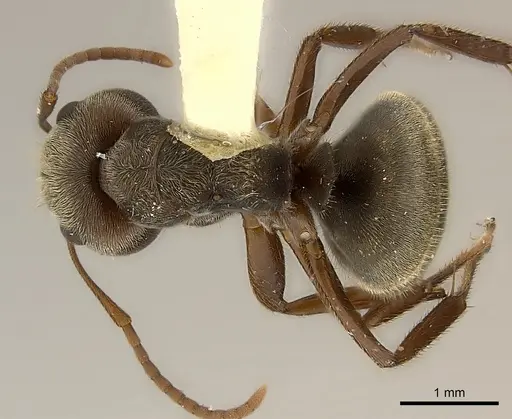
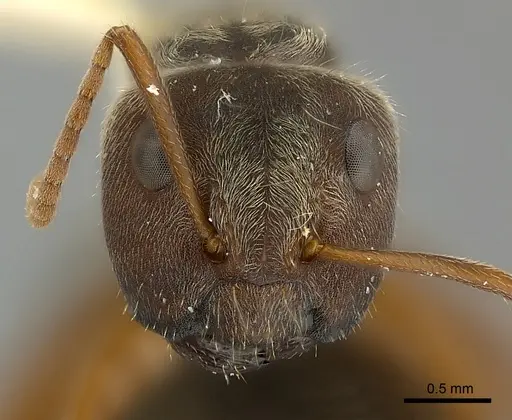
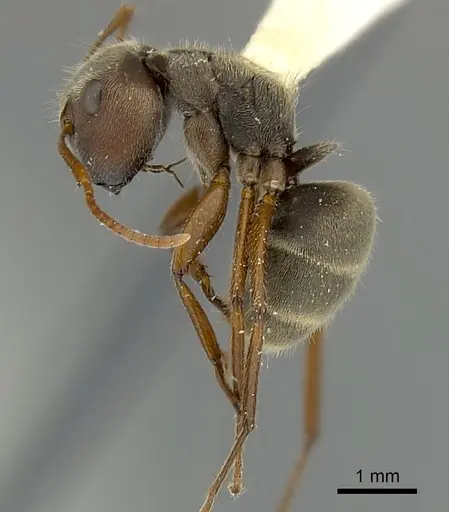
CASENT0903622
Auf AntWeb ansehen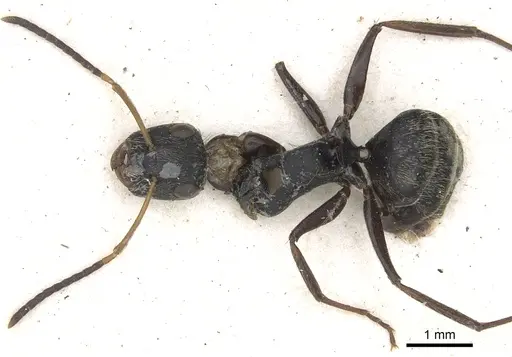
Literatur
Verbreitungskarte wird geladen...Produkte werden geladen...