
Camponotus callistus
- Wiss. Name
- Camponotus callistus
- Untergattung
- Myrmocladoecus
- Tribus
- Camponotini
- Unterfamilie
- Formicinae
- Autor
- Emery, 1911
- Verbreitung
- In 0 Ländern gefunden
Einleitung
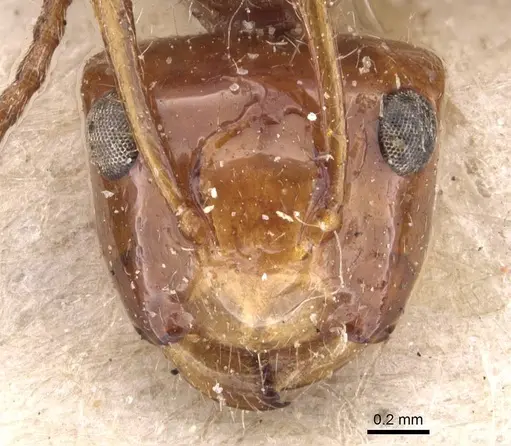
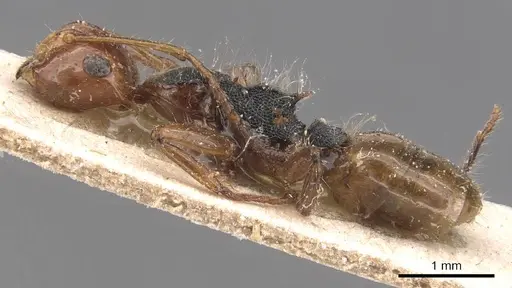
Camponotus callistus is a carpenter ant species native to Peru in South America . Workers are polymorphic, meaning they come in different sizes - larger major workers and smaller minor workers. The genus Camponotus is known for their robust build and powerful mandibles. These ants are typically dark in coloration with some lighter markings. In the wild, they nest in rotting wood, dead trees, or under bark in forest habitats.
Quick Summary
- Difficulty: Medium
- Origin & Habitat: Camponotus callistus is found in Peru, South America. They inhabit forested areas where they nest in decaying wood in humid tropical or subtropical environments [1].
- Colony Type: Likely monogyne based on typical Camponotus patterns.
- Size & Growth:
- Queen: size data unavailable, inferred from Camponotus genus (~15-18mm)
- Worker: size data unavailable, inferred from Camponotus genus (5-12mm polymorphic)
- Colony: up to several thousand workers at maturity, estimated from genus patterns
- Growth: Moderate
- Development: estimated 6-10 weeks at optimal temperature based on related Camponotus species (Development time depends on temperature, warmer conditions around 24-26°C speed up development, while cooler temperatures slow it down)
- Antkeeping:
- Temperature: Keep nest area at 24-26°C. A gentle temperature gradient allows ants to regulate their own conditions.
- Humidity: Maintain moderate to high humidity in the nest around 60-80%. These forest-dwelling ants prefer damp conditions but not waterlogging. Provide a water source via test tube setup.
- Diapause: No, tropical species from Peru does not require hibernation
- Nesting: In captivity, they do well in Y-tong nests, plaster nests, or naturalistic setups with wood. They prefer dark, enclosed spaces with some moisture. Test tube setups work well for founding colonies.
- Behavior: Camponotus callistus is generally calm and not aggressive toward keepers. Workers are active foragers that search for sugar sources and protein. They spray formic acid as a defense mechanism when threatened. Escape risk is moderate, they are large ants but can squeeze through small gaps.
- Common Issues: queen death during founding is common, claustral queens rely on stored fat and can fail if disturbed or if conditions are unsuitable, mold growth in nest due to excessive moisture, maintain ventilation and avoid overwatering, colonies can stall if temperatures are too low, keep warm to ensure brood development, overfeeding can lead to mold and mite problems, remove uneaten protein promptly, major workers may appear alarming due to size but these ants are not particularly aggressive
Nest Preferences
Camponotus callistus naturally nests in rotting wood in forested areas of Peru. In captivity, they adapt well to various nest types. Y-tong nests work excellently, the dark chambers mimic their natural tree-nesting preferences. Plaster nests with built-in water channels maintain appropriate humidity. For founding colonies, a simple test tube setup with a water reservoir works well. The key is providing a dark, enclosed space that stays moderately humid. Avoid placing the nest in direct sunlight or near heat sources that could cause drying. A small outworld connected to the nest allows for foraging and waste disposal.
Feeding and Diet
These ants are omnivorous with a typical Camponotus diet. Sugar sources are essential, they readily accept sugar water, honey, or maple syrup. For protein, offer small insects like fruit flies, mealworms, or crickets. In the wild, they tend aphids for honeydew and hunt small invertebrates. Feed sugar water constantly via a cotton ball or small dish and offer protein 2-3 times per week. Remove uneaten protein within 24 hours to prevent mold. Major workers can tackle larger prey items than minor workers.
Temperature and Care
Maintain nest temperatures between 24-26°C for optimal brood development. These tropical ants do not require hibernation, but they do appreciate a slight temperature drop at night to simulate natural day/night cycles. A heating cable placed on top of the nest can provide gentle warmth if your room temperature runs cool. Always provide a temperature gradient so workers can move between warmer and cooler areas. Room temperature within the 22-28°C range is generally acceptable. Avoid temperatures below 18°C for extended periods as this can slow or stop brood development.
Behavior and Temperament
Camponotus callistus is a calm species that rarely shows aggression toward keepers. Workers are active foragers that will readily explore the outworld in search of food. When threatened, they can spray formic acid as a defense, this is a mild irritant but not dangerous to humans. Major workers are impressive-looking but not particularly aggressive. Workers communicate through chemical trails and will recruit nestmates to good food sources. They are primarily nocturnal or crepuscular in activity patterns, though they will forage during the day if food is available.
Frequently Asked Questions
How long does it take for Camponotus callistus to produce first workers?
Expect first workers to emerge around 6-10 weeks after the queen lays eggs, assuming optimal temperatures around 24-26°C. This timeline is based on typical Camponotus development patterns.
Can I keep multiple Camponotus callistus queens together?
Not recommended. Camponotus callistus is likely monogyne in structure. Combining unrelated queens typically results in fighting. If you capture multiple queens, house them separately.
What is the best nest type for Camponotus callistus?
Y-tong nests or plaster nests work well. They prefer dark, enclosed chambers. Test tubes are fine for founding colonies but you will eventually need to move them to a larger formicarium-style setup.
How often should I feed Camponotus callistus?
Provide sugar water constantly, check and refill every few days. Offer protein prey items 2-3 times per week. Remove uneaten prey within 24 hours to prevent mold.
Do Camponotus callistus need hibernation?
No, they are a tropical species from Peru and do not require hibernation.
Are Camponotus callistus good for beginners?
They are considered medium difficulty. They are more forgiving than some tropical species but require more attention than common temperate ants like Lasius. They are rewarding due to their large size and interesting polymorphic workers.
How big do Camponotus callistus colonies get?
Based on typical Camponotus patterns, mature colonies can reach several thousand workers over several years. Growth is moderate, expect the first year to produce perhaps 50-200 workers.
Why is my Camponotus callistus queen not laying eggs?
Common causes include temperatures too low, humidity issues, or stress from disturbance. Ensure the queen is in a dark, quiet location at 24-26°C with moderate humidity. Avoid checking the colony too frequently during founding.
When should I move my colony to a formicarium?
Move to a larger nest when the test tube becomes crowded typically around 50+ workers or when the water reservoir runs low and cannot be easily replaced. A formicarium provides more space for the colony to grow.
Report an Issue
The current care sheet is based fully on literature. See inconsistencies, or something that's incorrect? Please , it will be resolved after review from an admin. Contributing to the blogs tab also helps providing information, to make us be able to further improve the caresheets. Thank you for your support!
References

Dieses Caresheet ist lizenziert unter CC BY-SA 4.0 .
Community-Blogs
CASENT0905528
Auf AntWeb ansehen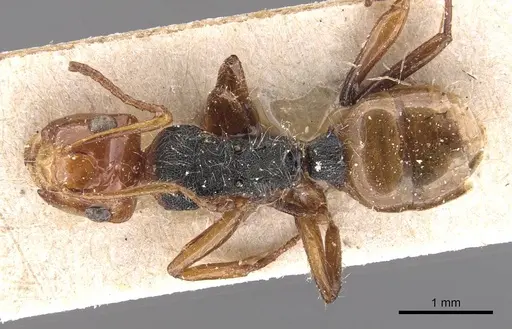
Literatur
Verbreitungskarte wird geladen...Produkte werden geladen...