
Axinidris kakamegensis
- Wiss. Name
- Axinidris kakamegensis
- Tribus
- Tapinomini
- Unterfamilie
- Dolichoderinae
- Autor
- Shattuck, 1991
- Verbreitung
- In 0 Ländern gefunden
Einleitung
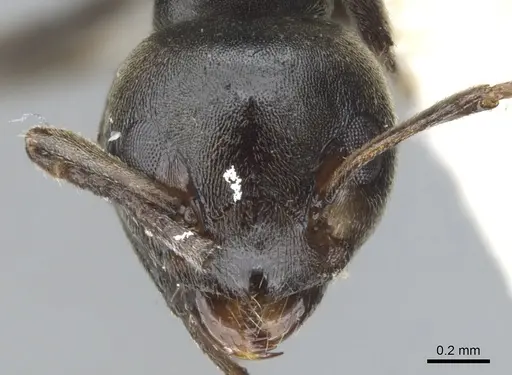
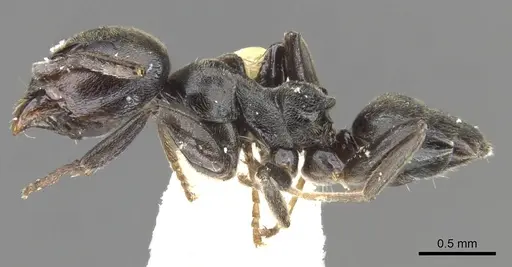
Axinidris kakamegensis is one of the rarest ants in the world - only a single worker specimen has ever been collected, taken in 1970 from Kakamega Forest in Kenya . This tiny ant belongs to the arboreal genus Axinidris, found across the Afrotropical region . The known specimen has a broad head, lacks erect hairs on its antennae and thorax, and has widely spaced propodeal spines . Beyond these physical details from the preserved specimen, we know nothing about its colonies, queens, behavior, or biology. The genus Axinidris contains tree-nesting species, but this particular species remains a complete mystery in terms of natural history.
Quick Summary
- Difficulty: Expert (theoretical only, cannot currently be kept)
- Origin & Habitat: Kakamega Forest, Kenya, tropical rainforest [1][2]
- Colony Type: Unknown, only the worker caste has been documented [1]
- Size & Growth:
- Queen: Unknown, no queens have ever been collected [1]
- Worker: Size data unavailable, the only specimen provides head width (0.97mm) and mesosoma length (1.10mm) but no total body length measurement [2]
- Colony: Unknown
- Growth: Unknown
- Development: Unknown, no queens or brood have ever been observed [1] (No developmental data exists for this species.)
- Antkeeping:
- Temperature: Unknown. Based on the tropical forest habitat, likely warm, but unconfirmed.
- Humidity: Unknown. Likely requires high humidity based on rainforest origin, but specific needs are undocumented.
- Diapause: Unknown. As a tropical species, hibernation is probably unnecessary, but this is unconfirmed.
- Nesting: Unknown. The genus is arboreal, but specific nesting preferences for this species are undocumented [2].
- Behavior: Unknown. Only one preserved specimen exists, providing no data on temperament, foraging, or activity patterns [1]. As a Dolichoderinae ant, it likely lacks a functional sting and may use chemical defense.
- Common Issues: only one specimen exists in the world, so you cannot obtain this species., no queens have ever been collected, making colony founding impossible., arboreal rainforest habitat requirements are completely unconfirmed.
The Only Specimen
In 1970,a single worker ant was collected in Kakamega Forest, Kenya. This specimen, now preserved in the Natural History Museum in London, remains the only individual of Axinidris kakamegensis ever found [1]. Shattuck described the species in 1991 based on this lone worker, noting its broad head, lack of erect hairs on the scape and pronotum, and widely spaced propodeal spines [2]. No queens, males, or additional workers have been collected in the 50+ years since, making this one of the most data-deficient ant species in the world.
Habitat and Climate
The type specimen came from Kakamega Forest, a tropical rainforest in western Kenya [1]. This forest sits at moderate elevation and experiences relatively stable warm temperatures with high rainfall. While we cannot confirm this species' specific microhabitat preferences, the forest environment suggests it likely experiences temperatures in the low to mid 20s Celsius with high humidity. However, without observing living colonies, these remain educated guesses.
Genus Patterns and Limitations
Axinidris is an arboreal genus found across the Afrotropical region [2]. Related species nest in trees and vegetation, and some are associated with specific plants. However, we cannot assume Axinidris kakamegensis follows these patterns. The species might be ground-dwelling, specialized to specific microhabitats, or extremely rare. Do not apply general Dolichoderinae care guides to this species, as its specific needs are entirely unknown.
Defense Mechanism
Like other Dolichoderinae ants, Axinidris kakamegensis lacks a functional sting. Instead, it relies on chemical defense, using sticky, foul-smelling substances from an anal gland to deter predators. This is typical of the subfamily Tapinomini tribe.
Why Captive Keeping Is Impossible
You cannot currently keep Axinidris kakamegensis. No queens exist in captivity, and likely none exist in collections anywhere. The single known specimen is a preserved worker in a museum. Even if you could obtain similar ants from the genus, you would be guessing at every care parameter, diet, temperature, humidity, and nesting structure. This species represents a gap in our knowledge rather than a viable pet ant option. [1][2]
Frequently Asked Questions
Can I keep Axinidris kakamegensis in a test tube setup?
No. Only one worker specimen exists in the world, housed in a museum collection. No queens are available to start a colony, and the species cannot be obtained for private keeping [1][2].
How big are Axinidris kakamegensis workers?
Size data is unavailable. The only specimen provides head width (0.97mm) and mesosoma length (1.10mm) measurements, but no total body length has been recorded for this species [2].
Where do Axinidris kakamegensis live?
The only known specimen was collected from Kakamega Forest in Kenya [1][2].
What do Axinidris kakamegensis eat?
Their diet is completely unknown. No living colonies have been observed foraging [1].
How long does Axinidris kakamegensis take to develop from egg to worker?
The development timeline is unknown. No queens or brood have ever been documented [1].
Do Axinidris kakamegensis need hibernation?
This is unknown. As a tropical species from Kenya, they likely do not require winter rest, but this is unconfirmed [1].
Can I keep multiple Axinidris kakamegensis queens together?
This is unknown. No queens of this species have ever been collected [1].
Are Axinidris kakamegensis good for beginners?
No. This species cannot be obtained and has no established care guidelines. You should start with well-documented species like Lasius niger or Camponotus species instead.
How do I find an Axinidris kakamegensis queen?
You cannot. No queens have ever been documented for this species, and the only known specimen is a worker collected in 1970 [1][2].
Report an Issue
The current care sheet is based fully on literature. See inconsistencies, or something that's incorrect? Please , it will be resolved after review from an admin. Contributing to the blogs tab also helps providing information, to make us be able to further improve the caresheets. Thank you for your support!
References

Dieses Caresheet ist lizenziert unter CC BY-SA 4.0 .
Community-Blogs
CASENT0902934
Auf AntWeb ansehen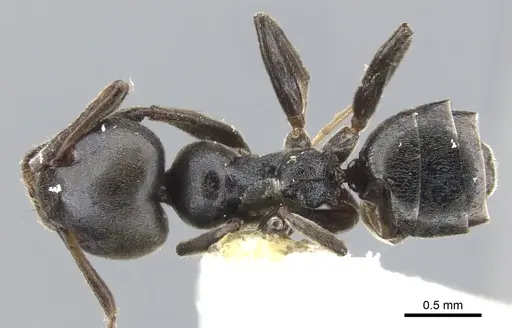
Literatur
Verbreitungskarte wird geladen...Produkte werden geladen...