
Aenictus vagans
- Wiss. Name
- Aenictus vagans
- Unterfamilie
- Dorylinae
- Autor
- Santschi, 1924
- Verbreitung
- In 0 Ländern gefunden
Einleitung
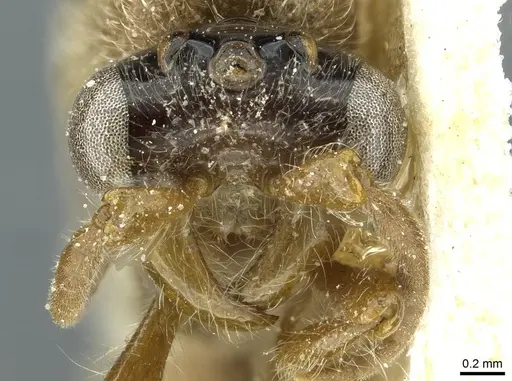
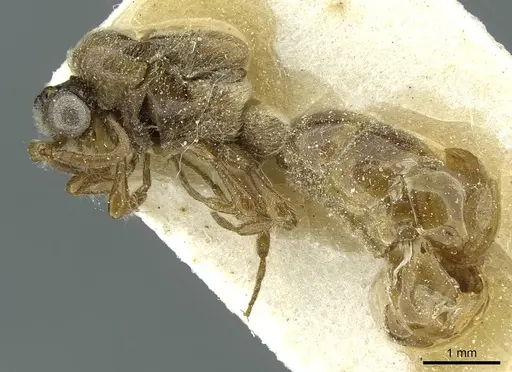
Aenictus vagans is an army ant species found in West Africa, specifically recorded from Benin, Niger, Nigeria, and Uganda . Like all members of the genus Aenictus, these are nomadic ants that do not build permanent nests. Instead, they form temporary shelters called bivouacs and move frequently to find new food sources. Workers are small and typically have reduced eyes, while queens are dichthadiiform - large, flightless, and with reduced eyes, a body plan typical of army ant queens. These ants are specialized predators that hunt other social insects, particularly termites .
Quick Summary
- Difficulty: Expert
- Origin & Habitat: West Africa (Benin, Niger, Nigeria, Uganda), tropical regions [1]
- Colony Type: Colony structure is unconfirmed for this species, army ants typically maintain multiple-queen colonies and reproduce by colony fission
- Size & Growth:
- Queen: Size data unavailable for this species, Aenictus queens are typically 8-12 mm, inferred from genus patterns
- Worker: Size data unavailable for this species, Aenictus workers are typically 2-4 mm, inferred from genus patterns
- Colony: Colony size is unconfirmed for this species, related army ant species maintain colonies of thousands to hundreds of thousands of workers
- Growth: Fast, inferred from army ant biology
- Development: Development timeline is unconfirmed for this species, typical army ant development is approximately 4-8 weeks at warm temperatures (Development is likely faster than temperate species but specific data unavailable for this species)
- Antkeeping:
- Temperature: Warm tropical conditions, likely 25-28°C based on West African distribution
- Humidity: High humidity required, keep the enclosure moist as these ants inhabit tropical regions
- Diapause: No, tropical species do not hibernate
- Nesting: No permanent nest, nomadic species requiring continuous movement and space
- Behavior: Highly aggressive, nomadic foragers that hunt in groups. They are specialized predators of other social insects. Due to their small size and nomadic nature, escape prevention is difficult to manage in captivity.
- Common Issues: nomadic lifestyle makes standard formicarium housing impossible, they require continuous movement and cannot settle in one place, colonies likely reach massive sizes with thousands of workers, requiring enormous space and constant food supplies, specialized diet of other social insects is difficult to maintain in captivity, reproduce by colony fission rather than traditional founding, making colony establishment nearly impossible for keepers, tiny worker size combined with nomadic behavior makes escape prevention extremely challenging
Army Ant Biology and Movement Patterns
Aenictus vagans belongs to the army ant group, which means they live a nomadic lifestyle. Unlike most ants that build permanent nests in soil or wood, these ants form temporary shelters called bivouacs and move frequently to find new food sources. The colony marches as a group, carrying their brood and queen with them. Queens are dichthadiiform, meaning they are flightless with reduced eyes and enormous abdomens capable of producing thousands of eggs. This body type is typical of army ants and reflects their reliance on worker care rather than independent survival [1].
Feeding and Diet Requirements
Based on typical Aenictus patterns, these ants are specialized predators that hunt other social insects. Their primary targets are termites and other ant species. They hunt in groups, overwhelming prey through sheer numbers. In captivity, this presents an enormous challenge because they require a constant supply of live prey. Unlike generalist ants that accept honey or dead insects, army ants need active hunting opportunities to survive. This makes them unsuitable for standard ant keeping setups.
Why These Ants Are Not Suitable for Home Keeping
You should not attempt to keep Aenictus vagans in a standard ant setup. First, they do not use permanent nests, so formicariums and test tubes are useless. They need large, open spaces to move and form temporary bivouacs. Second, their colony size likely reaches thousands or hundreds of thousands of workers, requiring massive enclosures and impossible amounts of food. Third, they reproduce by colony fission, meaning new colonies split from mature ones. You cannot buy a single queen and start a colony, you would need an entire established colony section with multiple queens and thousands of workers. Finally, their specialized diet of live social insects is nearly impossible to maintain long-term in captivity.
Temperature and Environmental Needs
Coming from West Africa, these ants need warm, stable temperatures year-round. They do not hibernate. You should maintain temperatures around 25-28°C with high humidity. However, providing these conditions is the easy part, the behavioral and spatial requirements are what make captive keeping impractical. If you were to attempt housing, you would need a very large, escape-proof enclosure with constant humidity and no distinct nest area, as they do not settle in one place.
Frequently Asked Questions
Can I keep Aenictus vagans in a test tube?
No. These ants do not stay in one place. They are nomadic army ants that require constant movement and space to roam. A test tube is completely unsuitable and would kill the colony.
How do I found a colony of Aenictus vagans?
You cannot found them traditionally. Army ants reproduce by colony fission, where a mature colony splits into two parts. You would need to obtain an entire colony section with multiple queens and thousands of workers, which is practically impossible for private keepers.
What do Aenictus vagans eat?
They are specialized predators of other social insects, particularly termites and other ant species. They require a constant supply of live prey, making them extremely difficult to feed in captivity.
Are Aenictus vagans good for beginners?
Absolutely not. These are among the most challenging ants to keep, requiring specialized facilities, massive amounts of space, constant food supplies of live prey, and colony reproduction methods that are incompatible with standard ant keeping.
How big do Aenictus vagans colonies get?
Exact colony size is unknown for this species, but related army ants maintain colonies of thousands to hundreds of thousands of workers. This makes them unsuitable for home keeping.
Do Aenictus vagans need a formicarium?
No. They do not use permanent nests. They require open space to form temporary shelters and move frequently. Any enclosure would need to be extremely large and designed for nomadic movement rather than a fixed nest site.
Can I buy Aenictus vagans queens to start a colony?
Even if available, a single queen cannot start a colony. Army ant queens require an existing worker force from the moment they emerge, as they do not forage or care for brood alone. Colonies must be obtained by splitting existing mature colonies.
Do Aenictus vagans need hibernation?
No. They come from tropical West Africa and remain active year-round. They do not require a winter rest period.
Why are my Aenictus vagans dying?
If you somehow obtained these ants and they are dying, it is likely due to improper housing. They cannot survive in standard nests. They need constant movement, massive space, and specific live prey. Most captive attempts fail due to these specialized requirements.
Report an Issue
The current care sheet is based fully on literature. See inconsistencies, or something that's incorrect? Please , it will be resolved after review from an admin. Contributing to the blogs tab also helps providing information, to make us be able to further improve the caresheets. Thank you for your support!
References

Dieses Caresheet ist lizenziert unter CC BY-SA 4.0 .
Community-Blogs
CASENT0911443
Auf AntWeb ansehen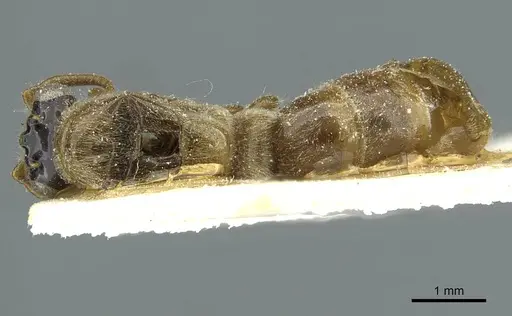
Literatur
Verbreitungskarte wird geladen...Produkte werden geladen...