
Acropyga rubescens
- Wiss. Name
- Acropyga rubescens
- Tribus
- Plagiolepidini
- Unterfamilie
- Formicinae
- Autor
- Forel, 1894
- Verbreitung
- In 0 Ländern gefunden
Einleitung
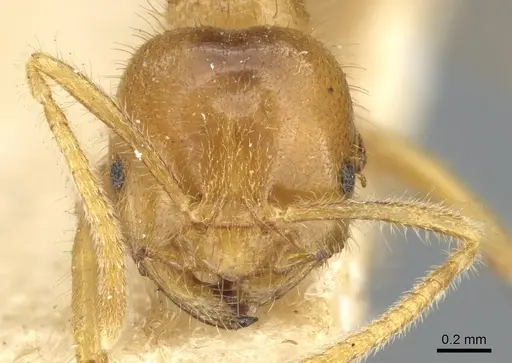
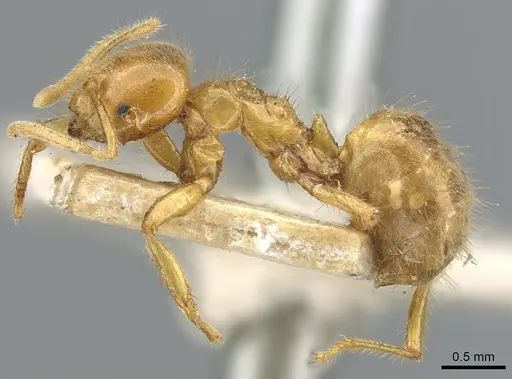
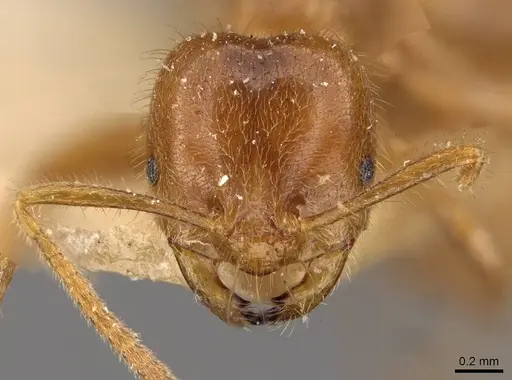
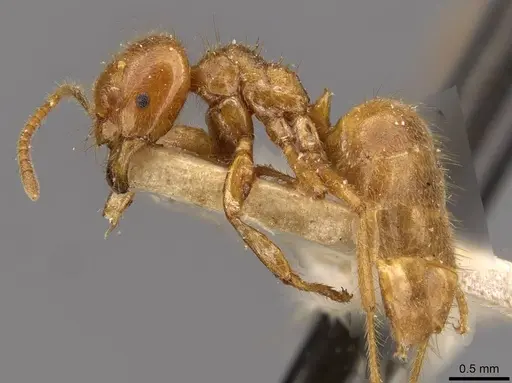
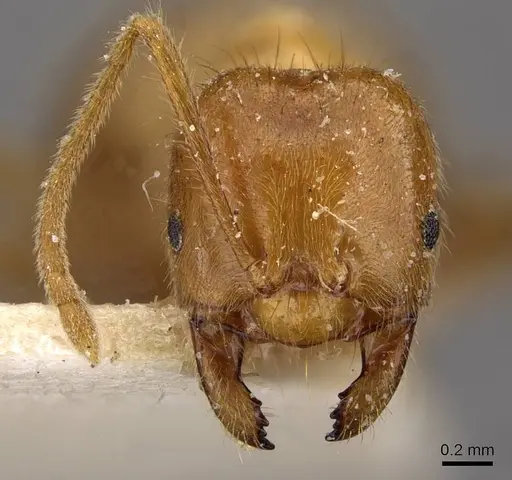
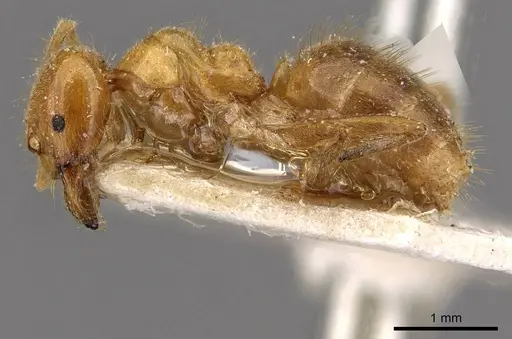
Acropyga rubescens is the largest known species in the genus Acropyga, with workers measuring 3.39-5.11 mm in total length and queens reaching approximately 6.16 mm . They display a distinctive spiky appearance due to dense erect hairs covering their brownish-yellow to reddish-yellow bodies, with the gaster typically darker than the head and mesosoma . Found across the Indomalaya region in India (Karnataka), Singapore, and Sri Lanka, these ants inhabit tropical forest environments . Despite their striking appearance, AntWiki explicitly notes that nothing is known about the biology of this ant in the wild . While specific care requirements remain undocumented, Acropyga rubescens likely shares the genus tendency toward specialized relationships with scale insects. Based on patterns observed in related species, colonies probably depend on mealybugs for food, making captive care extremely challenging. Only attempt keeping this species if you can source their specific symbiotic partners and maintain the high humidity typical of their tropical forest habitat.
Quick Summary
- Difficulty: Expert
- Origin & Habitat: Indomalaya region: India (Karnataka), Singapore, and Sri Lanka [1][3]. Tropical forest habitats, exact nesting preferences unknown.
- Colony Type: Unknown, colony structure unconfirmed.
- Size & Growth:
- Antkeeping:
- Temperature: Temperature requirements unconfirmed, likely 24-28°C based on tropical distribution. Start at 25°C and observe colony activity.
- Humidity: High humidity likely required, keep nest substrate consistently moist but not waterlogged.
- Diapause: No, tropical species do not require hibernation.
- Nesting: Nesting preferences unknown in nature, use small chambers with high humidity in captivity.
- Behavior: Temperament unknown. Workers are small enough to escape through tiny gaps, excellent escape prevention is essential.
- Common Issues: complete lack of biological data means no confirmed care methods exist., likely requirement for mealybug symbionts, colonies may starve without specific scale insects to farm., small worker size allows escapes through gaps in standard formicarium setups., tropical humidity requirements are difficult to maintain without proper equipment.
Why We Know So Little
Acropyga rubescens remains one of the most mysterious ants in the hobby. AntWiki explicitly states that nothing is known about the biology of this ant [1]. While the species was described in 1894 and has been recorded from India, Singapore, and Sri Lanka, no studies have documented their nesting behavior, diet, colony structure, or development timeline in the wild [1][4].
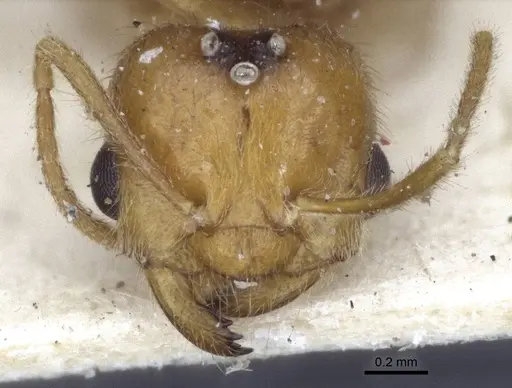
What we do know comes from morphology. Workers range from 3.39-5.11 mm in total length, making them the largest Acropyga species discovered [2][1]. They have 11-segmented antennae and distinctive mandibles with five teeth [1]. The dense hair covering gives them a spiky appearance that distinguishes them from the similar Acropyga acutiventris [1].
For keepers, this lack of data means you are essentially working blind. Any captive care must be extrapolated from related species or based on general Formicinae husbandry, with the understanding that requirements may differ significantly.
The Mealybug Symbiosis Challenge
While unconfirmed for A. rubescens specifically, the genus Acropyga is famous for an obligate relationship with mealybugs and scale insects. In other Acropyga species, queens carry a mealybug in their mandibles during the nuptial flight to seed their new colony with food stock. The ants then farm these scale insects underground, feeding on the honeydew they produce.
If A. rubescens follows this pattern, you cannot keep them without their specific symbiotic mealybugs. Standard ant diets of sugar water and insects will likely result in colony failure. The mealybugs required are typically root-feeding species that live in soil or rotting wood, not the common plant pests found in gardens.
This symbiosis makes Acropyga one of the most difficult genera to maintain in captivity. You would need to identify and culture the specific mealybug species they associate with, maintain both the ant colony and their livestock under compatible conditions, and ensure the mealybugs survive the founding period when the queen relies entirely on their honeydew production.
Housing and Humidity
Given their tropical origins in India and Southeast Asia, A. rubescens likely requires warm, humid conditions year-round. You should maintain nest substrate that feels damp to the touch but not waterlogged.
For nest design, use small chambers with tight-fitting lids. Workers at 3-5 mm can squeeze through surprisingly small gaps, so excellent escape prevention is essential. A naturalistic setup with soil or rotting wood might be most appropriate given their likely subterranean nesting habits, though this remains speculative.
Ventilation must balance humidity retention with fresh air. Stagnant air promotes mold, which could devastate a colony dependent on delicate mealybugs. Use small ventilation holes covered with fine mesh to prevent escapes while allowing air exchange.
Temperature Requirements
As a tropical species from lowland and mid-elevation forests in India, Singapore, and Sri Lanka, A. rubescens likely requires temperatures between 24-28°C. They probably do not require hibernation or diapause, remaining active year-round like other tropical ants.
Start with a stable 25°C and observe colony activity. If workers appear sluggish, increase temperature slightly. If they avoid heated areas, reduce temperature. A gentle heat gradient using a heating cable on one side of the nest allows the ants to self-regulate, though with their small size, ensure the cable does not dry out the substrate excessively.
Never expose them to temperatures below 20°C for extended periods. Tropical species often lack the physiological adaptations to survive cold, damp conditions common in unheated rooms during winter. [3]
Frequently Asked Questions
Can I keep Acropyga rubescens in a test tube?
You can house them in a test tube for founding, but standard test tube setups may not support their likely mealybug requirements. If they follow the genus pattern, queens need soil or substrate to accommodate their scale insect symbionts. A test tube with soil substrate and extremely high humidity might work temporarily, but long-term housing requires a more complex naturalistic setup.
What do Acropyga rubescens eat?
Unknown for this specific species. Based on typical Acropyga patterns, they likely farm mealybugs or scale insects for honeydew and do not accept standard sugar water or insect prey. Without their specific symbiotic mealybugs, the colony will probably starve. Do not attempt to keep them unless you can source the appropriate root-feeding scale insects.
How long until Acropyga rubescens get their first workers?
The egg-to-worker timeline is completely unknown for Acropyga rubescens. Without confirmed data, patience is essential when keeping this species.
Do Acropyga rubescens need hibernation?
No. As a tropical species from India, Singapore, and Sri Lanka, they likely remain active year-round and do not require diapause or hibernation. Keep them at stable tropical temperatures throughout the year.
Are Acropyga rubescens good for beginners?
Absolutely not. These are expert-level ants due to the complete lack of care information and their likely requirement for specific mealybug symbionts. Beginners should start with well-documented species like Lasius niger or Camponotus instead.
How big do Acropyga rubescens colonies get?
Colony size is unknown. No studies have documented mature colony sizes in the wild. Based on other Acropyga species, they likely remain relatively small, but this is speculative.
Can I keep multiple Acropyga rubescens queens together?
Not recommended. While the colony structure is unknown, combining unrelated queens has not been documented and likely leads to fighting. If the species is monogyne like most Acropyga, queens will fight until only one survives.
Where do Acropyga rubescens come from?
They are native to the Indomalaya region, specifically recorded from India (Karnataka state), Singapore, and Sri Lanka [1][3]. They inhabit tropical forest environments, though specific microhabitat preferences remain undocumented.
Why are my Acropyga rubescens dying?
The most likely cause is starvation due to lack of mealybugs. If they follow the genus pattern, these ants cannot survive on sugar water and insects alone, they require specific scale insects to farm for honeydew. Other risks include incorrect humidity, temperature fluctuations, or escapes due to their small size.
Report an Issue
The current care sheet is based fully on literature. See inconsistencies, or something that's incorrect? Please , it will be resolved after review from an admin. Contributing to the blogs tab also helps providing information, to make us be able to further improve the caresheets. Thank you for your support!
References

Dieses Caresheet ist lizenziert unter CC BY-SA 4.0 .
Community-Blogs
CASENT0903175
Auf AntWeb ansehen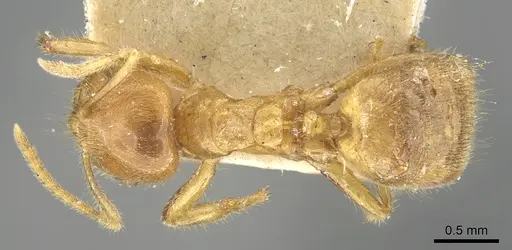
CASENT0909898
Auf AntWeb ansehen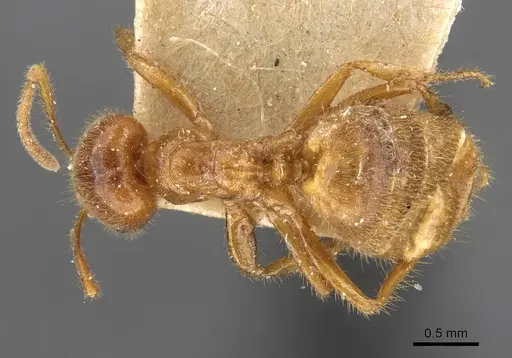
CASENT0909900
Auf AntWeb ansehen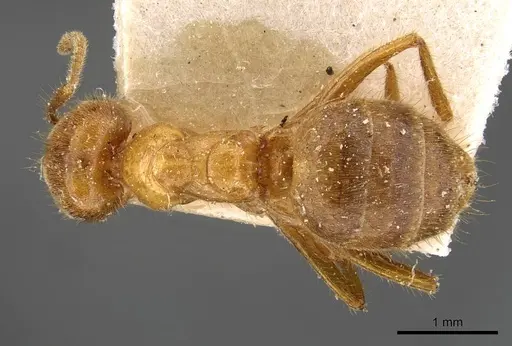
CASENT0916667
Auf AntWeb ansehen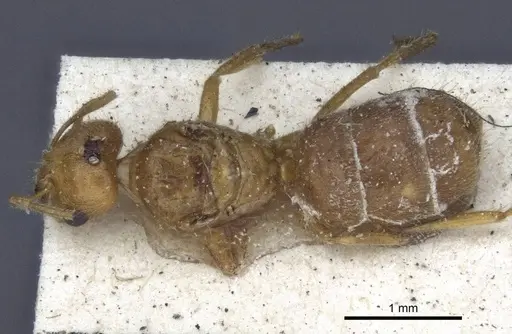
Literatur
Verbreitungskarte wird geladen...Produkte werden geladen...